


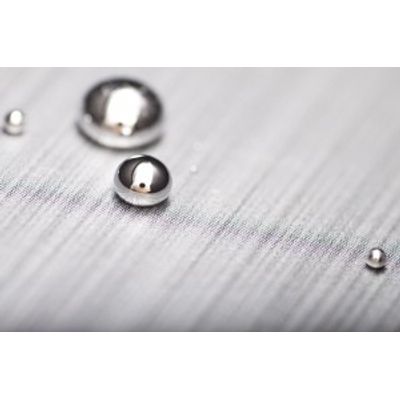
Mercury (Hg) for Trace Elements Analysis
Mercury is not very abundant in the planet’s crust; however, even modest increases in the quantity of mercury being introduced into the global environment is a matter of considerable and growing concern. Mercury contamination can threaten the health of humans and wildlife, from industrial sites to the most remote wilderness areas. Mercury is considered a global pollutant since it can affect the environment in areas far removed from the point of its original release.
Since 1982, Brooks Applied Labs has devoted significant resources to the research and development of the analytical methods and instrumentation necessary to quantify mercury and methylmercury concentrations at ultra-low levels in even the most complex matrices. Our early research contributed substantially to the development and validation of EPA Method 1631 and EPA Method 1630 for the determination of mercury and methylmercury in waters at sub-parts-per-trillion levels.
Over the decades we have developed and perfected our analytical methods to determine mercury and methylmercury concentrations in even the most complex matrices.
We routinely analyze the following for mercury and methylmercury with some of the lowest detection limits (view our MDL & MRL Table) available to our clients:
- surface water
- coal
- ground water
- fish tissue
- wastewater
- macroinvertebrates
- seawater
- plankton
- soil
- food
- sediments
- human blood
Mercury Speciation Services Available:
- Methylmercury
- Total Volatile Mercury
- Acid-Labile Mercury
- Ethylmercury
Types of Mercury Testing We Do:
- Bioavailability in Sediments
- Pore Water Extractions
- Elutriate Generation