


- Home
- Companies
- IMR Test Labs
- Services
- Microstructural Analysis Services
Microstructural Analysis Services
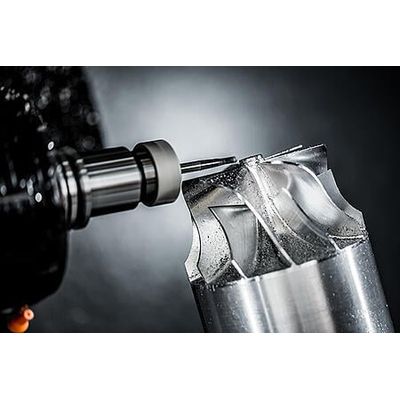
Aggressive and abusive, out of tolerance, machining conditions can cause surface and subsurface damage to the machined component. Improper material feeds, speeds, or dulled tooling can leave high-stress areas where cracks can initiate. Although the damage may be subtle, these very small defects can result in distortion in the microstructure, which can lead to failure of the part or component, resulting in premature repair or replacement. Microstructural analysis specializes in evaluating machined surfaces for evidence of damage. IMR Test Labs has the ability to perform the high-precision sample preparation needed to be able to resolve the subtle near-surface distortion and damage characteristics of non-optimal machining conditions. IMR Test Labs has a number of highly trained and experienced metallographers in all 5 of our labs.
Fatigue cracking typically has a distinct crack pattern, either transgranular or intergranular.
Laps and TearsLaps and tears are separations in the material caused by improper machining and mechanical stress.
Grain DistortionGrain distortion occur due to material deformation or other stress factors.
White LayerCaused by excessive heat during machining, white layer is a deformed or hardened layer on the surface of a material.
Strain LinesLocalized areas of deformation, in the form of lines or bands.
Phase TransformationsDuring machining, phase change may occur, either by formation of a new phase, or changes in crystal structure which indicates damage or altered microstructure.
Microstructural InclusionsImpurities, such as non-metallic particles or foreign substances within the material, can impact the integrity of the component.
PorosityPorosity is a defect in the material, which can compromise both mechanical and structural properties.
Components commonly used in turbomachinery need to be microstructurally tested after aggressive machining.
Disks - One of the main elements of turbomachinery, these circular components are made of strong materials to withstand stress during operation.
BLISKs - A solid component of the rotor disk and attached blades, BLISKs are lighter, more aerodynamic, and more reliable than the components as separate parts.
Blades - Extracting or imparting fluid within a turbomachinery system, blades can be found in many parts of the system, such as the fan, turbine, or compressor.
Shrouds - Outer covers of turbomachinery blades provide support, create aerodynamic operations, and prevent blade contact.
Nozzles - Accelerating or decelerating the flow of fluid, nozzles can be found in turbomachinery in the outlet, inlet, within compressors or turbines.
Vanes - Components for fluid flow guidance, between rotating blades, to increase or decrease velocity.
Seals - An important component of ensuring system integrity, seals prevent leakage of fluid, which helps maintain fluid flow and mitigate energy loss.
Casings - Outer components that enclose and protect the internal components of a turbomachinery system.
Shafts - The mechanical power connection between the rotor and rest of the machinery, the shaft is paramount in the overall function of the system.
Couplings - Couplings join the shafts together, transmitting torque.
Manufacturers of critical components such as disks, blisks, blades and shrouds rely on IMR Test Labs. For more information on IMR`s microstructural subsurface analysis capabilities, click the button below to contact us.