

- Home
- Companies
- CQA Solutions Ltd
- Services
- Other Services
Other Services
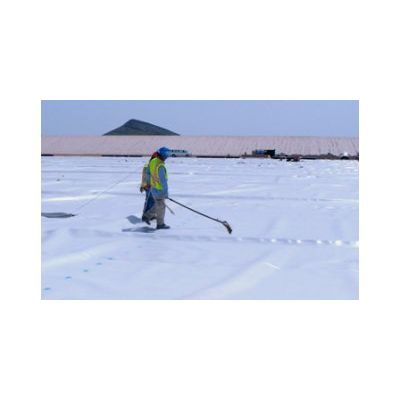
Leak Integrity: Studies show that nearly 75 percent of the damage found in geomembrane systems happens when the drainage/protective layer is placed over top of the geomembrane, not during geomembrane construction.
Leak Integrity Surveys (LIS) use an electric charge applied in various form to the liner surface; such methods include spark test, water lance, hand held probe and remote probe. Where the circuit is completed or variances detected, a leak is indicated.
Because holes as small as 2mm-5mm in size can be detected, LIS can offer peace of mind after the drainage/protective layer is installed and help avoid costly problems later.
We have significant experienced in LIS, having observed spark testing on more 13 million square feet of geomembrane. We are also available for the other methods listed above.
Leak Integrity Surveys (LIS) use an electric charge applied in various form to the liner surface; such methods include spark test, water lance, hand held probe and remote probe. Where the circuit is completed or variances detected, a leak is indicated.
Because holes as small as 2mm-5mm in size can be detected, LIS can offer peace of mind after the drainage/protective layer is installed and help avoid costly problems later.
We have significant experienced in LIS, having observed spark testing on more 13 million square feet of geomembrane. We are also available for the other methods listed above.

Troubleshooting
Our extensive field experience coupled with superior training makes us great troubleshooters. We offer prompt ideas when problems arise, and if the situation requires additional input, we can draw from our extensive network of leaders in the waste containment construction industry.
Included in this broad depth of knowledge are projects such as cold weather geosynthetics installation and waste solidification. Having worked with a large variety of general, earthwork and geosynthetics contractors, we often have experience from which to make recommendations. Simply put, when problems arise, we will find a workable solution that keeps the project moving.troubleshootingHere are some examples of our past troubleshooting efforts:
Manure Settling Pond
Our staff was called in to perform CQA on a dairy pond clay liner construction project. The contractor had already performed excavation of the pond prior to our arrival on site. During our orientation process, we determined through pacing and comparing plan dimensions through scaling that one side of the pond was not built in the correct place—the side-slope was located approximately 30 feet to far to one side.
The contractors brought in surveyors who confirmed the error. This finding resulted in a quick resolution that not only saved the contractor time and money, but saved the site valuable time in delays that would have occurred if the problem was not caught until the certification stage after the completion of construction.
Lagoon
Personnel performing CQA on the compacted clay liner also were performing certification of the final grades using a total station survey. Points along the toe of the slope were not checking out properly and the contractor’s final grading activities came to a halt. The lead field technician quickly performed some calculations, which showed the plans did not account for the clay thickness on the slope, and that the toe should be shifted out.
The project engineer quickly confirmed the technician calculations were correct, issued a revised set of certification points, and the contractor resumed final grading with less than two hours of final grading lost. Had the contractor continued grading, they would have cut out the clay liner below required thickness, resulting in extra work, costs, and project delays.
Evaporation Pond
While performing geosynthetics CQA, our team observed a variation in the appearance of the geomembrane surface. For the most part, the anomaly was only obvious under good lighting conditions and often hard to see. We informed the project manager, who then ordered laboratory testing of the material. The material was found to have lower strength characteristics in the blemished area, often falling below site specifications. However, when the sheet was looked at with normal conformance testing across the entire sheet, the sheet passed the average value criteria.
During meetings between the project manager, owners’ representative and liner manufacturer, a decision was made to reject the material. A substantial amount of material was rejected throughout the project, partially because the manufacturer took a proactive stance and assisted in isolating the rolls affected by this blemish type. The end result was a higher quality installation that benefits all parties involved.