- Home
- Companies
- 2B Technologies
- Services
- 2B-Technologies - Research and ...
2B-Technologies - Research and Development Service
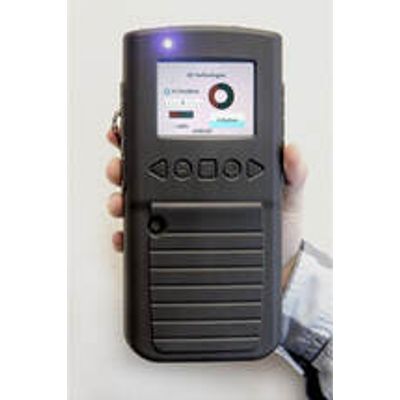
In work supported by a NIH/NIEHS Phase II SBIR grant, we are in the process of developing an intrinsically safe version of our Hermes Personal Mercury Monitor and obtaining ATEX certification for operation in potentially explosive environments such as in oil and gas operations or in mines. The Hermes II will have the same analytical specifications the original Hermes.
The Hermes II will have the same analytical specifications the original Hermes. The external battery is being replaced with an internal rechargeable battery with up to 15 hours of continuous operation. The instrument will have Bluetooth for data streaming to a mobile device and an internal alarm that can be set to warn when dangerous levels of mercury are encountered. The image to the right is the first prototype with a 3-D printed enclosure. For more details and launch date contact sales@twobtech.com.
With support of a Phase II SBIR grant funded by the National Science Foundation, we are developing an air monitoring station containing miniaturized, highly accurate instruments for measurements of O3, NO, NO2, CO, SO2, CO2, black carbon, and PM2.5. Ozone will be measured using the OEM version of our Model 106-L Ozone Monitor. We are combining our Model 405 nm NO2/NO/NOx Monitor with our Black Carbon Photometer to measure NO, NO2 and black carbon in one instrument. Carbon monoxide (CO) and sulfur dioxide (SO2) will be measured using electrochemical sensors. A CO2 sensor based on non-dispersive infrared (NDIR) spectrometry will be utilized for this greenhouse gas. For PM2.5, we will make use of an OEM optical particle counter (OPC) from another manufacturer. OPCs have a very fast response time and correlate extremely well with beta attenuation monitor (BAM) and other EPA Federal Equivalent Methods. Our BPC measurements at 405 nm will provide an independent check of the OPC PM2.5 measurements.
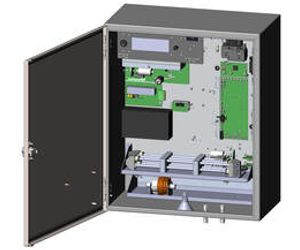
AQSync will provide a complete solution for ambient air monitoring with measurements of five of the six EPA Criteria Pollutants (O3, NO2, CO, SO2 and PM2.5) along with the major global warming components CO2 and black carbon. Black carbon, which arguably should be regulated as well, is a major contributor to respiratory and other health effects of air pollution. It is important to measure NO in addition to NO2 because of the rapid interconversion of these two species in the atmosphere, with NO constituting most of the direct emissions. We see the AQSync as a complete air monitoring solution, especially for developing countries where the cost of establishing traditional monitoring stations is prohibitive. However, the novel and perhaps most important future application is to serve as drive-by or park-by calibration stations for mobile monitors mounted on vehicles such as municipal buses and trams, rideshare vehicles, and delivery vehicles. To this end, we have recently developed a car-top enclosure for mobile measurements of air pollutants using low-cost sensors such as those used in the Personal Air Monitor (PAM) developed for our AQTreks educational outreach program. AQSync stations mounted on lamp and traffic light posts throughout cities are evaluated in a Phase II SBIR grant from NSF for their ability to provide drive-by calibrations of the less accurate sensors. This approach to hyperlocal mapping of air pollutants throughout cities could identify hot spots, contribute data for addressing environmental justice issues, and aid cities in controlling traffic to reduce human exposure to air pollution. The image on the right is a preliminary CAD drawing of the the AQSync station, which will continuously measure and upload data to the web via a cellular connection. For more details about this project and future availability of AQSync, contact sales@twobtech.com.