


- Home
- Companies
- Sullivan Environmental
- Services
- Urban Scale Air Quality Assessment ...
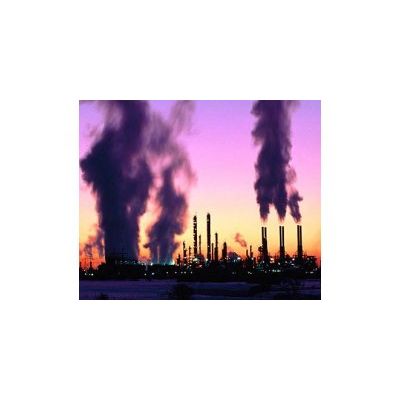
Urban Scale Air Quality Assessment Services
Some firms have experience modeling individual industrial facilities to support permit applications. The true challenge for a modeler is to address the analysis on an urban-scale, model all quantifiable source categories in a metropolitan area, and determine how realistic the assessment is relative to measured air quality data.
Since the first major EPA urban-scale air toxics study conducted in 1981, the staff of Sullivan Environmental Consulting, INC. was responsible for developing methods for EPA to address urban-scale air toxics exposures. The methodology was developed and refined in the EPA Integrated Environmental Management Project (IEMP), which was one of the key components used by EPA to address air toxics in the 1980s.
EPA urban scale studies generally involve establishing air toxics monitoring networks in the selected metropolitan area, compiling available point source emissions data, conducting pollutant apportionment as necessary into individual species, and addressing the general area source terms such as mobile sources, home heating, and solvent use. Dispersion modeling methods are then used to link the emissions and measured air quality data to determine the strengths and weaknesses in the exposure assessments. After an evaluation of these assessments, a more obvious picture emerges of where risks were found in terms of both pollutant species and source categories. These urban-scale studies were performed for metropolitan areas in the U.S. and also in Eastern Europe based on the same fundamental principles as applied in the earlier IEMP studies.
After the environmental tragedy in Bhopal, India involving methylisoscyanate, the Administrator of the U.S. Environmental Protection Agency identified the need to conduct an assessment of the heavily industrialized Kanawha Valley of West Virginia as a high priority. Among several alternative methods proposed to address this group of chemical plants located on complicated terrain, the design developed by David Sullivan was selected and implemented. Mr. Sullivan served as Principal Investigator on studies of carcinogenic endpoints and acute exposures to toxic air pollutants. These studies extended over a four- year period.
Through the challenge of addressing acute exposures from the complex facilities in the Kanawha Valley, Sullivan Environmental developed the concepts that evolved into the TOXST model. It has been available to enhance ISCST model applications and is now linked to AERMOD which is the next generation EPA dispersion model.
As part of the EPA Project Silesia, conducted in Ostrava, Czech Republic and Katowice, Poland, Sullivan Environmental conducted extensive modeling of the steel mills, coke oven facilities, chemical facilities, and widespread emissions from home heating and mobile sources. Through comparison with measured data, a clearer picture was identified of the degree of exposures associated with the aging technology used in the processes and control systems in Eastern Europe.