

Version RMT -Rapid Motion Tracking
Rapid Motion Tracking (RMT) is a recently developed technique for tracking rapid movement rates that exceeds those observable with SAR Interferometry. In contrast with SAR Interferometry, which measures motion using the signal phase value, RMT uses the amplitude value of the signal to evaluate the shift of recognizable features between SAR images. RMT is capable of measuring motion from tens of centimetres to tens of metres in both the line-of-sight and the azimuth (north-south) directions. The precision of this technique is in the order of several centimetres instead of the few millimeters attainable with SqueeSAR.
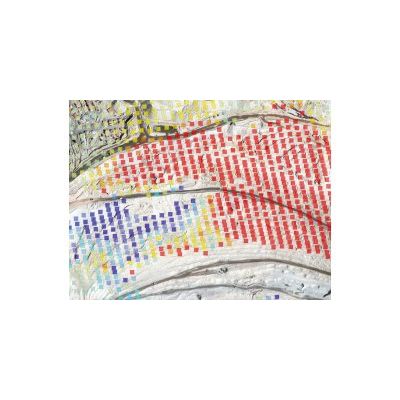
RMT results can be visualized as maps of surface motion or displacement time-series of individual measurement targets.
RMT results can be visualized as maps of surface movement or as displacement time-series of individual measurement targets.
Two different approaches are possible:
- Pixel tracking – whenever strong visible features (PS or artificial reflectors) can be identified on the ground
- Area tracking – whenever less strong but distributed features (DS) can be identified on the ground
The pixel tracking approach estimates the sub-pixel position of the maximum reflectivity values image by image, highlighting possible displacement/shift with respect to the first image acquired. Both velocity and displacement values can be obtained along the LOS and azimuth directions.
Area trackingThe area tracking approach works in the presence of distributed scatterers (DS). In this case, established a cell grid in the first image, the processing estimates the position of each cell in the following images, highlighting possible displacement/shift with respect to the first image. Both velocity and displacement values can be obtained along the LOS and azimuth directions. These estimates have intrinsically lower resolution and poorer accuracy than pixel tracking measurements, but they serve well in areas where there are no strong scatterers.