


- Home
- Companies
- Fluence Corporation
- Articles
- Industrial Feedwater Challenges and the ...
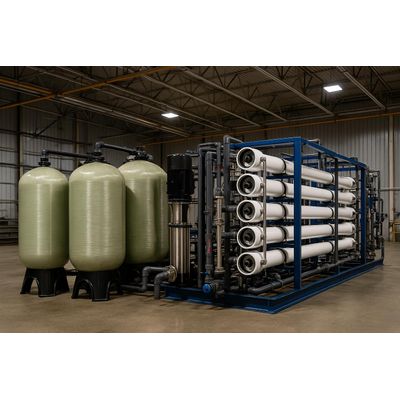
Industrial Feedwater Challenges and the Role of Containerized Treatment
Industrial operations across manufacturing, chemicals, energy, food processing, and heavy industry face increasing pressure to manage feedwater more effectively. Water quality directly influences uptime, energy efficiency, regulatory compliance, and product quality, making feedwater a strategic operational input rather than a background utility.
A smarter approach to industrial water management
Modern feedwater management requires robust, adaptable treatment capable of handling variable source water, stricter regulations, and rising sustainability expectations. Fluence brings decades of global experience to help industrial operators meet these challenges with confidence.
Industrial Feedwater in High-Growth Sectors
- Semiconductor fabrication plants and AI data centers require ultrapure water to protect sensitive manufacturing and cooling systems.
- Lithium extraction and battery manufacturing depend on advanced treatment to manage brines and recover process water efficiently.
- Renewable energy facilities must balance water reliability with sustainability performance.
Why Industrial Feedwater Quality Matters
Feedwater refers to water used within industrial processes, including boilers, cooling systems, cleaning operations, and production lines. When feedwater quality is poorly managed, consequences can include increased scaling, corrosion, and fouling of equipment; reduced operational efficiency and higher energy consumption; greater maintenance costs and unplanned downtime; and difficulty meeting regulatory and environmental requirements.
As water sources become more constrained and inconsistent, facilities must rely on advanced industrial treatment solutions that ensure feedwater remains fit for purpose.
Consistent Water Quality for Critical Operations
While industrial applications vary, many feedwater challenges are shared across sectors. Dissolved minerals, suspended solids, silica, and organic contaminants can damage equipment or compromise end products if left untreated.
- Industries relying on boilers and steam generation, such as power generation and process manufacturing, require high-purity feedwater to protect turbines, heat exchangers, and piping.
- In sectors where water becomes part of the final product, such as food and beverage processing, pharmaceuticals, and specialty manufacturing, consistent water quality is essential to meet product and safety standards.
Fluence designs integrated treatment trains that combine pretreatment, membrane filtration, reverse osmosis, and demineralization to deliver reliable feedwater across a wide range of industrial applications.
Source Water Variability and Operational Risk
Industrial water sources fluctuate due to seasonal changes, supply constraints, or upstream influences. Without adaptable treatment systems, this variability can disrupt production and increase operational risk. Industries with continuous or high uptime requirements benefit from modular and scalable systems that maintain consistent output even as feedwater conditions change.
Fluence’s standardized, containerized treatment systems are engineered for rapid deployment and predictable performance. Pre-assembled and factory-tested, these systems reduce installation time, simplify commissioning, and allow facilities to scale capacity without major civil construction.
Meeting Regulations While Advancing Sustainability
Environmental regulations governing water withdrawal, discharge, and reuse are becoming more stringent across all industrial sectors. At the same time, many organizations are setting ambitious goals to reduce water consumption and environmental impact. High water demand industries are increasingly adopting water reuse, recycling, and advanced wastewater treatment strategies to close the water loop.
Fluence supports these objectives with solutions that enable water reuse for nonpotable and process applications, reduce intake of fresh water through advanced treatment and recovery, and support compliance with local and international discharge standards. By adopting a lifecycle approach to industrial water, facilities can improve resilience while strengthening their sustainability performance.
Real-World Industrial Water Treatment in Action
Fluence has delivered systems addressing feedwater challenges across industries, demonstrating measurable benefits in operational reliability, sustainability, and water efficiency.
- Power plant feedwater stabilization: In Egypt, Fluence implemented a modular ultrafiltration and reverse osmosis system for a large power plant. The system converts low-quality seawater into high-purity feedwater, ensuring reliable steam generation and protecting critical equipment. This led to improved boiler performance, reduced maintenance, and more consistent operations.
- Beverage plant water reuse: A major beverage bottler faced rising freshwater costs and stricter water regulations. Fluence designed a membrane bioreactor (MBR) wastewater treatment system that enabled treated effluent to be reused for non-product applications. The result was reduced freshwater consumption, lower operational costs, and maintained water quality for cleaning and process needs.
- Blowdown recycling for solar power facilities: At a utility-scale solar power facility, Fluence installed a blowdown recycling system to treat and reuse water from cooling and process systems. The project cut consumption of fresh water by roughly 50%, supporting both sustainability goals and operational efficiency.
These real-world examples illustrate how industrial facilities can overcome feedwater variability, reduce freshwater use, and protect critical assets. They demonstrate that robust, adaptable water solutions are feasible across industries.
The Fluence Advantage: Flexible and Scalable Industrial Water Solutions
Fluence's industrial water portfolio is designed to address feedwater challenges across a broad range of industries. Key advantages include: modular and containerized systems for rapid deployment; scalable designs that grow with operational needs; integrated treatment trains from pretreatment through reuse; and automation and smart controls for optimized performance. This flexible approach enables industrial operators to move beyond reactive water management and toward a strategic, future-ready water framework.
Flexible delivery models, including build-own-operate (BOO) structures, allow industrial operators to implement advanced treatment without diverting capital from core production investments.
Turning Feedwater Challenges Into Operational Advantages
Industrial feedwater challenges, whether protecting boilers, ensuring product quality, or meeting environmental requirements, are central to operational reliability, regulatory compliance, and sustainability performance. By combining proven technologies with modular design and lifecycle expertise, Fluence helps industrial facilities transform water from a constraint into a competitive advantage. Speak with a Fluence specialist to evaluate feedwater risk, system performance, and opportunities for modular optimization.
Original: https://www.fluencecorp.com/industrial-feedwater-challenges/