
- Home
- Companies
- NANO IRON s.r.o.
- Articles
- INNOVATIVE APPROACH TO REMEDIATION OF ...
INNOVATIVE APPROACH TO REMEDIATION OF THE LOW-PERMEABLE CLAY SOIL ENVIRONMENT
SITE CHARACTERISTICS
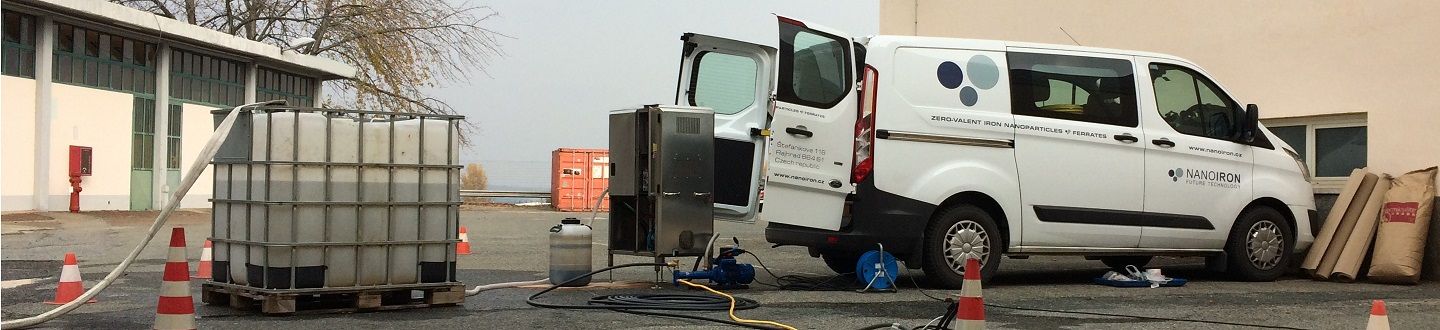
Together with partners from the Czech Republic (Dekonta, a.s.) and Belgium (ABO and Adviesbureau inzake Grondwater Technieken n.v), NANO IRON works on research and development of in-situ remediation technologies based on hydraulic fracturing of subsurface. The main benefit of the method is a possibility of application of the remediation suspensions in a geological environment in which the remediation is difficult.
REMEDIATION APPROACH
Hydraulic fracturing (HF) enhanced remediation is an in-situ method for remediation of contaminated environment. It uses high-pressure injection of reagents into the geological subsoil, thus enabling interaction between the reagent and contaminants even in places that cannot be reached using standard injection techniques.
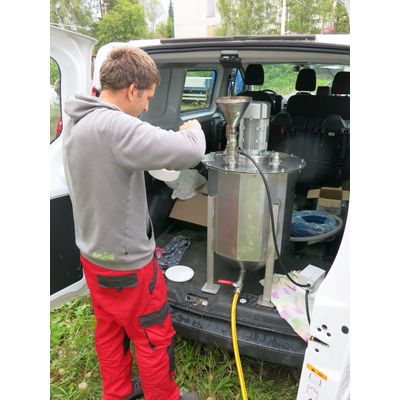
The direct push (DP) delivery method is an effective way to deliver remediation agents to the contaminated zones. The main advantages of DP application are simple applicability, low cost and flexibility. One of the main limitations of this technology is its small effectivity in low permeable geological formations. Combination of DP with HF is a suitable method for the application of alternative remediation agents that can serve as a fracturing material as well as remediation agent in one time. Formation of newly induced fractures will provide preferential flow paths for contaminated groundwater that will react with the fracturing material/remediation agent present in the fractures. Created fractures can also be used for subsequent injection of remedial agents, or the application of other remediation techniques.
CONCLUSION
A technology for combined direct push injection of remediation agents and combined hydraulic/pneumatic fracturing has been developed within the project. This technology was subsequently verified by a pilot test at a site with chlorinated ethenes contamination and complicated geology. The results so far show that the application of the technology has led to the initiation of both abiotic and biotic degradation of chlorinated ethenes.
MORE INFORMATION: https://www.fracin.eu/