

- Home
- Companies
- Hiden Analytical Ltd.
- Articles
- Mass Spectrometry for Groundwater ...
Mass Spectrometry for Groundwater Studies
Fast Dissolved Gas Analysis for Groundwater Age, Recharge and Flow Paths
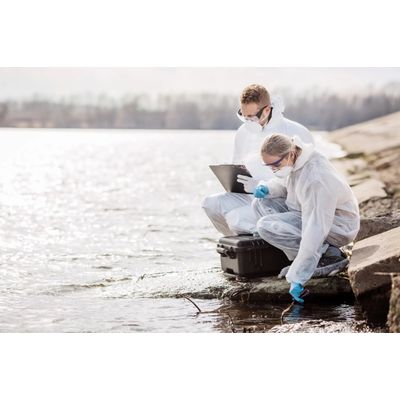
Mass spectrometry for groundwater studies provides real-time detection of transient events and supports reliable, efficient groundwater quality monitoring to help ensure the safety and sustainability of water supplies. Measure dissolved noble gases (e.g., helium, argon) and reactive gases (e.g., methane) in less than a minute. These gases serve as crucial tracers for assessing groundwater age, recharge elevations, and flow paths.
In summary: mass spectrometry for groundwater studies enables fast dissolved-gas tracer measurements to support interpretation of groundwater age, recharge and flow paths—without waiting on slow sampling-to-lab turnaround.
For an overview of this application area, see Groundwater Studies
- Real-time detection of transient events during groundwater sampling and monitoring
- < 1 minute measurement of dissolved tracer gases (e.g., He, Ar, CH4)
- Tracer gases support interpretation of groundwater age, recharge elevation, and flow paths
- Superior sensitivity and selectivity for confident trace-gas measurement
- Throughput gains reported for large-scale groundwater studies
- DAkkS-accredited N2/Ar method for excess N2 measurement in groundwater monitoring
Mass spectrometry supports rapid dissolved gas analysis in groundwater programmes where time-to-result, sample integrity, and changing site conditions matter. This approach aligns with broader Gas Analysis workflows used for environmental monitoring and research measurement.
Key dissolved gas tracers for groundwater studies
Dissolved gases are used as tracers because they help link measured concentrations to recharge conditions and subsurface transport behaviour.
Noble gases
Dissolved noble gases such as helium (He) and argon (Ar) are widely used as tracer gases within groundwater investigations.
Reactive gases
Reactive gases such as methane (CH4) support groundwater quality monitoring and geo-environmental investigations where gas occurrence and variability are important.
Superior sensitivity and selectivity
Superior sensitivity and selectivity support confident detection and quantification of dissolved tracer gases in groundwater, including low-concentration species used in monitoring and hydrogeology.
Throughput gains for large-scale groundwater studies
High-throughput workflows can drastically reduce the long-term operational effort of large-scale studies. Research teams have reported completing groundwater projects in two weeks that would have taken six years using traditional lab-based methods.
Hiden Analytical supports waterworks, environmental authorities, and research institutions in implementing MIMS technology within existing and new monitoring concepts. The aim is to make denitrification processes quantitatively measurable, comparable, and assessable over the long term.
The MIMS method has been officially recognised by DAkkS within the accredited scope of one of our customers in Germany, and is used as a reference method nationally. This recognition highlights the method’s practical relevance and growing importance for monitoring programmes.
Green chemistry and remote operation
Field-portable mass spectrometry can reduce resource consumption by avoiding chemical reagents and sample preservatives. Solar-powered battery pack operation can also support longer-term remote site operation for groundwater monitoring programmes and field campaigns.
Hiden Analytical manufactures both portable and lab-based compact bench-top mass spectrometer solutions for groundwater studies—supporting field measurements and laboratory workflows. Typical workflows include field measurement for rapid turnaround, lab measurement for controlled routine analysis, or combined approaches depending on study scale and reporting needs.
- Portable solution: pQA – Portable Quadrupole Analyser
- Bench-top solution: HPR-40 MIMS
- Related range: Dissolved Gas Analysis systems
Request further information to discuss your groundwater gas analysis requirements, target tracer gases (e.g., He/Ar/CH4, N2/Ar), and preferred field or lab workflow.
Mass spectrometry is used for dissolved gas analysis in groundwater, including noble and reactive tracer gases. These measurements support interpretation of groundwater age, recharge elevation, and flow paths, as well as groundwater quality monitoring.
Which gases are measured for groundwater tracer studies?Common dissolved-gas targets include helium (He) and argon (Ar) (noble gases) and methane (CH4) (reactive gases). Method workflows may also include N2/Ar for assessing excess N2 in groundwater.
What is the N2/Ar method in groundwater?The N2/Ar method is used to quantify excess nitrogen (N2) in groundwater, supporting groundwater protection priorities and monitoring success.
Why does “less than a minute” matter?Fast measurement supports high-throughput campaigns and helps capture transient events that may be missed with slower sampling-to-lab workflows.