

- Home
- Companies
- Hiden Analytical Ltd.
- Articles
- Static SIMS for Ultra-Clean Surfaces: ...
Static SIMS for Ultra-Clean Surfaces: Minimising Damage in Surface Analysis for the Top Nanolayers
The chemistry of a material’s outermost nanometres often determines its functional performance, making accurate surface characterisation vital for modern materials research. Yet, analysing these nanometre-scale layers is inherently challenging, as many surface-sensitive chemistry techniques, like AES, can modify the material or disturb its native chemical composition and techniques like EDX (Energy dispersive X-ray) do not have surface specificity. For ultra-clean surfaces, even minimal beam-induced change or contamination can alter material performance. Static Secondary Ion Mass Spectrometry (Static SIMS) addresses this analytical limitation, revealing the molecular and elemental composition of top monolayers without inducing measurable damage.
In SIMS analysis, a focused beam of primary ions strikes the sample surface, sputtering atoms and molecular fragments into the gas phase. The ionised species are then detected and analysed by mass spectrometry to produce a characteristic chemical fingerprint. Conventional dynamic SIMS uses high ion doses that continuously remove the material’s surface and underlying layers, enabling depth profiling but at the cost of surface preservation. In static SIMS the surface atomic layers become mixed and chemical structural information is lost. Static SIMS operates with very low ion doses, below the static limit of around 10¹² ions per square centimetre, where the likelihood of striking the same area twice is extremely low. At this dose, only the outermost monolayers of the surface are analysed. No measurable sputtering or mixing occurs. The result is an accurate, high-sensitivity representation of an ultra-clean surface, obtained through true low-damage analysis.
At the nanoscale, even subtle changes in surface chemistry can alter how a material performs, affecting adhesion, conductivity, and corrosion resistance. Conventional high-flux analytical beams can disrupt this delicate balance by causing atomic mixing, ion implantation, or molecular fragmentation that obscure true compositional information. Through operating below the static limit, Static SIMS prevents such effects, capturing molecular and elemental data from the outermost nanometre before the surface is altered. It provides genuine, low-damage insights crucial for analysing ultra-clean interfaces, molecular films, and contamination-free coatings with confidence.
The precision of Static SIMS depends on the meticulous control of beam conditions and environment, particularly when analysing ultra-clean surfaces where even minor disturbance or contamination can compromise data integrity. To preserve the pristine state of these surfaces, every aspect of the ion beam and operating parameters must be carefully managed:
- Low primary-ion dose- beam current and exposure time are tightly controlled to remain well below the static limit, ensuring that only the outermost nanometres are sampled without sampling previously damaged areas.
- Beam species selection- Although almost any ion beam will give good results, the use of heavy primary ions such as xenon and caesium help to keep the measured spectrum clean.
- Beam energy and incidence angle- lower energies and a well controlled angle of incidence reduce the area that is damaged by each ion impact leading to a spectrum richer in large characteristic fragments.
- Rastering strategy- scanning the beam across a wider area prevents localised overexposure, maintaining uniform ion impact across the analysed region.
- Environmental control: ensuring ultra-high vacuum (UHV) conditions and using clean transfer and sample handling protocols eliminates unwanted adsorption and allows the measured chemistry to reflect the true surface state.
Together, these parameters enable Static SIMS to perform precise, low-damage chemical surface analysis of ultra-clean top nanolayers, capturing authentic molecular and elemental information while preserving the surface in its original condition.
With an information depth of only 1-2 nanometres, Static SIMS provides direct chemical insight into the outermost atomic and molecular layers of ultra-clean surfaces. It characterises residual contaminants, adsorbed species, and ultrathin films that can influence surface functionality or compromise material performance.
Because Static SIMS operates below the static limit, the ion dose is low enough to prevent sputtering, implantation, or molecular fragmentation. This allows the true chemical state of a material’s surface to be examined without introducing analytical artefacts or damage. Even minute traces of hydrocarbons or absorbates can be detected, enabling rapid verification of a surface’s cleanliness, coating integrity, or process quality.
By preserving surface integrity and revealing molecular-level detail, Static SIMS yields authentic chemical information from ultra-clean top nanolayers, revealing their true interaction with the surrounding environment.
The non-destructive precision of static SIMS has made it indispensable across multiple scientific and industrial applications:
- Semiconductor manufacturing- verifying wafer and oxide cleanliness without altering device layers.
- Nanocoatings and thin films: assessing chemical uniformity and contamination in coatings less than 10 nanometres thick.
- Self-assembled monolayers (SAMs): characterising molecular orientation and surface coverage with nanometre sensitivity.
- Advanced materials research: studying corrosion inhibitors, passivation layers, and catalytic surfaces where top-layer chemistry defines performance.
Across these fields, Static SIMS remains constant in its ability to provide maximum chemical insight with minimal physical interference, enabling truly representative surface analysis of ultra-clean top nanolayers.
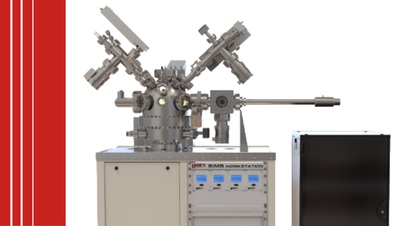
Studying surfaces at the nanometre scale demands an analytical approach that can reveal detail without inducing changes. Static SIMS can meet this requirement for ultra-clean surfaces, offering high chemical sensitivity and the preservation of structural integrity. Hiden Analytical’s SIMS Workstation provides the precision and stability needed for surface analysis at the nanometre scale, combining advanced ion-beam control, ultra-high vacuum performance, and versatile operation modes to ensure reliable results. Find out more about our SIMS Workstation now by contacting our team of experts to explore how it can enhance your surface characterisation and research capabilities.