


AllWater Technologies Ltd (AWT) products
Demineralisers

AWT - Deionisation & Demineralisation Unit
Our range of smaller sized, short cycle, counter current, skid mounted demineralisation units, are developed to use proven multiport valve technology for control of service and regeneration functions. “Short cycle” refers to the relatively short period of time that the unit is in service before going into a regeneration. This might be as short as 2 – 2½ hours (depending on the relative capacity of the demineraliser) but is offset by the relatively short regeneration period which typically takes around 30 minutes.
Other Products
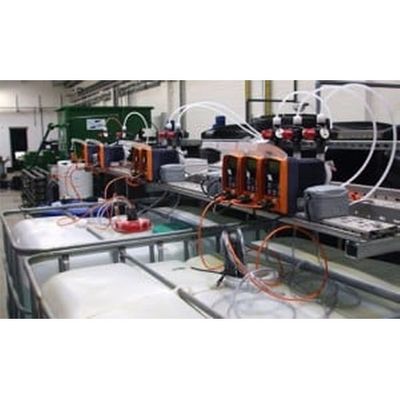
AWT - Industrial Wastewater Treatment Unit
In today’s challenging environment, companies with wastewater streams operate with the dual pressures of trying to achieve ever more stringent wastewater discharge consent limits, whilst at the same time also trying to reduce operational wastewater treatment costs.
Water Softeners
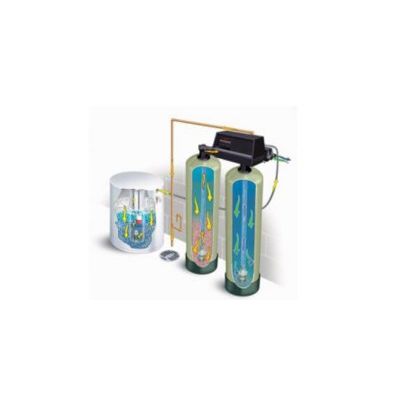
AWT - Cabinet Water Softener
Where small volumes of softened water are required on a non-continuous basis, and space is at a premium, a compact cabinet style water softener may offer the perfect solution.These trim units, supplied within a rotationally moulded cabinet are ideal for ensuring a softened supply to dishwashers, glass washers, laundry equipment and small scale applications in hotels, restaurants, hospitals care homes and other commercial premises.
AWT - Model 5600 - Simplex Water Softener
Simplex Water Softeners are best suited to applications where there is a steady demand for moderate capacities of softened water over the course of a normal working day. Regeneration, during which time no supply to service is available, is then programmed to occur at a time when there is no demand (typically during the night). For this reason, Simplex Water Softeners are normally sized to give at least one days supply of softened water output before regeneration.
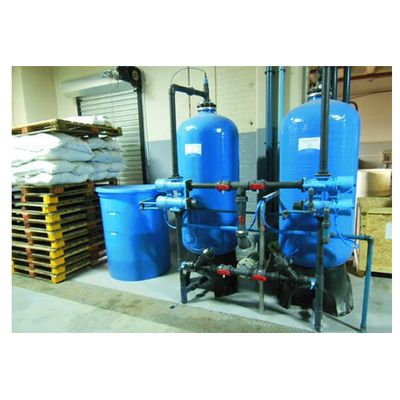
AWT - Model 9000 - Duplex Water Softener
Duplex softeners are ideal for sites with varying water demand or for applications where a continuous and uninterrupted supply of softened water is required. The twin vessel configuration allows for one resin vessel to always be in service whilst the other is in regeneration or standby thus guaranteeing 24/7 soft water production.
Reverse Osmosis
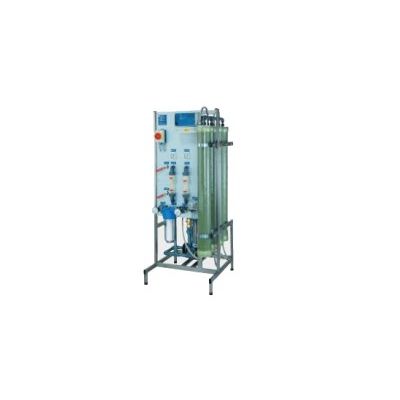
AWT - Model UO 600 ND-UO 1500 ND - Reverse Osmosis Units
Stand-type unit for desalination of softened drinking water according to German drinking water regulations (free chlorine not detectable), operating on the principle of reverse osmosis.
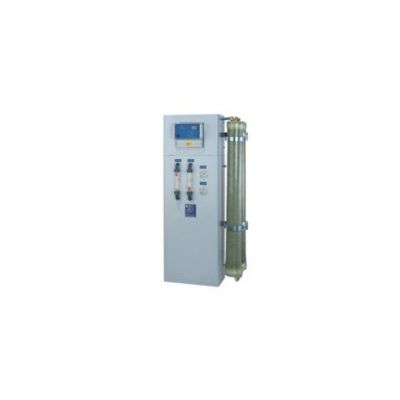
AWT - Model UO50W - 500W - Wall Mount Reverse Osmosis Unit
A budget wall mounted Reverse Osmosis Unit perfect for applications where floor space is at a premium and low demand is required. Wall mounting unit for desalination of softened drinking water according to German drinking water regulations (free chlorine not detectable), operating on the principle of reverse osmosis. Drinking water can also be desalinated without pretreatment. However, in this case the recovery rate is reduced. The decisive factor is the water analysis.
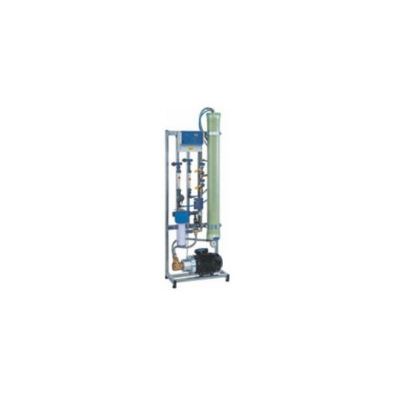
AWT - Model UO120WSE-UO500WSE - Flexible Budget Reverse Osmosis Unit
A flexible budget Reverse Osmosis Unit suitable for wall mounting or freestanding installation and where low demand is required. Wall mounting/stand-type unit for desalination of softened drinking water according to German drinking water regulations. Drinking water can also be desalinated without pre-treatment, with a reduced permeate recovery rate, and depending on the raw water analysis. RO 524 controller, with 24 VDC control voltage.
Filters
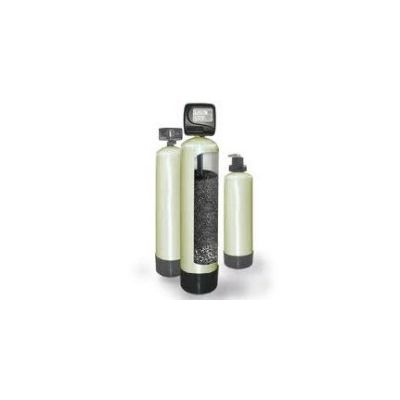
Activated Carbon Filters
Most towns water sources in the UK contain free chlorine to reduce the level of bacteria present in the water however this can add taste & odour and as a strong oxidant, can also attack water treatment medias such as ion exchange resin and reverse osmosis membranes. For these reasons, it is sometimes beneficial to remove the free chlorine.
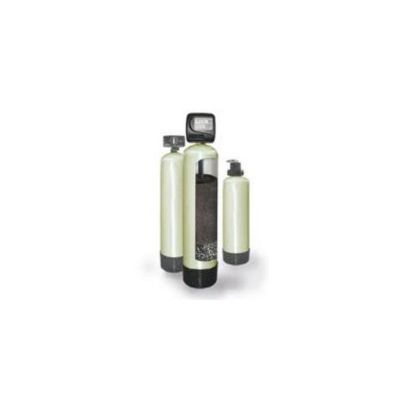
FILOX - Model R - Iron and Manganese Filters
Next to water hardness, the presence of Iron and Manganese in water is probably the most common water issue. Iron and manganese, in excess of the suggested maximum contaminant levels (MCL) may result in the discolouration of water causing stai ning of equipment and final product; it can also give a metallic taste to water or to manufactured foodstuffs. Filtration of Iron and Manganese is typically carried out using a Manganese Dioxide based media (a catalytic media converting dissolved iron & manganese to an insoluble, and subsequently, readily filtered, substance). In some instances a mixture of sand and Manganese Dioxide can be used but more often a proprietary product such as Filox R or Burgess Iron Removal Media (BIRM) is used, offering operational advantage to the procedure.