

Commonwealth Biomonitoring services

Aquatic Toxicity Testing Services
A vast majority of our work is performing whole effluent toxicity testing (WET Tests) for wastewater treatment plants and other point-source elimination systems. The state of Indiana and the EPA (Environmental Protection Agency) require all point-source elimination meet specific standards of toxicity before the effluent can be safely discharged into a stream, river, or other waterbody. Our lab uses toxicity testing to accomplish this under EPA method EPA-821-R-02-013. Click on EPA Methods to learn more. The results from toxicity testing provide data to not only determine if a discharger is in compliance, but also helps regulators make decisions on NPDES permit requirements.

Lake and Stream Surveys/Watershed Diagnostic Studies
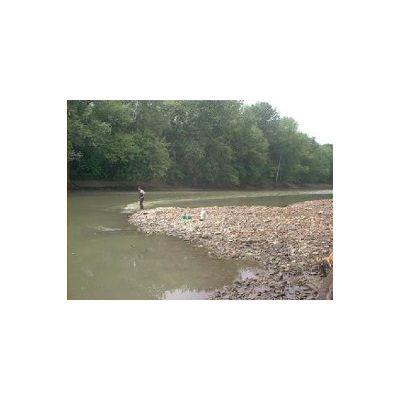
Our work is not only confined to the laboratory, we also specialize in performing various waterbody surveys and diagnostics of watersheds. Observing the quality of our waters sometimes requires being out there in direct contact with the environment. It is important to monitor the health and integrity of waterbodies as our landscape continues to change and can be measured by the abundance and diversity of aquatic communities. Fish, mussels, and macroinvertebrates are the most commonly used indicators of water quality. Watershed management, restoration practices, and lake and river enhancement are also used to enhance and restore water quality. We can then use this information to help our clients make better decisions and suggest Best Management Practices (BMP`s) to address issues with water quality.
Biomonitoring Services
Biomonitoring is measuring the condition and integrity of various sources of water to ensure the health and diversity of those sources. This can be accomplished by several methods. One of the most popular and effective methods is the observation and/or use of aquatic animals. Fish, mussels, and macroinvertebrates (aquatic insect larvae) are routinely used as indicators of water quality. This is due to the fact that these animals are continuously exposed to the water and the abundance, distribution, and diversity of these animals is indicative of the quality of water they live in. We study animals both in the lab (aquatic toxicity testing) and in the field (surveys or diagnostic studies). Some of the other important biomonitoring tools include lake and watershed management, diagnostic studies, restoration, and direct measurements of water quality parameters.