

Conifer Systems
15 products found

Conifer Systems products
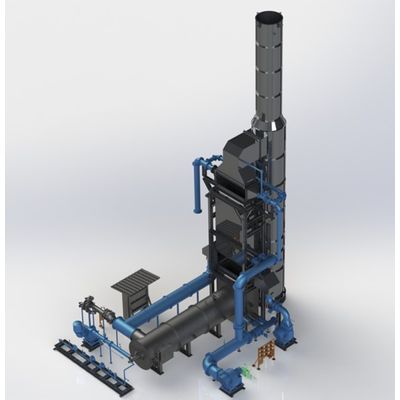
Conifer Systems - Direct-Fired Thermal Oxidizers

Direct-Fired Thermal Oxidizers (DTFO) destroy emissions that are created through chemical processes found in industrial exhaust streams through the process of combustion. By raising the exhaust stream temperature, the molecules are safely broken down into carbon dioxide (CO2), water (H2O) and thermal energy.
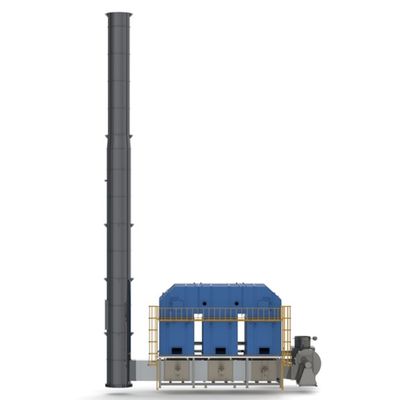
Conifer Systems - Regenerative Thermal Oxidizer

Regenerative Thermal Oxidizers (RTO) are used to destroy high volumes of emissions that are created through chemical processes, as well as those from industrial exhaust streams. Extremely high heat treats the exhaust of dangerous pollutants and compounds using ceramic media. RTOs are commonly configured in two, three and multi-canister systems to meet any organizations’ needs for ensuring odor and organic material are destroyed. RTOs are a great solution for any process that requires continuous operation.
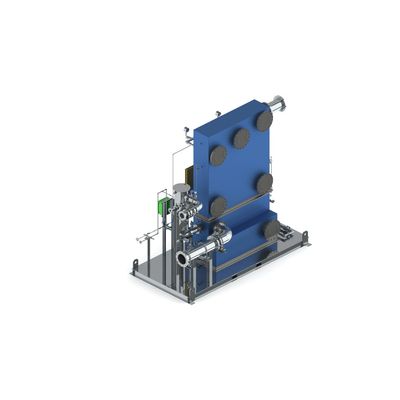
Conifer Systems - Scrubbers

Scrubbers remove dangerous particles from industrial gas streams without burning or using fuel. Scrubbers are ideal for applications that require high temperatures, highly acidic exhaust streams, or harsh chemicals.
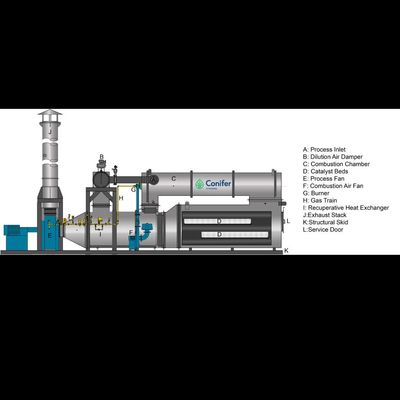
Conifer Systems - Catalytic Oxidizer

A Catalytic Oxidizer (CATOX) is used to abate industrial exhaust streams using media and heat together.  Catalytic oxidizers raise the temperature of the exhaust stream to break apart the chemical bonds that hold the Volatile Organic Compounds (VOC) molecules together using media in the system as a catalyst. The molecules are converted to carbon dioxide (CO2), water (H2O) and thermal energy.  The use of media allows for the operating temperature of a CATOX to be lower than a traditional thermal oxidizer, which uses less energy and requires less fuel.

Air Pollution Control Equipment - Thermal Oxidizers

GCES - Regenerative Thermal Oxidizer

Regenerative Thermal Oxidizers destroy Volatile Organic Compounds (VOCs) and Hazardous Air Pollutants (HAPs), that are created through chemical processes, and industrial exhaust steams. This type of oxidizer uses extremely high heat, about 1500°F, to clean the exhaust of dangerous pollutants and compounds.  Developed for large volumes, and low VOC concentration air pollution applications, Regenerative Thermal Oxidizer technology is based on using ceramic media as heat exchangers, and switching values. This design contrasts with Recuperative Thermal Oxidizers which use metallic shell and tube heat exchanger technology, with primary and/or secondary heat. In this configuration, among other distinctions, the outgoing clean process stream of the secondary heat exchanger process is routed to another part of the plant for its use or back to the process itself.

GCES Aqueous - Regenerative Thermal Oxidizer

In emission control technology, Regenerative Thermal Oxidizers (RTO) were developed for large volumes and low VOC concentration air pollution applications. They carry a low operating cost, and reliably harness the principle of thermal oxidation, which utilizes the process of regeneration for internal heat recovery. A superior pollution control device for air and vapor pollutants, it is highly energy-efficient, and ideal for long, continuous operations. They are highly effective and achieve some of the highest DRE numbers.

GCES - Thermal Recuperative Oxidizers (TROs)

What is a Thermal Recuperative Oxidizer? A thermal recuperative oxidizer (TRO) is a type of pollution control equipment that is used to treat industrial exhaust streams that contain volatile organic compounds (VOCs), and particulates. It takes VOCs and HAPs, and converts them into harmless carbon dioxide. This is accomplished through the pollution treatment method known as thermal oxidation. A TRO is essentially a direct fired thermal oxidizer, with a primary and/or secondary heat recovery source. The most commonly used heat exchanger for a TRO is a tube and shell heat exchanger. The addition of this heat recovery source makes the TRO a more cost-effective option, because it uses significantly less natural gas to operate. This is because the heat collected in the primary heat recovery is used to pre-heat the chambers, instead of using natural gas to heat them.

GCES - Catalytic Oxidizers

What is a Catalytic Oxidizer? A catalytic oxidizer is a type of pollution control equipment, that is used to abate industrial exhaust streams, laden with volatile organic compounds (VOCs). Also known as a CO, CATOX, CTO, RCO, or CRO, a catalytic oxidizer works by raising the temperature of the exhaust stream to a point in which the chemical bonds that hold the VOC molecules together are broken (oxidized) across the precious metals from the catalyst media.  The VOCs from the process exhaust stream are converted to carbon dioxide (CO2), water (H2O), and thermal energy.  In a catalytic oxidizer, the operating temperature is substantially less than straight thermal oxidation, and when combined with a VOC loading level from the process stream, the system can become self-sustaining; often requiring minimal auxiliary fuel to support operation.

Air Pollution Control Equipment

GCES - Wet Scrubbers

What Is a Wet Scrubber, and How Does It Work? A wet scrubber, or wet scrubber system, is a type of pollution control equipment that is designed to remove harmful gases and particulates from industrial exhaust streams. It works by funneling the exhaust stream through the bottom of a packed tower and then it passes through an engineered packing, where a solution from specialized nozzles is sprayed countercurrent to the exhaust stream flow. This solution can often be water, especially when the stream is primarily dust or dust like particles. When the waste gas has lower solubility, chemicals are usually added to the solution.

GCES - Selective Catalytic Reduction (SCR) NOx Abatement

NOx Abatement and Reduction (NOX): NOx is considered a harmful greenhouse gas and substantial releases into the atmosphere are prohibited. The NOx abatement system is configured with a NOx reducing catalyst and an ammonia injection system. The catalytic reaction of the ammonia across the Selective Catalytic Reducer (SCR) reduces the emission of NOx by converting it into basic atmosphere elements (nitrogen, oxygen, and water). The catalyst comes in varying arrangements depending on the application.