


Delta-Phase Electronics Inc. products
Level Meter
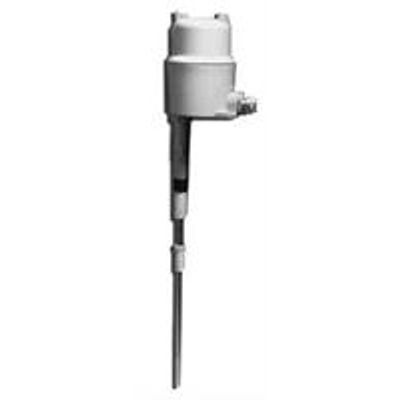
Model RFL-200 Series - Continuous Level Meters
RF Admittance/Capacitance is by far the most versatile technologies for continuous level measurement. The RFL-200 Series system can measure level of liquids, slurries, interface and granular in tanks by using special circuit to ignore material build-up on probe. There are no moving parts to wear, plug, or jam. There is only a single tank penetration, usually at the top of the tank above the actual process level. There are several sensing element designs to handle a wide range of process conditions anywhere from cryogenics to 1000 degrees F and from vacuum to 10,000psi pressure. The electronic unit is loop powered. Remote models are available for high temperature or high vibration applications.
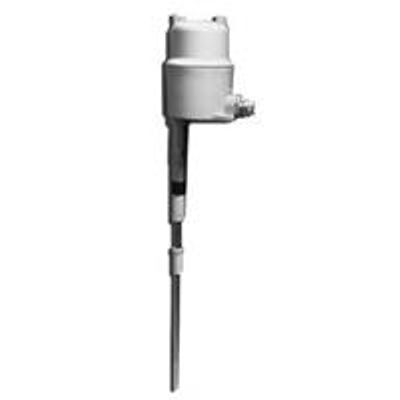
Model RFS600 RF - Admittance/Capacitance Level Switch
High and low Point level control for liquids, slurries, inter face and granular stored in tanks, bins, silos or other containers. It also could be used as a plug condition detector in free-flowing granular solids. Using special probe and circuit to ignore material build-up on probe, RFS-600 is design for easy on-site installation and no moving parts for long term reliability in harsh environment. It can be powered by either 24VDC or 110/220VAC. Remote models are available for high temperature or high vibration applications.
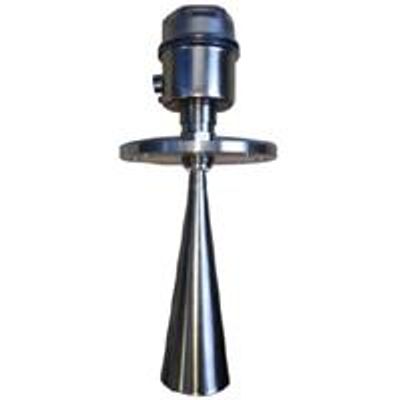
Delta Phase - Model RG7 - Radar Level Gauges
RG7 measures the level by transmitting radar pulses towards the object and receiving its echoes. The level is decided by the pulses travel time that is proportional to the distance between the sensor and the object surface. Upon reception, the microprocessor that runs the intelligent software in the sensor head analyzes the echoes, transforms them into the surface level values, and outputs the data. Since the radar pulses are hardly affected by the tank content and its environment like temperature and pressure, radar measurement is proven to be the most reliable gauging method in most applications. Additionally, because of the fact that the radar sensor is not physically contacting with the measured object, there is almost no maintenance required for the sensor.