


Envitech Bohemia s.r.o. products
Pollutants measuring systems
We design pollutant monitoring as a stationary or portable automatic measuring stations, which detect and record components of air pollution caused by traffic, thermo and energetic sources, chemical operation and secondary influences taking place in the atmosphere (when solar radiation affects primary pollutants). These automatic monitoring stations can be used in urban areas, on the border of hygienic protection zones in industrial areas or in an open space country. The measured substances include mainly: sulfur dioxide, nitrogen oxides, carbon monoxide, dust, ozone, carbohydrates, volatile organic substances, polyaromatic carbohydrates, and so on.
Soil Parameters Measurement
Soil parameters measurement is a specific area. According to customer specification we prepare a set of soil sensors, which we furnish with additional features for soil liquid sampling or for automatic data logging. We can also prepare the set to be portable and mounted on a particular vehicle. Soil parameters measurement is often accompanied by special measuring of specific characteristics of the ambient air and other meteorological parameters. For water detection we offer a device, which detects carbohydrates on the water surface using a special membrane. In case it detects a presence of pollutant it sends a signal via electric cable, radio or telephone and starts an alarm. This device detects particles as small as 0.1mm and it is very easy to use.
Water Analyzers
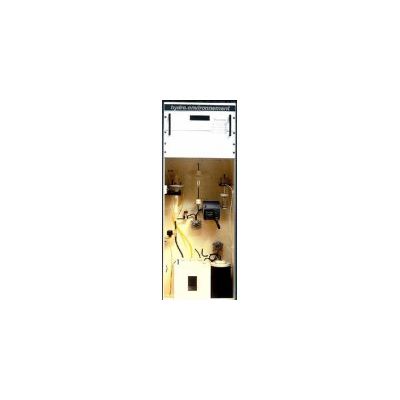
Environnement s.a is a leading company in the area of gas, dust and water analysis. Since its foundation in 1978, Environnement SA develops, studies, produces and delivers progressive automatic station with the newest available technologies. The company is based in France It is with no doubt the leading company in Europe with representatives in more than 70 countries.
Odor Substances Monitoring
Odor substances monitoring can be provided by OdoWatch system developed by Odotech, Inc. It meets the requirements for continuous monitoring systems operating at the odor site of operators of dumps, waste composing, sewerage plants, industries and other originators of unpleasant odor. Permanent measurement and emission development forecast secures better management and process control, improves efficiency of methods for lowering emissions and speeds up the reactions of operation staff in case of an accident on the device. OdoWatch system consists of electronic noses, so called odo-noses (e-noses) placed on the area around the source, either at the odor substance source or on the perimeter of the odor contaminated area in a way that it is possible to characterize emission of all odor substances.
Detection Systems
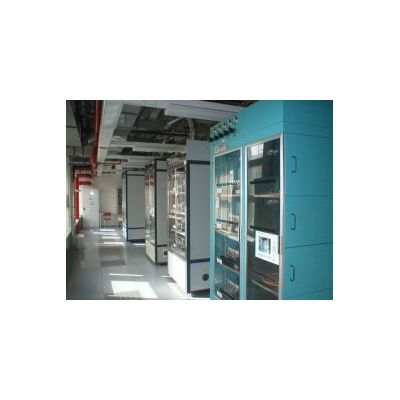
Our detection systems detect occurrence of non-standard situations of production device before the emergency occurs and thus secure, so called emergency prevention. Detection system usually consists of a sensor set spread over a protected area and connected to automatic control and evaluation system – central office, issuing emergency signals (sound, visual, action or technological enclosures). The protected area lies near the production plant. Common visualization system for one or more central offices is placed at dispatching. It is possible to detect mainly toxic gases and explosives such as hydrogen, phosphine, arsine, hydrogenchlorid, amonia, etc.
Analyzers
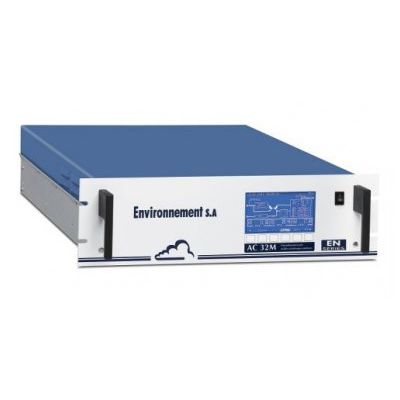
Model AC32M - Chemiluminescent Nitrogen Oxides Analyzer
The new Chemiluminescent NO-N02-NOx analyzer, model AC32M, combines our 20 years of experience with its predecessors AC30M & AC31M, with an enhanced electronics package and a modular component parts design. The outcome is an ultra compact and light- rack 3U, easy-to-use, che-miluminescence based analyzer capable of measuring nitrogen oxides at ppb levels. Applied to nitrogen oxides measurement, Chemiluminescence corresponds to an oxidation of NO molecules by 03 molecules. The return to a fundamental electronic state of the excited N02 molecules is made by luminous radiation, detected by the PM tube.
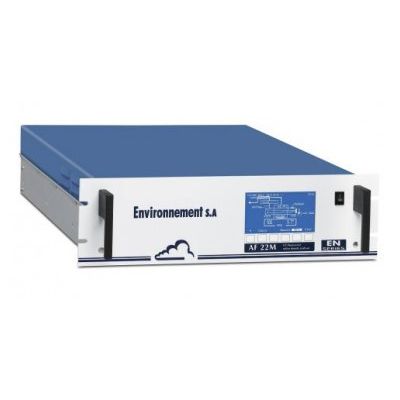
Model AF22M - UV Fluorescent Sulfur Dioxide Analyzer
The new model AF22M, sulfur dioxide analyzer, combines years of experience of a wide range of analyzers with an enhanced electronics package and a modular component parts design (measurement module, permeation module, 24V power supply module, analog input-output module, etc.). The outcome is an ultra compact and light- rack 3U, easy-to-use analyzer capable of measuring sulfur dioxide at ppb levels. Applied to SO2 measurement, the universally known UV fluorescent principle consists in detecting the characteristic fluorescence radiation emitted by SO2 molecules. In the presence of a specific wavelength of UV light (214 nm) the SO2 molecules reach a temporary excited electronic state. The subsequent relaxation produces a fluorescence radiation which is measured by a non-cooled photomultiplier tube (PM).
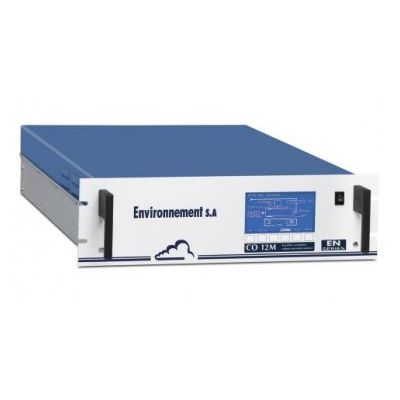
Model C012M - IR Gas Filter Correlation Carbon Monoxide Analyzer
The new NDIR CFC (Non Dispersive InfraRead Gas Filter Correlation) carbon monoxide analyzer, model C012M, combines over 20 years of experience in the NDIR CO measurement with an enhanced electronics package and a modular component parts design. The outcome is an ultra compact and light- rack 3U, easy-to-use, IR CFC based analyzer able to measure carbon monoxide with an excellent stability and accuracy.
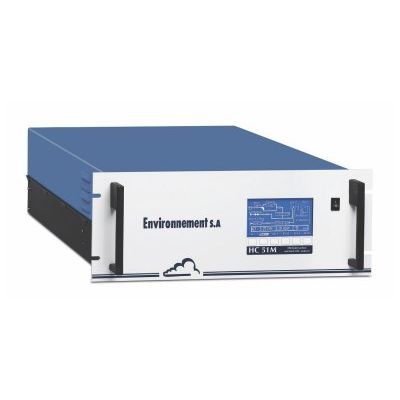
Model HC5IM - FID Total Hydrocarbon and Total VOC Analyzer
The analyzer uses the principle of flame ionization detection (FID) to measure the concentration of hydrocarbons in air. The analyzer`s electrometer measures the current generated by the ionization of the carbon atoms in the flame fueled by a hydrogen/air mixture. To distinguish between `total` and ``non-methane` hydrocarbons, an optional selective converter oven is used to oxidize all the non-methane hydrocarbons. The temperature controlled pneumatics prevents condensation. The flow is automatically adjusted and the instrument is provided with automatic ignition of the flame in case of flame out or power failure.
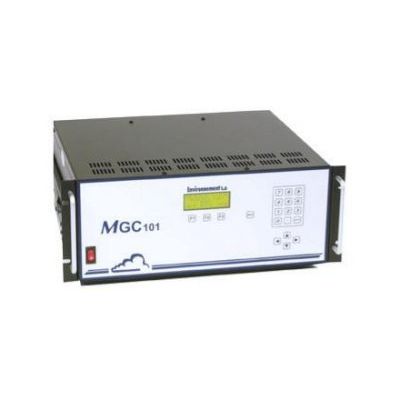
Model MGC 101 LCD - Computerized Multi-Gas Calibrator
The MGC101 consists of a single chassis supporting 2 thermal mass flow controllers, an ozone generation module, a mixing zone, a reaction chamber for gas phase titration, and control electronics. The mass flow controllers are calibrated to a NIST (National Institute of Standards and Technology) traceable primary standard. The calibration data consists of a comparison of desired versus actual flow over the full dynamic range of the instrument with linear interpolation between points. Calibration data is stored in non-volatile memory and may be updated by the user with a suitable standard. The MGC101 ozone generator is factory calibrated using a NIST traceable ozone standard. This temperature controlled, ultra-violet (UV) based ozone generator includes a precision photo-optical feedback circuit to compensate for lamp aging effects. The MGC 101 is available in either a standard rack mount or portable configuration.