


FISBA products

Imaging Optics
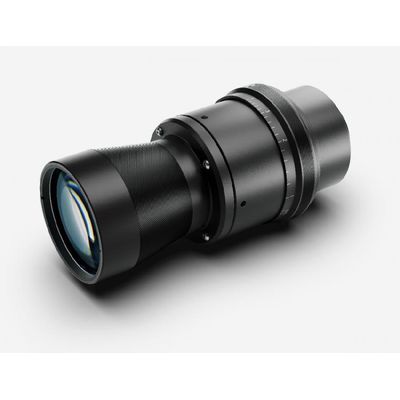
Laser Beam Shaping Optics
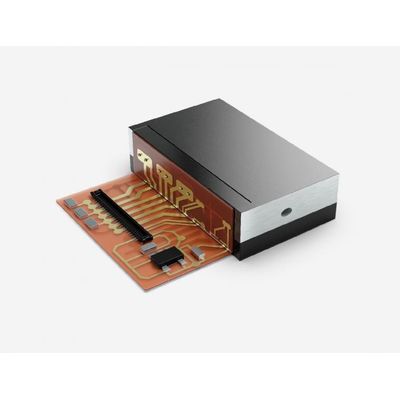
Micro Laser Modules
Life Sciences

Microscopy Optics
Optical microscopy has been a foundational instrument platform for understanding biological life since the pioneering cell imaging work conducted by Robert Hooke in the 17th century. It has grown from a primary research tool based on standard platform architectures and evolved into a highly specialized piece of equipment. It is ubiquitous across life science research, from DNA-sequencing to super-resolution imaging of proteins inside cells and used by drug developers to explore and understand the function and behavior of biomolecules and edits cells as they screen for new pharmaceutical drugs by imaging and analyzing.

Spatial Sequencing
Recent advances in biotechnology and sub-cellular imaging instrumentation have led to discoveries in fundamental life science biology and aided new developments in precision medicine. With the combination of fluorescence-based DNA-sequencing and super-resolution microscopy, it is now possible to image the location of individual biomolecules (e.g., proteins, mRNA) and understand how they behave and interact in the cellular environment with sub-100 nm resolution. This new technology frontier in life science research is known as Spatial Sequencing or Spatial Omics. By adding spatial resolution to the molecular information (gene profiling), this technology platform creates an unparalleled understanding of the relationship between an individual cell’s genomic (transcriptomic) profile, cellular morphology, and interaction with the local environment.
Industrial
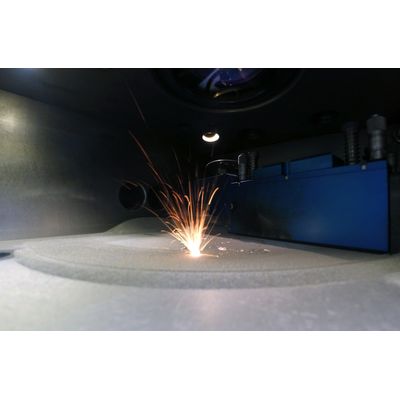
Additive Manufacturing
Additive manufacturing (AM), also known as 3D printing, is a process that creates three-dimensional objects by precisely layering materials based on a digital computer-aided design (CAD) model. A 3D printer uses the digital instructions to layer material, eventually generating a new 3D object. Several different modalities for 3D printing are available, with one of the most notable being powder bed fusion for metal AM. In this approach, high-power laser beams are tightly focused and scanned at high rates to melt small (30-50 um diameter) particles to create fully dense metal alloy parts that can range from a few millimeters to 1 meter in size.