


- Home
- Companies
- KLARO GmbH
- Products
KLARO GmbH products
Separation Technology
Light Fluid Separators
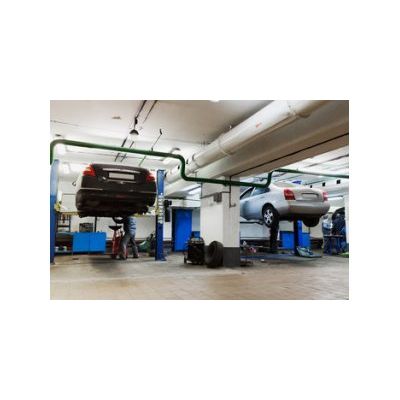
A separator must be installed wherever water is contaminated with oil, grease and other light liquids. Separation systems are classified according to the NS (Norm Size). As soon as you make an inquiry for a separator with us, we will calculate your required NS, which describes the flow rate in litres per second. Operators of the following facilities must

Accessories for Light Fluid Separators
All KLARO separator systems can be expanded with an upstream sludge collector. Additional sludge collectors are used for pre-filtration of contaminants contained in the water, whose density is greater than that of water. The contaminants are deposited on the bottom. In addition, larger floating material is already stopped here. The efficiency of the sludge collector is dependent on the surface area, the dwell time, the flow path and the volume. 50% of the sludge collector volume (with static water level) can be used for storage of the sludge. Once this level is reached, the contents of the sludge collector must be disposed of. Freed of coarse sediments and floating debris, the wastewater flows into the separator. The incoming volume of flow is regulated by a baffle and directed into the container with an optimized flow. This also initiates the sedimentation process.

Grease Separator
In premises where wastewater containing fat and oil accumulates, the wastewater must be cleaned through a grease separator before it can be discharged into the drain. A grease separator operates according to the principle of phase separation. It consists of a separation zone, a fat collector, a sludge trap and a sampling point. The system reduces the flow rate of the wastewater so that solids, such as food wastes, sink and settle in the sludge trap. The contaminants with lower density than water, i.e. fats and oils, float on the water surface. The wastewater liberated from the fat is fed into the main drainage system. The choice of the nominal size of the separator is stipulated in EN 1825. In addition, it is necessary to comply with the wastewater regulations of the relevant local/water authority (e.g. emptying every 14 days; or monthly with local/water authority approval).