


Postnova Analytics GmbH products
Detector
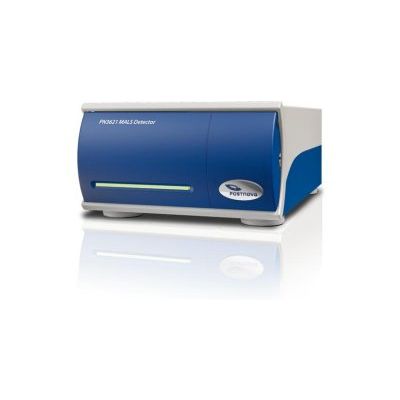
Postnova - Model PN3621 - Multi-Angle Light Scattering Detector
The PN3600 Series of Multi-Angle Light Scattering detectors has been especially developed for coupling with Postnova Field-Flow Fractionation separation systems. The MALS Light Scattering platform consists of different variants offering a flexible solution for all kind of FFF applications. Based on over two decades of practical experience in using and hyphenating FFF and MALS, Postnova offers the most flexible and powerful MALS solution available today. The unique PN3621 MALS is the top model of this PN3600 detector series, meeting the highest requirements in terms of sensitivity, precision and flexibility, and offers unique technical features:
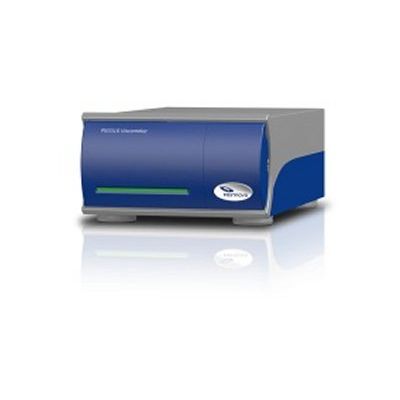
Postnova - Model PN3310 - Viscometer Detector
The Postnova PN3310 Viscometer detector is a state-of-the-art intrinsic viscosity detector for Field-Flow Fractionation (FFF) and Size Exclusion Chromatography (GPC/SEC). It is based on the proven Wheatstone-Bridge design for measuring the intrinsic viscosity of macromolecules in solution. The instrument is designed in the modern and compact Postnova FFF detector design.
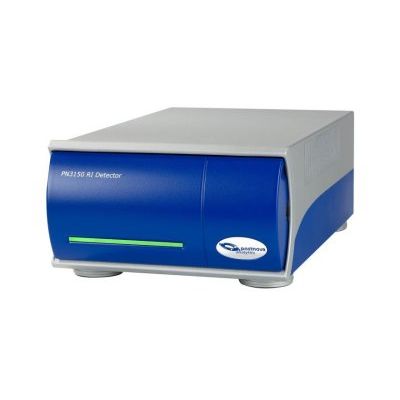
Postnova - Model PN3150 RI - Refractive Index Detector
The new PN3150 deflection type differential Refractive Index Detector is a detection system which offers the highest sensitivity combined with exceptional baseline stability at the same time. Thus, the system is ideally suited for „flow sensitive“ applications such as FFF and GPC. The unit comes in the new Postnova design and has a removable front cover. The manual touch keys, combined with the display, allow complete control of the detector without the need for any external software system. At the same time the PN3150 can be easily controlled externally using the integrated Ethernet interface connection port.
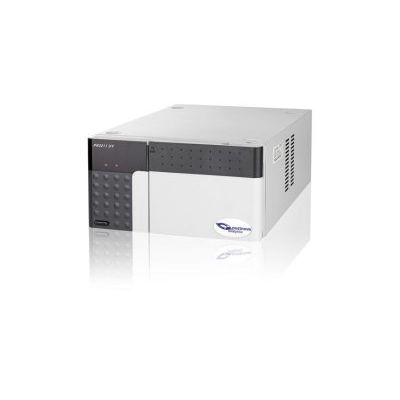
Postnova - Model PN3211 - UV Detector
The PN3211 UV Detector provides an exceptional level of sensitivity and stability. As a high sensitive UV detector the PN3211 has a noise level of 0.5×10⁻⁵ AU max., making it one of the most sensitive UV detectors (ASTM Standards).
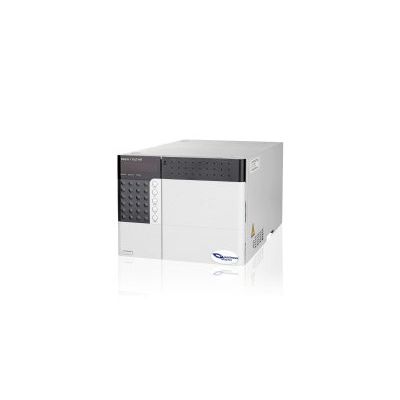
Postnova - Model PN3411 - Fluorescence Detector
The Postnova PN3411 Fluorescence Detector has an excellent basic performance which offers world-leading sensitivity, excellent ease of maintenance and validation support functions. They support a wide range of applications from conventional analysis to ultra fast analysis.
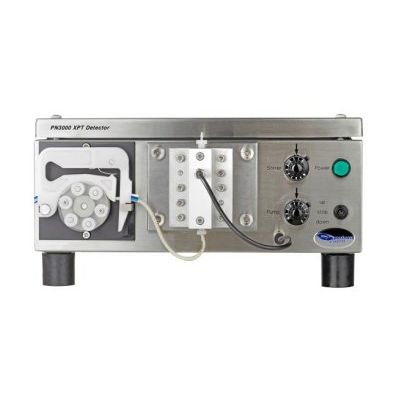
Postnova - Model PN3000 XPT - Micro Particle Detector
The Postnova PN3000 XPT Online Particle Size Detectoris a new type of detection system, which combines optical particle sizing with advanced CCD detection and fast image analysis. The system is idealy for coupling to FFF and enables the online identification and characterization of microparticles. Any kind of FFF separation system, such as Splitt, Centrifugal, Flow or Thermal FFF can be hyphenated to the PN3000 XPT. The detector employs a special inert glas flow cell, illuminated by a LED light source coupled with sensitive CCD detection for the optical identification and characterization of any microparticle from approximate 1 μm up to 300 μm. Thus, in combination with a FFF separation system, even the most complex particle systems can be characterized. The particle size and number, size distribution and shape can be easily obtained for each fraction. This makes the technology ideal for use in Pharmaceutical Technology, Biotechnology, Chemical and Environmental applications.