


SPIE - The International Society for Optics and Photonics training
Education
Practical Optical System Design (SC003)
This course will provide attendees with a basic working knowledge of optical design and associated engineering. The information in this course will help novice and experienced designers, as well as people who interact with optical designers and engineers, sufficiently understand these problems and solutions to minimize cost and risk. The course includes background information for optical design and an array of pragmatic considerations such as optical system specification, analysis of optical systems, material selection, use of catalog systems and components, ultraviolet through infrared system considerations, environmental factors and solutions, Gaussian beam optics, and production considerations such as optical testing and alignment.
Microlens Arrays: Properties and Applications (SC008)
Microlens arrays provide a flexible and powerful technique for solving a variety of optical design problems. This course will provide an introduction to the types of microlens arrays currently available and their optical characteristics. Topics include optical properties of arrays, fabrication techniques, and applications to coherent and incoherent imaging systems.
Introduction to Optical Alignment Techniques (SC010)
Design of Efficient Illumination Systems (SC011)
Introduction to Optomechanical Design (SC014)
This course will provide the training needed for the optical engineer to work with the mechanical features of optical systems. The emphasis is on providing techniques for rapid estimation of optical system performance. Subject matter includes material properties for optomechanical design, kinematic design, athermalization techniques, window design, lens and mirror mounting.
Fastening Optical Elements with Adhesives (SC015)
Introduction to Nonlinear Optics
Testing and Evaluation of E-O Imaging Systems
Length: 7 hours. The test concepts presented apply to CCD/CMOS cameras, intensified CCD cameras, night vision goggles, SWIR cameras, and infrared cameras. Using a systems approach, this course describes all the quantitative and qualitative metrics that are used to characterize imaging system performance. Laboratory performance parameters discussed include resolution, responsivity, random noise, uniformity, fixed pattern noise, modulation transfer function (MTF), contrast transfer function (CTF), minimum resolvable temperature (MRT), and the minimum resolvable contrast (MRC). The eye’s spatial and temporal integration allows perception of images whose signal-to-noise ratio (SNR) is less than unity. Since most imaging systems spatially sample the scene, sampling artifacts affects all measurements and significantly affect MRT and MTF test results. Phasing effects are illustrated.
Others
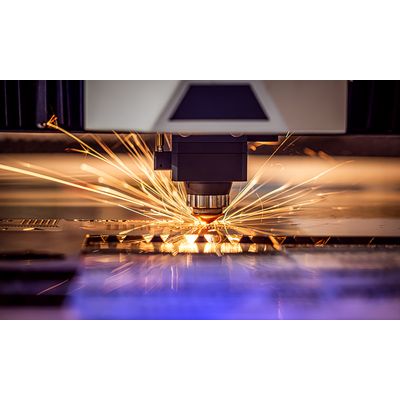
Technician Training Programs
Become a laser, optics, or photonics technician by enrolling in a one- or two-year training program. Find a technician training program. A degree or certificate provides a foundation for technicians to develop a basic understanding of the use of lasers and optics-enabling technologies to access a career that is exciting, fast-paced, and always changing. The following is a list of community colleges and universities that offer one- or two-year programs in laser, optics, or photonics technician certification. The demand for technicians is high, and employers are looking to hire now. Find a program near you and be part of the solution.

Eichenholz-SPIE Photonics Technician Scholarship
For students enrolled or planning to enroll in a laser, optics, or photonics technician associate or certificate program. Valuable support for students pursuing careers as optics and photonics technicians. Four $2,500 scholarships will be awarded to support tuition and fees, textbooks, computer, or computer upgrade, and supplies and equipment needed for courses of instruction. Scholarship winners will also receive a one-year complimentary SPIE Student Membership.