

TS NCT products
PVD Coatings
Our leading-edge PVD (Physical Vapor Deposition) process applies extremely thin film to a variety of substrates. In the mid 1800’s a scientist named Faraday evaporated thin films in a vacuum when he exploded wires in his laboratory. It was not until the late 1800’s that the first films would be deposited in a vacuum by Nahrwold. This was the beginning of the vacuum deposition method that we now call PVD (Physical Vapor Deposition) coating. The application of this technology remained primarily academic until the post World War II era. The branch of PVD coating technology called ion plating was not developed until 1963 by Donald Mattox.
DLC Coating
Introducing the New Standard for DLC (Diamond-Like Carbon) Coatings: CertessTM Carbon. What is a Diamond-Like Carbon (DLC) Coating? In recent years, a new generation of PVD + PACVD (plasma-assisted CVD) carbon has gained widespread commercial success. Carbon can exist in three allotropic forms: In a diamond crystal structure, it is one of the hardest known materials. In a graphite crystal structure, is very soft and lubricous. Diamond-like carbon (DLC) coatings combine the properties of diamond and graphite: high hardness levels, in the range of conventional tribological PVD coatings (1500 - 3200 HV), coupled with a coefficient of friction which is 200-500% lower than that of conventional PVD coatings. (See illustration below.)
Salt Bath Nitriding
Our Melonite QPQ® process provides superior protection against wear and corrosion. The Melonite QPQ process is a multi-step process that provides a very uniform consistent nitride layer on your components. The first step of the process is a preheat to raise the component`s surface temperature to about 700 - 800°F in air. The product is then transferred to the MEL 1 / TF 1 tank containing the liquid Melonite salt to begin the nitrocarburizing process. The salt melt mainly consists of alkali cyanate and alkali carbonate. It is operated in a pot made from special material, and fitted with an aeration device. The active constituent in the MEL 1 / TF 1 bath is the alkali cyanate. The nitrocarburizing process step is conducted in the MEL 1 / TF 1 bath at 896-1166°F; the standard temperature is usually 1076°F.
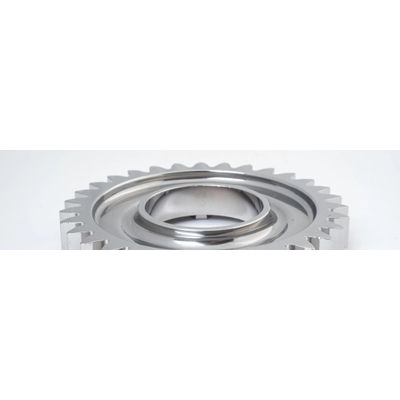
REM Isotropic
REM® Isotropic Finishing cost-effectively mitigates surface roughness to reduce friction and improve wear. Finishing has become more important as companies look for solutions to improve the performance of components in applications where they will experience friction and wear. REM Isotropic Finishing mitigates a component`s surface roughness to reduce forces and improve the sliding friction between two contacts. Manufacturing processes such as machining, forming, and grinding are directional, and leave machining or grinding lines on the surface of the part, as shown in Figure 1. This limits how much they can reduce surface roughness. The directional lines produced by these processes may exhibit low friction when components contacting the surface are sliding in one direction, but exhibit greater friction if sliding perpendicular to the machine lines.