

ULTRAPAVE Corporation products
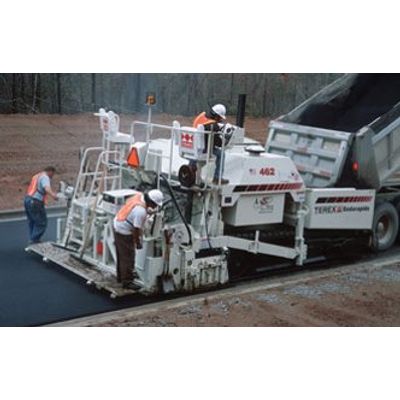
Polymer Modified Asphalt
Today’s increasing loads, greater traffic volume and the need for better, longer-lasting roads demand better service from paving materials. Asphalts modified with ULTRAPAVE® SBR Latex Polymers offer the best method of improving binders for highway, street and airport paving and maintenance projects. ULTRAPAVE® SBR Latex Polymers were created specifically for modifying asphalt binders. ULTRAPAVE® SBR easily blends with the asphalt to form a homogenous reinforced composite.
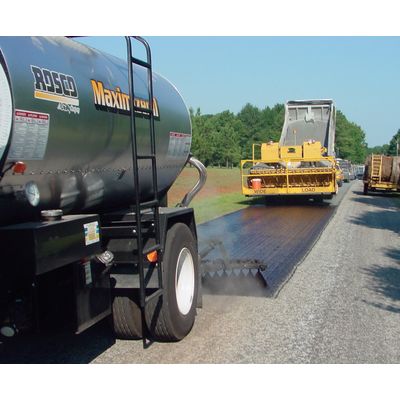
Polymer Modified Asphalt Emulsion
SBR LATEX POLYMERS FOR MODIFICATION OF ASPHALT EMULSIONS: SBR latex polymers are ideally suited for use as polymer modifiers for asphalt emulsion since they are also water-based emulsions. These polymer emulsions are available in anionic or cationic compatible forms with variations of each type available for improvements in properties such as elastic recovery, torsional recovery, toughness and tenacity, and softening point. The liquid (water-based) form of SBR latex polymers permits customizing of the product for specific applications. The ULTRAPAVE® SBR Latex Polymer family contains two types of emulsions each with variations of latex polymers. Cationic latex polymers modify cationic emulsions, while anionic latex polymers can modify asphalt cements and anionic emulsions.
Polymeric Aggregate Treatment System
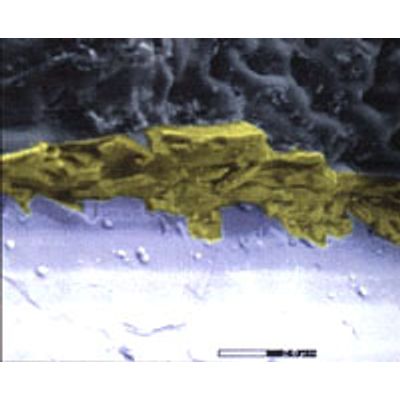
Polymeric Aggregate Treatment System
Performance, from an economic point of view, has been one driving force toward improving asphalt and paving technology. Finding an environmentally friendly solution has become a significant objective. These two factors have encouraged the development of polymeric treatment.
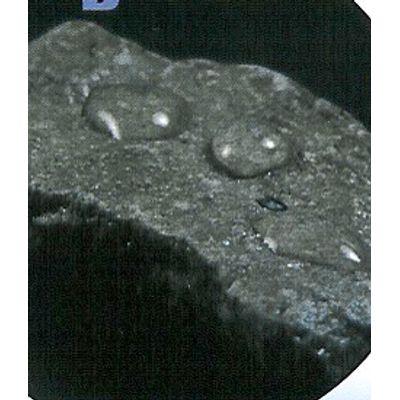
Evaluation Of Polymeric Aggregate Treatment System
The performance of hot mixed asphalt concrete (HMAC) mixtures is measured in terms of its resistance to rutting, fatigue, low temperature cracking, and raveling. The resistance of HMAC to these failures can be evaluated through the measurement of its moisture sensitivity and its temperature susceptibility. The resistance of asphalt concrete to moisture-damage is very critical to its long term performance. Moisture damage manifests itself as a reduction in the overall strength of the mixture. Therefore, if a HMAC mixture is susceptible to moisture damage, it could eventually fail in any one of the three failure modes, i.e. rutting, fatigue, low temperature cracking, and raveling.