

- Home
- Companies
- Fuel Tech, Inc.
- Products
- Fuel-Tech - Ammonia Generation System ...
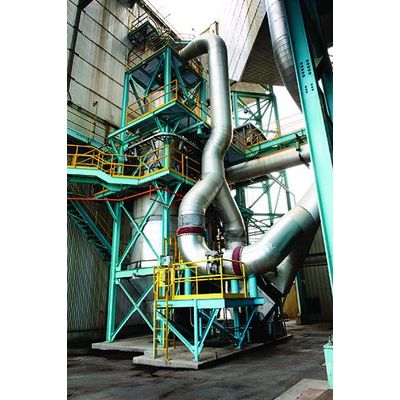
Fuel-Tech - Ammonia Generation System for NOx Reduction
Fuel Tech is the world’s leading supplier of NOX reduction and urea reagent technologies. The ULTRA® conversion process and systems are designed by experienced in-house engineering personnel and backed with significant commercial experience. The systems are manufactured to ensure quality and longevity while providing a reliable, safe, and easy to use system for the on-site generation of ammonia.
How It Works: Simple Process for Urea Decomposition
The ULTRA process generates low-pressure, dilute ammonia for SCR systems and flue gas conditioning applications by thermally decomposing urea. The diluted ammonia is fed through the ammonia injection grid (AIG) to the SCR. The ULTRA process controls ammonia generation by metering urea into a decomposition chamber. The generation rate responds rapidly based on urea flow rate. The ULTRA system is simple, consisting of a blower, heat source, decomposition chamber, urea storage, urea metering and process controls.
System Options
The ULTRA system can be customized for each application. In addition to natural gas, potential heat sources include electric heaters for small systems, and fuel oil or propane for larger systems. Where energy efficiency is critical, we can use pre-heated combustion air directly or in conjunction with a heat exchanger to preheat ambient air. Aqueous urea can be delivered to the site or created on-site using granular or concentrated urea solutions by adding condensate or demineralized water. It is important that quality requirements of the water being used to create the urea solution are followed to ensure no negative impacts on the SCR catalyst performance.
ULTRA 5®& ULTRA 1™ Process
The ULTRA 5® and ULTRA™ 1 systems are modular and compact for reagent demand rates of 5 lb/hr or less. The ULTRA 1 system consists of a single skid (4’x 8’ footprint) containing both the control module and decomposition chamber. For the ULTRA 5 systems, the chamber is typically separate from the control module. These compact systems offer a cost effective, simple solution for providing on–site ammonia generation of 1 to 5 lbs per hour. From package boilers to combined heat and power (CHP) facilities, ULTRA may be applied to new and retrofit SCR systems. Many small SCR applications may be located indoors. Anhydrous ammonia in bottles or 19% aqueous ammonia systems are often used for the SCR reagent feed. The storage of ammonia in confined spaces creates safety concerns of noxious fumes and fire hazards should leaks occur.
ULTRA-EX™ Utilizes Hot Gas Turbine Exhaust as a Heat Source
High temperature exhaust gas from the combustion turbine is extracted from the HRSG, directed to the Decomposition Chamber, and returned to the flue gas path. The extracted flue gas, which is drawn from the HRSG using a high temperature blower, thermally decomposes the concentrated urea solution that is injected and distributed in the ULTRA chamber. The temperature of the flue gas typically is greater than 800°F and it is particulate free. As with our other ULTRA systems, the urea injection rate is varied in response to ammonia demand changes, but the total flow rate of the NH3/air mixture remains relatively steady.
The ULTRA process simplifies SCR operation using safe urea reagent for the on-site generation of ammonia, with feed rates ranging from 1 to 1,300 lb/hr.
ULTRA-QS™ Quick Start Process for SCR Operation Within Minutes
ULTRA-QS™ has the ability to rapidly respond to changes in ammonia demand rate for combustion units using SCR technology to control NOX emissions. The system can be injecting urea and producing ammonia for the SCR within 10 minutes of receiving the operating permissive. This duration is acceptable for most GT/HRSG applications to avoid thermal stress on SCR and HRSG tubes from rapid temperature increase. The typical power cost of operating ULTRA-QS in standby mode is only $20 to $25 per day.
- Safe & simple urea reagent
- Eliminates the risk of hazardous chemical handling
- Low-pressure operation
- Capacities available for small and large SCR applications
- Integrated systems for retrofit or greenfield applications
- Backed by 57,000 MW experience with over 230 systems installed worldwide
The I-NOx system offers significant lower capital costs than traditional SCRs and provides the option of a staged capital investment. Components of an I-NOXSystem
SCR process design is the most critical step to successful SCR performance. Maximizing SCR performance and minimizing its impact on plant operations requires a thorough understanding of each application. Fuel Tech has many tools to provide the most efficient design for our ASCR™ Advanced SCR systems. Our experimental model studies combined with Computational Fluid Dynamics (CFD) modeling provide insight into the flue gas parameters and flow conditions to develop the optimum duct configuration for the SCR. Fuel Tech works with industry leading catalyst suppliers to determine the appropriate catalyst type and formulation for any given application.
The ASCR technology component of an I-NOx system incorporates a high performance SCR reactor where space permits. By utilizing an integrated technology approach, the catalyst quantity, weight, and space requirements can be minimized, potentially leading to the elimination of new foundations and the need to install new "steel to grade."
The scope of supply for Fuel Tech`s I-NOx systems include design, engineering, procurement, delivery, and startup of the following:
- Combustion Modifications in the Form of LNB and OFA
- NOxOUT® and HERT™ SNCR Systems
- Rich Reagent Injection Systems
- ASCR™ Advanced SCR Systems and Components
- Modeling and Process Design with Performance Guarantees
- Static Mixer
- Large Particle Ash Screen (LPA)
- GSG™ Graduated Straightening Grid
- Ammonia Injection Grid (AIG)
- Catalyst Specification and Supply
- SCR Reactor Design and Supply
- System Startup, Optimization, and Training Services
Fuel Tech’s extensive experience base and financial status allow us to offer single source responsibility. System installation and installation management services are also available to meet customer needs. Our integrated I-NOx systems may be applied to retrofit and new boiler applications, and our experience includes installation of systems on more than 800 units, SCR design and consulting support on more than 50,000 MWs, and over 20,000 MWs of AIG Tunings.
Fuel Tech’s I-NOx system is a combination of technologies that provide cost effective NOx reduction and flexibility in meeting rapidly changing regulatory and public policy drivers. I-NOx systems can be implemented in stages over time, providing financial advantages of both lower total installed capital costs and the ability to stage capital expenditures.
NOxOUT CASCADE
The NOxOUT CASCADE process is a specific type of I-NOx system using a special urea-based, in-furnace SNCR process with a compact back-end catalyst (SCR) module that is much smaller and less capital intensive than conventional SCR designs. The chemical reagent usage with NOxOUT CASCADE is improved over conventional SNCR.
On a stand-alone basis, the NOxOUT® process is designed to operate at higher than optimum furnace temperatures to minimize ammonia NH3 slip to 2 to 10ppmv. This is especially important for electric utility units where the NH3 can combine with SO3 emissions to form ammonium bisulfate (ABS), which can affect a boiler’s air pre-heater.If the SNCR process is designed with urea injection to take place in the optimum range, NOx reduction may be dramatically improved, but NH3 slip will also increase. Fuel Tech can take advantage of this condition by installing a compact SCR catalyst layer in an expanded duct section that can use this excess NH3 for further NOx reduction. Since the SCR catalyst need only remove a portion of the NOx, it is significantly smaller and less capital intensive than a full SCR system. NOxOUT CASCADE systems are installed on six 600 MW units in the People’s Republic of China, and on a 110 MW unit in the northeastern U.S.