


- Home
- Companies
- Scheuch GmbH
- Products
- Collecting Exhaust Air Plants
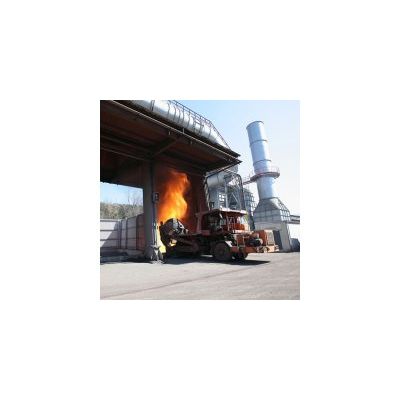
Collecting Exhaust Air Plants
EXTRACTION HOODS
Secondary collection of exhaust air
Producing and processing metals generally creates significant exhaust air volume flow rates - with energy consumption and contamination levels to match.
In this sector, not all processes or treatments can be directly coupled to or enclosed in extraction devices. This means that emissions (dust, waste heat, gaseous substances, etc.) have to be collected using secondary methods-that is, at a location other than the point where they arise - in order to achieve the desired level of air quality in the working area or environment in question. The emission stream dilution associated with this technique determines the required collection flow volume and therefore has a direct impact on the investment and operating costs for the dedusting plant.
Scheuch adopts a methodical approach to determining the characteristics of the emission stream in a verifiable way (observations are made during operation and then documented and evaluated) and to creating the ideal extraction hood design using CFD, with basic operational conditions taken into account.