


- Home
- Companies
- SUN Pipeline Solutions
- Products
- SUN - Efficient Aluminum Mandrel Pigs ...
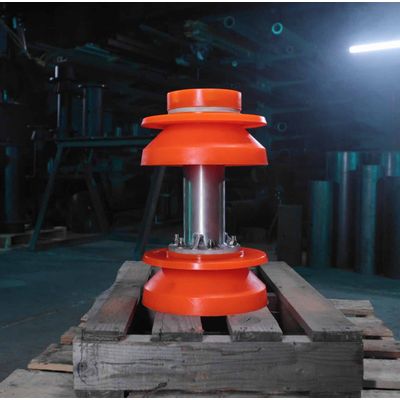
SUN - Efficient Aluminum Mandrel Pigs for Pipeline Maintenance
Efficient Aluminum Mandrel Pigs are essential tools for maintaining the integrity and optimal throughput efficiency of pipelines transporting gas and liquid products. These tools are crucial for various cleaning applications, including regular maintenance cleaning and debris removal. They are designed to remove paraffin wax and other contaminants that accumulate within the pipeline's interior. Additionally, they support effectiveness in batching processes by ensuring a clear separation of different product types, and play a significant role during commissioning and de-commissioning by aiding in the filling and displacing of products. The design incorporates bypass flow, allowing debris to be jetted forward, and is applicable for purging and liquid removal. These pigs also tackle issues like airlocks during the filling or removal process and are employed in drying pipelines post-hydrostatic testing. Furthermore, they can support gauging operations to detect diameter reductions, help apply internal coatings to reduce corrosion, and are integral in keeping new constructions clean, ready for operations. Proving or line sphere tools are used alongside for volume measurement and displacement in a pipeline segment.
The Aluminum Super Mandrel pigs, like steel mandrel pigs, give you limitless options with the addition of cups, discs, brushes, magnets & gauge plates, making them one of the most versatile product lines we offer. Aluminum Super Mandrel pigs offer immediate weight savings in comparison to steel pigs. Depending on size, aluminum mandrel pigs can have a 50% weight reduction in comparison to steel. This weight savings promotes safety and ease of use for those responsible for launching and receiving pigs and it reduces stress on the urethane components. The Aluminum Mandrel pigs offer unmatched versatility and benefit and are a great option to incorporate into your pipeline integrity program.
- Variety of Durometers
- Aluminum Body Pig
- Transmitter Compatible
- Brush Compatible
- Magnet Compatible
- Gauge Plate Compatible
- Even Wear
- Lightweight
- Runs More Center-Line
- Long-Lasting MDI Urethane
- Limitless Configuration
- Rebuild in the Field
Pipeline Operators perform regular pig / scraper tool runs in their pipelines to maintain integrity and throughput efficiency in order to safely transport gas and liquid products.
There are various methods to remove debris or contaminants from pipelines. The most used is pushing through the pipeline a pig/scraper tool with the product flow to push debris to a containment facility at the receive station.
One common component of crude oil is paraffin wax that accumulates in the internal diameter of pipelines. The removal requires the use of pig/scrapper tools in a progressive sequence with or without chemical batches.
One of the most effective methods of removing debris from pipeline segments is the designing of product Bypass Flow in pig/scraper tools to flush or jet debris forward as the tools traverse the pipeline segment. There are operating parameters required to incorporate this strategy.
The process of transporting more than one (1) product through a pipeline is called batching. The most effective way to separate batches is with two (2) high sealing pig/scraper tools, one leading and one behind.
This is the process of filling and displacing products in a pipeline is primarily done with high sealing pig/scraper tool(s).
The process to remove a product from a pipeline is called purging. Depending on the type of product, gas or liquid, a high sealing scraper/pig tool is normally used to push the product out of the pipeline.
There are several types of liquid that can accumulate in pipelines or are pumped in due to a process need, such as hydrotesting, that require removal/de-watering. The use of a high sealing pig / scraper tool is the most effective method to pushout the liquid to a containment facility at the receive station.
The lack of proper pig/scraper tool seal during the filling or removal process of a liquid with the use or presence of air or a gas in a pipeline segment can cause the condition commonly known as Airlock. This is the passing or mixing of air/gas into the liquid to the point that the tool is stopped due to the bypass and/or compression of the air/gas in the liquid batch.
When a pipeline segment is hydrostatically tested, the water is first introduced and afterwards removed from the pipeline with a high sealing pig / scraper tool. After the removing of the water, the humidity level is reduced to the required dew point per the pipeline operator specification. This process may require a combination of pig/scraper foam pigs and hot-dry air or nitrogen.
The initial option in detecting a reduction in size of the internal diameter of a pipeline is with a gauging plate mounted on a pig/scraper tool that will traverse the pipeline segment. The effectiveness of a gauging pig is contingent on the Launch / Receive process and Pipeline Operating Conditions.
The use of internal coating in pipelines is an effective method to reduce corrosion and debris buildup in pipelines. The coating is normally applied to the pipe joints prior to the construction of the pipeline segment, however it can be applied in existing pipelines with a process that uses pig/scraper tool (s) designed for this purpose.
An important process in the building of a pipeline segment is maintaining it clean and free of debris during and after construction. This is critical prior to the execution of a hydrostatic operation. The selection and running of cleaning, filling, de-watering, and drying pig/scraper tools is very important to meet the specifications to prepare a pipeline segment for commissioning and operation.
One of the options used by pipeline operators to measure volume and displace products in a pipeline segment is a pig/scraper tool commonly known as Spheres. These are made in different diameters, inflatable or non-inflatable, durometer hardness, and materials. They require Launch and Receive Systems designed for Spheres and/or conventional pig/scraper tools.