


- Home
- Companies
- IDM Instruments Pty Ltd.
- Products
- IDM - Model IDM-F0031-M1 - Foam ...
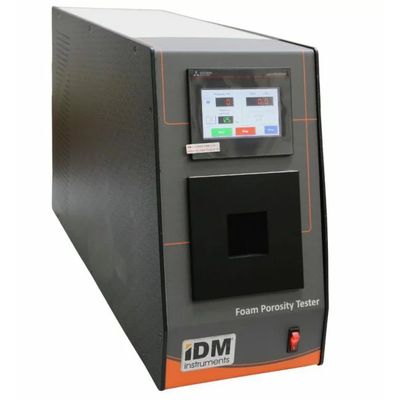
IDM - Model IDM-F0031-M1 -Foam Porosity Tester
The Auto Foam Porosity Tester monitors the porosity of flexible cellular polyurethane. This machine determines how easy air passes through a cellular structure. These airflow values are an indirect measurement of certain cell structure characteristics. This model adheres to relevant international standards for measurement of a flexible cellular. That is 50mm x 50mm x 25mm.
The test begins by placing a specimen in a vacuum chamber cavity. And creating a specific constant air pressure differential. The Pa Pressure can be set on the digital display. And once the FPT reaches the Pa, the rate of airflow at the set Pa locks in. Thus, the result stays on the Flow display automatically after completing a test in seconds. The digital operation makes it easier to do tests repetitively. Therefore, saves time and costs.
Using Foam Porosity Tester, manufacturers can check the quality of incoming material. Thus, ensuring quality assurance and reduces costs too.
A flexible cellular test piece is placed in a cavity over a vacuum chamber and a specified constant air pressure differential is created. The rate of air flow required to maintain this pressure differential is the air flow value.
- Air Flow Meter
- Pressure Meter
- Vacuum Motor
- Touch screen control system
- The test screen features the setup, start and stop touch buttons for testing. It displays the pre-set pa pressure and flow L/min.
- After a stable reading for 2 seconds, the test result screen will automatically be displayed showing results.