

- Home
- Companies
- Disperator AB
- Products
- Disperator - Model 500A-MC Excellent ...
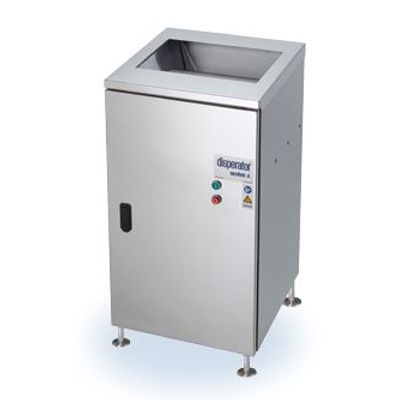
Disperator - Model 500A-MC Excellent Series -Food Waste Disposer System
The MC-cabinet with integrated food waste disposer is installed as a separate unit, eliminating mounting into existing interior, and is delivered ready to be connected to existing flushing water, drain pipe and electricity. Work stations handling large amounts of food waste frequently benefits from the large inlet of the MC-cabinet, allowing for effective handling without unnecessary interruptions. The inlet cone is delivered with a flushing nozzle, solenoid valve and line strainer already assembled for easy installation, and is partly covered by a labyrinth protection guard preventing accidental access to the rotating grinding unit during operation. The guard is fitted with a limit switch which stops the disposer motor if lid is lifted.
Food waste disposers within the 500A Excellent Series features grinders of specially alloyed steel, housings and mounting assemblies of stainless steel EN 1.4301 (AISI304) and a protection class of IP55 – all assuring long life expectancy and operational reliability.
DISPERATOR FOOD WASTE DISPOSERS are approved according to SS EN1717 (i.e. the flush water outlet with air gap above the hopper meets the standard for protection against reflux on liquid category 5 in fresh water pipes).
The food waste disposer has the following options:
- strengthened cutting features
- seawater resistant
- spark-free design for explosive environments
- Fast and easy transport of organic waste = no leaking garbage bags or heavy lifting to garbage bins.
- Reduction of bad odors, pests and bacteria formation = more pleasant working environment and improved hygiene.
- Fewer garbage collections, as well as for dry waste = lower total waste management cost.
- Fewer waste containers are needed and transported to storage locations = less time and expense for cleaning in the kitchen.
- Freeing of space and lower energy cost for cooled waste rooms = which would otherwise be used for storage of organic waste.
- Contribute to recycling through biogas production = possibility to establish a corporate environmental friendly profile.
- Improving hygiene and eliminating bad odors around garbage bins and buildings.
- Fewer transports of garbage means less vehicle exhausts, road wear and accident risks.
- Possibility of recycling through anaerobic digestion in the form of renewable energy (biogas).
- Better utilization of social investments in sewage systems and sewage treatment plants.
- The cost of pre-processing (grinding) of food waste at treatment plants/biogas facilities is avoided.
- Less garbage is deposited and instead utilized in a better way.