


LS Instruments AG
- Home
- Companies
- LS Instruments AG
- Products
- LS Instruments - Model LS Spectrometer ...
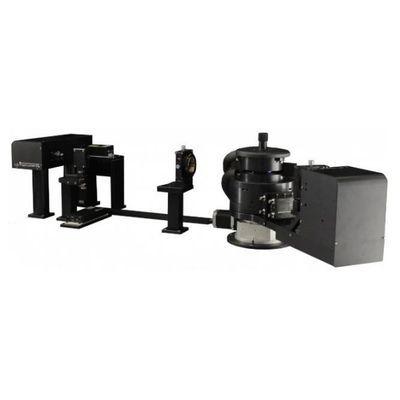
LS Instruments - Model LS Spectrometer -Dynamic and Static Light Scattering for Powerful Particle Characterization
The LS Spectrometer™ is a goniometer-based multi-angle static light scattering (SLS) and dynamic light scattering (DLS) instrument for particle characterization. It is a modular platform enabling a high degree of customization. Even in its basic configuration, the LS Spectrometer™ is one of the most sophisticated instruments on the market and is particularly well suited as an entry-model. Should your demands on the device increase over time, the LS Spectrometer™ can easily be upgraded to the 3D LS Spectrometer™ configuration at any time. Our patented modulated 3D Cross-Correlation technology opens up the world of error-free particle characterization of even highly concentrated samples.
Most popular related searches
particle characterization
particle sizing
spectrometer
light scattering particle
dilution sampling
particle size monitoring
sample concentration
particle monitoring
sample dilution
- Particle size
- Polydispersity
- Particle shape
- Viscosity
- Molecular weight
- Sample structure
- Error-free measurements with modulated 3D technology
- No dilution of samples required
- Best measurement sensitivity on the market
- Transparent data processing
- Characterize multimodal samples accurately
- Technology : Dynamic and Static Light Scattering (DLS and SLS)
- Scattering angle : 8° to 155° +/- 0.01°
- Hydrodynamic radius : 0.15 nm to 5 μm*
- Radius of gyration : 5 nm to 5 μm*
- Molecular weight : 360 - 3?600?000 Dalton*
- Correlator : 320 channels, delay time 12.5 ns to 15 h, auto- and cross-correlation
- Detectors : Two high performance APDs, QE 65%, dark counts < 250 count/s
- Laser wavelength : Wide range of choices: 457 to 685 nm
- Laser power : Wide range of choices: 20 to 500 mW
- Laser control : Fully automated active Laser intensity optimization
- Detection : Single mode fiber detection system with integrated collimation optics
- Sampled cells : Fits 5 and 10 mm diameter cylindrical cells
- : (min sample volume 50 μL)
- Software : Including Cumulant, CONTIN, CORENN, and Zimm Plot analysis
- Temperature : Up to 90 °C (optional 140 °C)
- Modular system : Wide range of optional modules