Membrane Filtration Process
GEA Filtration covers the full spectrum of membrane filtration. Membrane filtration can be used to meet very distinct liquid separations.
Reverse Osmosis
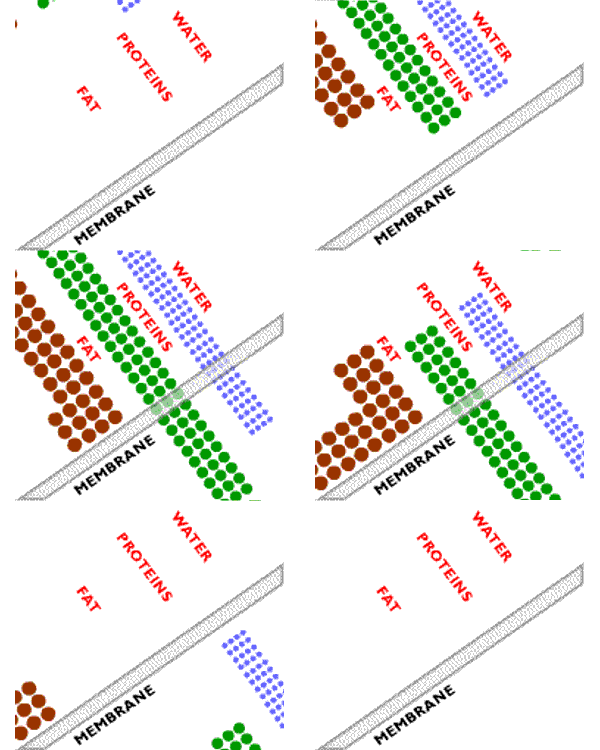
Reverse osmosis is a high-efficient technique for dewatering process streams, concentrating/separating low-molecular-weight substances in solution, or cleaning wastewater. It has the ability to concentrate all dissolved and suspended solids. The permeate contains a very low concentration of dissolved solids. Reverse Osmosis is typically used for the desalination of seawater.
Nanofiltration
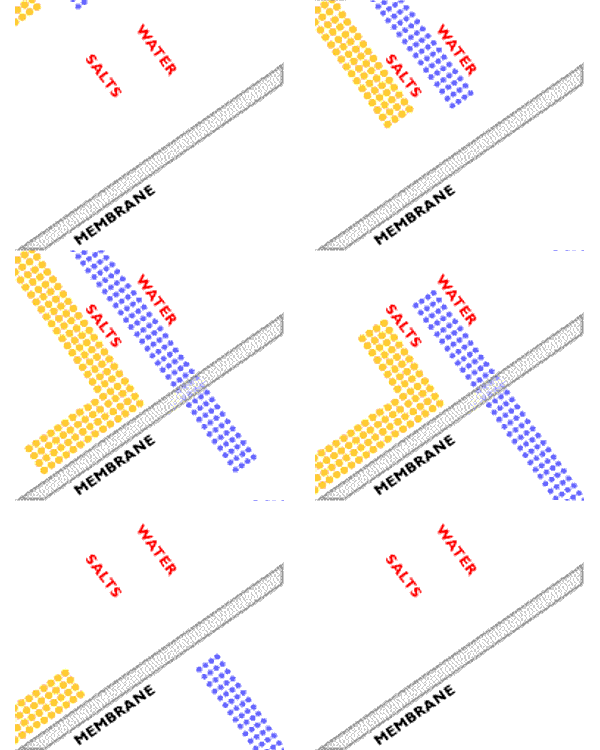
Nano-filtration is selected when Reverse Osmosis and Ultrafiltration are not the correct choice for separation. Nanofiltration can perform separation applications such as demineralization, color removal, and desalination. In concentration of dissolved organic solutes, colloidal solids, and polyvalent ions, the permeate contains monovalent ions and low-molecular-weight organic solutes like alcohol.
Ultrafiltration
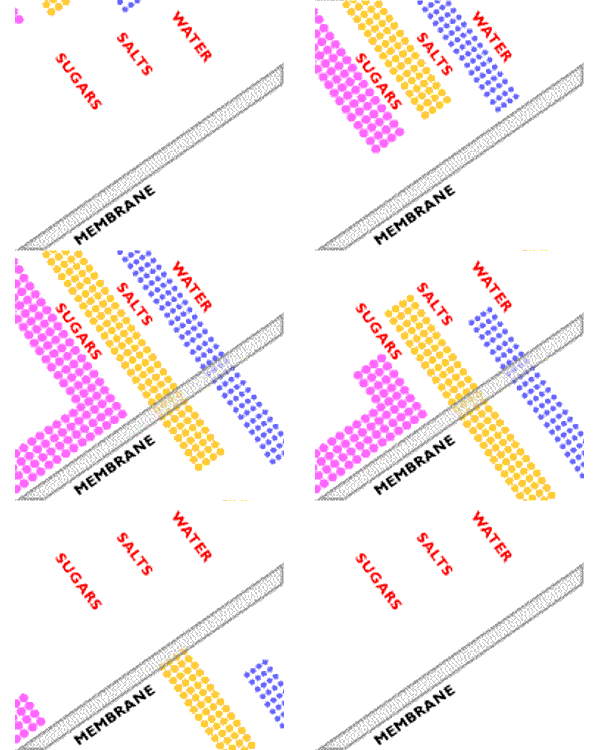
Ultrafiltration is a selective fractionation process using pressures up to 145 psi (10 bar). Ultrafiltration is widely used in the fractionation of milk and whey, and in protein fractionation. It concentrates suspended solids and solutes of molecular weight greater than 1,000. The permeate has low-molecular-weight organic solutes and salts.
Microfiltration
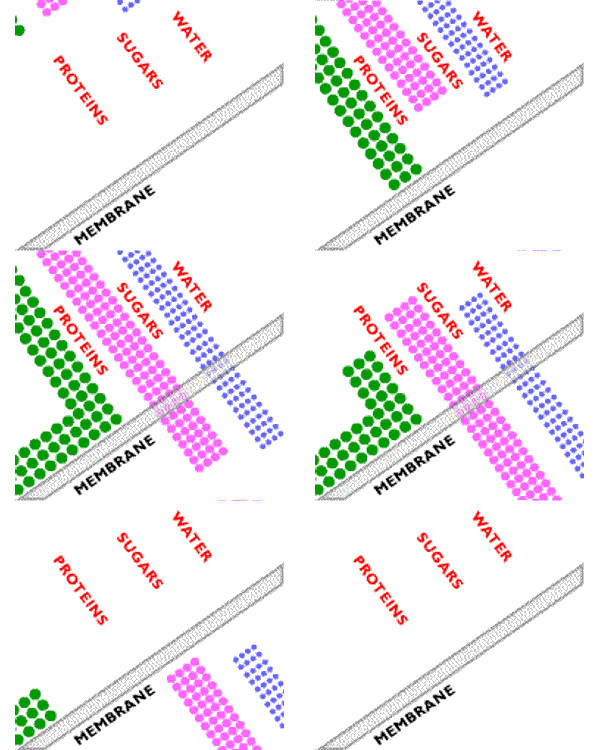
Microfiltration is a low-pressure cross-flow membrane process for separating colloidal and suspended particles in the range of 0.05-10 microns. Microfiltration is used for fermentation, broth clarification and biomass clarification and recovery.