


- Home
- Companies
- Breath Explor
- Products
- Model Breath Explor - Sampling Device
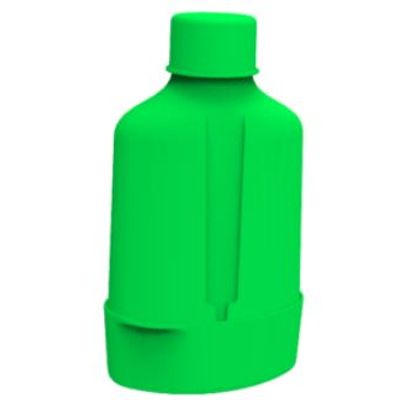
Model Breath Explor -Sampling Device
A user-friendly, multi-purpose breath sampling tool for drug testing and diagnostics. Breath Explor is a non-invasive and easy-to-use sampling device made in Sweden. Breath sampling is convenient for the donor; no need for syringes or intrusive supervision. With Breath Explor, sampling is so simple that a collecting officer can expect to collect ten Breath Explor samples or more per hour. To support the collection officer, we have developed a free instructive app. The samples are sent to our accredited partner laboratory for LC-MS/MS analysis. Breath Explor collects aerosol particles from the most distal parts of the lung through impaction. The samples can be analysed for the presence of drugs-of-abuse or clinical biomarkers. The device is intended for professional use in workplace drug testing, dependence clinics, clinical studies, and the monitoring of therapeutic drugs. The Breath Explor sampling device is patented in Sweden and the USA, and patent pending internationally.
The Breath Explor sampling device consists of a collector unit with three separate collectors, a body, and two caps. The device is easily disassembled for both manual and automated robot sample preparation. Read more about Breath Explor sample preparation here. Thanks to its three collectors (see Figure 1), the device offers multiple test options from one and the same sample. This makes the device attractive for forensic, clinical, and research purposes, where confirmatory testing, or diverse testing, may be required.
We are all familiar with the fact that we breathe to rid the blood of CO2 and fill it with oxygen. The alveoli are the smallest and most distal parts of the lungs, and this is where the CO2 for oxygen exchange happens (see Figure 3). Alongside CO2, the blood leaves other traces of substances and biomarkers, which get caught in the alveolar fluid. For an illustration of this exchange, see Figure 2.
Left: Figure 2. Illustration of the capillary exchange in the alveoli, kindly provided by prof. Kjell Alving, Uppsala University. Right: Figure 3. Illustration of the alveoli inside the lung.
When we breathe, aerosol particles of surfactant will travel out through the mouth or nose. These are the particles which we collect with the Breath Explor sampling device. Through impaction, the aerosol particles get caught on the surfaces of the Breath Explor collectors, and can subsequently be flushed out and analysed. This method creates minimal interference from background material during the analysis phase, as shown by Seferaj et al. 2018’s comparison of Breath Explor collectors with a filter device:
Figure 4. Cleaner extracts demonstrated with mass spectrometry scanning. From Seferaj et al. 2018.
As can be seen from the curves in Figure 4, even a blank synthetic filter showed significant interference from background material (from the filter itself), whereas the blank Breath Explor (BE) collector extract shows an identical curve to pure methanol.
The Breath Explor sampling device is delivered in a protective film, with caps covering the outlet and inlet. After these are removed, the device is ready to collect a sample.
Figure 5. The breathing manoeuvre used for leaving a sample with the Breath Explor sampling device
Before breathing into the device, the person leaving the sample will breathe out, hold their breath for three seconds, and breathe in. The next exhalation is done through the device. After repeating this procedure ten to twelve times, the test is complete. This particular breathing manoeuvre is motivated by the fact that it increases particle formation in the lungs and, as a result, the amount of collected material, as described by Prof. Alving above. A complete user’s instruction (in Swedish and English) can be found here and our instructive app Breath Explor Operator Guide, which times and keeps count of the number of breaths, can be downloaded from the App Store and Google Play.