


- Home
- Companies
- Malvern Panalytical B.V. - a Spectris ...
- Products
- Malvern - Model 4-ID - ...
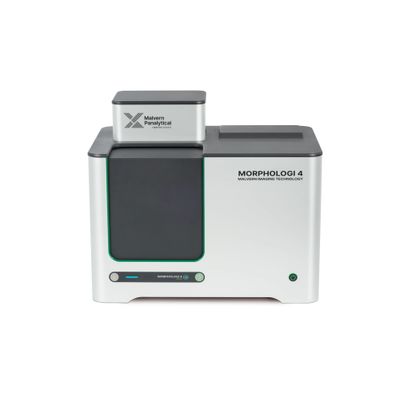
Malvern - Model 4-ID -Morphologically-Directed Raman Spectroscopy (MDRS)
Rapid, automated, component-specific particle characterization in a single, integrated platform with a trial subscription to Wiley’s KnowItAll® Raman Identification Pro package. Morphologi 4-ID delivers detailed component-specific morphological descriptions of particulate blends through Morphologically-Directed Raman Spectroscopy (MDRS). This combines automated particle imaging with Raman spectroscopy in a single, integrated platform, providing the power to unlock complex particle characterization problems. Morphologi 4-ID software works seamlessly with Wiley’s KnowItAll® Raman Identification Pro software platform to provide rapid identification of your Raman spectra.
The Morphologi 4-ID offers an exclusive capability, combining all the benefits of automated static imaging delivered by the Morphologi 4 with chemical identification of individual particles by Raman spectroscopy in a single measurement.
- Patented MDRS capability delivers representative component-specific particle size and shape data, delivering full characterization of your sample
- All the functionality of the Morphologi 4 combined with a dedicated Raman platform for both physical and chemical particle characterization in a single, automated measurement
- Automatically measures Raman spectra for hundreds or thousands of particles, saving valuable analyst time
- Intuitive software ensures suitability for experienced and non-experienced spectroscopists alike
- Easy correlation of morphological properties with chemical information provides the most comprehensive understanding of your sample
- 21 CFR Part 11 software option ensures regulatory compliance
- Conforms to standards: ISO 9276-6 and ISO 13221-1
- Adaptable workflows enable methods to be tailored to specific user or application requirements. Select particles for chemical analysis:
- manually, from particle images
- morphologically-directed, based on user-specified classifications (MDRS)
- automatically and objectively by the software
- Ability to export spectra in industry-standard format supports unknown component identification using 3rd party spectral libraries
- Tight control of laser power and acquisition time enables measurement optimization for a wide range of materials, from weak Raman scatterers to those that are thermally sensitive
The Morphologi 4-ID measurement procedure can be split into five sections:
Sample preparation
Spatial separation of individual particles and agglomerates is critical to robust results. The integrated dry powder disperser makes preparing dry powder samples easy and reproducible. The applied dispersion energy can be precisely controlled, enabling the measurement process to be optimized for a range of material types. Accessories that fit directly in to the Morphologi 4-ID’s automated stage are available for preparing suspended or filtered samples.
Image capture
The instrument captures images of individual particles by scanning the sample underneath the microscope optics. The Morphologi 4-ID can illuminate the sample from below or above, whilst accurately controlling the light levels.
Image processing
Use of either the automated ‘Sharp Edge’ segmentation analysis or the manually-controlled thresholding enables the detection of particles and the calculation of a range of morphological parameters for each.
MDRS
Components and particles of interest are targeted for Raman analysis. Particles can be selectively targeted based on their morphology, or particles representative of the whole sample can be targeted objectively by the Morphologi software.
Result generation
Advanced graphing and data classification options in the software ensure that extracting the relevant data from the measurement is straightforward, via an intuitive visual interface. Correlation scores to a reference library are calculated for each Raman spectrum acquired, enabling particles to be classified based on their chemistry. The morphological data associated with the particles in each chemical class is used to generate size and shape distributions, delivering component-specific morphological information. Individually-stored grayscale images for each particle are linked to their Raman spectra and provide qualitative verification of the quantitative results.
- Technology: Static automated imaging
- Particle size: 0.5 μm – 1300 μm (upper limit may be extended for some applications*)
- Particle properties measured: Size, shape, transparency, count, location
- Particle size parameters:
- Circle equivalent (CE) diameter, length, width, perimeter, area, maximum distance, sphere equivalent (SE) volume, fiber total length, fiber width
- Particle shape parameters:
- Aspect ratio, circularity, convexity, elongation, high sensitivity (HS) circularity, solidity, fiber elongation, fiber straightness
- Particle transparency parameters: Intensity mean, intensity standard deviation
- Integrated Sample Dispersion Unit: For fully automated dispersion and measurement of dry powders. Manual or SOP control of dispersion pressure, injection time and settling time
- Illumination: White light LED: brightfield, diascopic and episcopic; darkfield, episcopic
- Detector: 18 MP; 4912 x 3684 pixel color CMOS array; pixel size 1.25 μm x 1.25 μm
- Optical system: Nikon CFI 60 brightfield / darkfield system
- Lens (and particle size range):
- 2.5x: 8.5 µm – 1300 µm (nominal)
- 5x: 4.5 µm – 520 µm (nominal)
- 10x: 2.5 µm – 260 µm (nominal)
- 20x: 1.5 µm – 130 µm (nominal)
- 50x: 0.5 µm – 50 µm (nominal)
Raman Spectroscopy:
- Size range: 1 μm - 1300 μm*
- Spectral performance:
- 150 cm-1 to 2800 cm-1
- 6 cm-1 resolution measured on an atomic line source. Average of < 8 cm-1 across the range.
- Wavelength: 785 nm
- Power output from spectrometer: < 100 mW
- Power output at sample: > 45 mW at max power
- Laser spot size: 2 µm at 50x magnification
- Laser safety: Class 1
- Chemical identification method: Raman spectral correlation
Weight and dimensions:
- Dimensions (W, D, H): 810 mm (W) x 520 mm (D) x 685 mm (H) with carry handles: 1100mm (W) x 520mm (D) x 685mm (H)
- Weight: 80 kg (88 kg including carry handles)
- Power: 100-240 V ac 50/60 Hz (<100W load)
- Notes: * Sample and substrate dependent
Appropriate dispersion of the individual particles and agglomerates within a sample leads to robust and reliable results. Good spatial separation and representative sampling of the particles is required. To achieve this, a number of dispersion options are available with the Morphologi 4-ID.
Easy, reproducible, automated sample dispersion
Morphologi 4-ID comes with an integrated dry powder dispersion unit. It enables simple, reproducible preparation of dry powder samples. A precise amount of sample is dispersed automatically using a unique compressed air dispersion mechanism controlled from within the software, for reproducible dispersions every time.
Optional accessories – for analysis of particles in suspension
A range of instrument accessories supports preparation of samples on microscope slides, in wet suspensions or on filters, extending the capability of the Morphologi 4-ID beyond the characterization of dry sample dispersions. Each accessory fits directly into the automated stage area and is easily selectable in the Morphologi software.