


- Home
- Companies
- Lantec Products, Inc.
- Products
- Multi-Layer Media - Regenerative ...
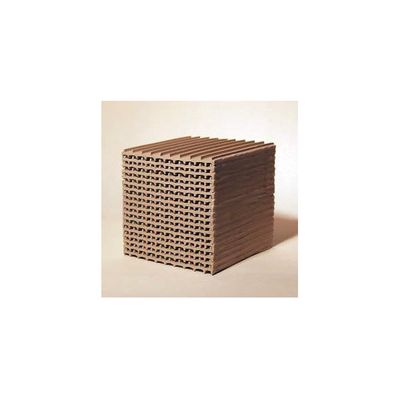
Multi-Layer Media - Regenerative Thermal Oxidizer Heat Recovery Media
MLM® from Lantec Products is the most efficient heat-recovery media for regenerative thermal oxidizers (RTOs). It comes in three configurations, with 160 ft2, 180 ft2, or 200 ft2 of heat-transfer surface per cubic foot. MLM®‘s parallel-plate structure packs more ceramic material into each cubic foot-up to 80% more than saddles-with less resistance to air flow. The result is a unique combination of high heat capacity, rapid heat transfer, low pressure drop, and great resistance to plugging by particulates. When 1” saddles are replaced with MLM®-200, bed depths can be reduced by more than 50%.
Original equipment costs less when RTOs are built with MLM®. Designing for high gas velocities reduces overall oxidizer footprint. Designing for lower bed depths and pressure drops enables the use of smaller blower motors with less costly starters and controls, and less expensive control box and installation wiring.
Cost-cutting retrofits with MLM® can raise thermal efficiency to reduce RTO fuel consumption, or lower the pressure drop to cut fan power use-or both-depending on the amount of MLM® installed per canister. Either way, operating cost savings give a rapid payback.
Capacity-boosting retrofits with MLM® allow RTOs to operate at gas velocities of 400 scfm/ft2 or higher, with good heat recovery and moderate pressure drop. What would otherwise require a second RTO can be accomplished just by replacing media and upgrading the fan.
VOC destruction efficiency improves when shorter bed depths effectively enlarge the combustion chamber, and decreased back pressure results in less leakage through switch valves.
Maintenance costs are reduced by using MLM® in RTOs treating dirty air streams. Random packing media are unfortunately efficient particulate filters, but MLM® with its parallel flow channels allows more particulates to pass through the canisters and be burned up. The result is less frequent shutdown for media cleaning or replacement.