


- Home
- Companies
- SCIREQ - an emka TECHNOLOGIES Company
- Products
- expoCube - Novel Air Liquid Interface ...
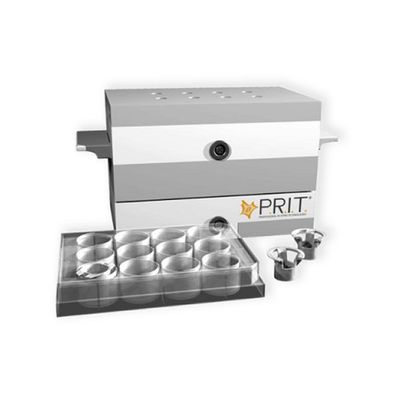
expoCube - Novel Air Liquid Interface (ALI)/Transwell Device
The expoCube is a novel Air Liquid Interface (ALI)/Transwell in vitro exposure system which permits highly reliable and effective deposition of aerosols onto cells and tissues. This exposure takes advantage of Thermophoresis, which guides small particles and gas onto the target tissue through a temperature gradient and increases the deposition rate from 2% to ~40%. The integration of the expoCube with SCIREQ’s inExpose® inhalation exposure platform will allow researchers to combine in vitro and in vivo modelling, resulting in an effective use of compounds and better compliance with the 3Rs principle (replace, reduce, refine animal experiments).
Accurate and efficient particle deposition profiles
The expoCube is engineered to create an efficient, uniform, and precise exposure of particulates onto target cells and tissues. Its flow paths were designed and optimized using advanced computational fluid dynamics (CFD) modelling. They allow a uniform deposition of airborne particles on the target cells, regardless of the particle size. The expoCube’s patented use of thermophoresis increases the deposition efficiency of small particles without imparting unnatural electrostatic charges onto the aerosols.
Physiologically relevant particle exposure
Aerosol exposure studies conducted at the air/liquid interface are more scientifically relevant and predictive of human biology than in vitro studies conducted in submerged culture. The use of Transwells® permeable supports allows cells to uptake and secrete molecules separately on both their basal and apical surfaces, thereby carrying out metabolic activities in a more natural fashion. The expoCube replicates human physiology more closely than traditional cellular exposure systems by preventing the exposure of the culture medium (i.e. the blood side) to the gas phase, thereby creating a more natural or “lung-like” exposure profile.
Optimized workflow
The expoCube exposes cells seeded on standard Transwell well plate inserts from Costar or Falcon. The use of standard commercial airway/liquid interface plates allow scientists to carry out different steps of the experimental process (e.g. cell culture, aerosol exposure, biological assays) on a single plate, from start to finish. This all-in-one plate ensures a productive workflow and minimizes the chances of handling errors. The expoCube design is therefore ideally suited for repeat-dose in vitro studies.
At the heart of the expoCube system is the cube itself. Commercial Transwell® plates are seeded with cells and inserted in the expoCube. The expoCube is compatible with a wide variety of aerosols such as nebulized drugs, dry powder formulations, atmospheric pollutants, agro-chemicals, volatile organic compounds (VOCs), complex gaseous and particle mixes generated by tobacco and electronic cigarette, and a wide variety of other airborne substances.
Once activated, the precision-engineered expoCube precisely guides aerosols onto the target cells and tissues. An innovative sealing mechanism fully isolates the apical and basal sides of the well. Heaters maintain the cells at a set control temperature of 35C throughout the experimental cycle.
Exposure sites
The expoCube features eight individual exposure sites, each linked to separate well inserts. During a typical experiment, four of the wells are exposed to an aerosol of interest, four other wells act as controls, and the last four wells are “non-exposure” control cultures.
Main flow and micro-flows
Two main flow channels carry the air and the aerosol across the system. Each of the eight exposure sites is fed by precision micro-flows that draw from either of the main flow channels. The main flow and microflow channels are controlled by the expoCube Control Unit with a high degree of accuracy.
Temperature control and thermophoresis
The Transwell plate temperature is precisely controlled to ensure a natural environment to the cells and to improve the particle deposition efficiency. As aerosol particles travel through the expoCube, they are heated up 50C. A large fraction of the particles are guided to deposit uniformly on the target wells. Traditional in vitro exposure systems typically only deliver ~2% of the small particles onto the Transwell. The expoCube achieves a vastly superior (~40%) deposition rate by relying on a combination of unique geometry and thermophoresis effect. Thermophoresis is a physical process by which the small particles follow the temperature gradient over a short distance.e