
Tuna - NOx Removal Technology
There are three mechanisms of NOx production; first thermal type; second fuel type and third quick type. The density of the discharged NOx is closely related to the boiler type, combustion conditions and the proportion of nitrogen in the fuel. Control measures can be divided into first and second degree. First degree measures refers to the measures taken during combustion and achieved in the boiler, which is low NOx combustion technology. Second degree technology is denitration as a way to clean flue gas, which involves adding reductants and catalysts into the flue gas after combustion to absorb NOx.
Danger of NOx:the direct and indirect harm of NOx to mankind and their living environment is much more dangerous. It will produce smog and create global warming. It will also damage the ozone layer and it is one of the main causes of acid rain.Main solution:Selective catalyst restoration denitration technologyReaction mechanism of SCR
Add NH3 into flue gas at the temperature of 280~420℃, the NOx in the flue gas will be converted into harmless N2 and H20, thus the purpose of reducing and removing the discharge of pollutants is served4NO + 4NH3+ O2→ 4N2+ 6H2O 2NO2+ 4NH3+ O2 → 3N2+ 6H2O 6NO2+ 8NH3→ 7N2+ 12H2O
Procedures of SCR denitration system
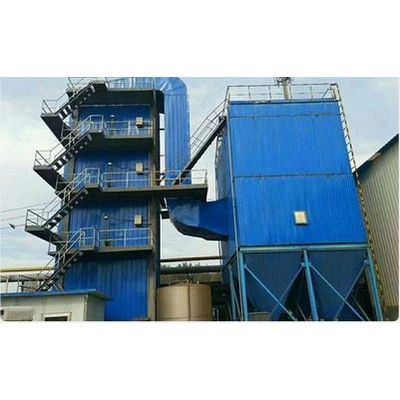
SCR denitration system consists of three sub-systems: SCR reaction device with its supporting system, the storing and processing system of ammonia, and ammonia injection system. SCR Process: the reductant (ammonia) is stored in ammonia tanks as liquids and conveyed by filling trucks; the liquid ammonia is evaporated by the evaporator before injected into the SCR system; the air ammonia is mixed with diluted air and enters the flue gas at the top of the SCR reaction device through the ammonia sprinkler grid; the fully mixed reductant and flue gas will be treated in the SCR reaction device to get rid of NOx.
High dust arrangement
SCR reactor will be placed between economizer and air preheater Advantages: High temprature, no need pre-heated, low investment and running cost
Low dust arrangement
SCR reactor will be placed behind precipitator and FGD system Advantages: less dust , low SO2 concentration, no poison phenomenon, longer service life Disadvantages: flue gas preheater will be need, higher investment and running cost
Features of SCR denitration technology in Tuna
-
Tuna has self- manufactured catalyst, knows its features very well, thus is able to select suitable catalyst for differents projects, including beehive, plate and corrugated plate types. Tuna can also reduce the dust gathering risk of catalyst by perfecting the catalyst parameters to ensure a low flue gas pressure drop, thus making the management of catalyst more convenient for th clients;
-
Rate of flue gas denitration≥ 90%;
-
SCR system is elaborately designed, using physical and digital analogy technology, which ensures efficient use of catalyst to reduce the consumption of ammonia and gathering of dust, and keeps a low flue gas pressure drop; The escape of ammonia and the transition of SO2/SO3 is low to prevent the formation of ammonium salt; the discharge of ammonia at the exit is lower than 3PPM, which completely meets the national standard of SO3 transition < 1%;
-
The coordination of acoustic dusting and steam dusting effectively removes the problem of catalyst clogging;
-
Good design of reaction device to facilitate the instalment of catalyst and ajust to various main catalyst suppliers to facilitate the change of catalyst suppliers;
-
The coordination of acoustic dusting and steam dusting effectively removes the problem of catalyst clogging;
Alternatives of ammonia and urea can meet different needs