

PycnoPlast
PycnoPlast - Model Pycno 489 -Nucleation Masterbatch
FromPycnoPlast
Fields of application Extruded and injection moulded articles made from PP resins. Examples: Extruded PP sheets, films, tapes and blow moulded and injection moulded articles, such as garden furniture, and automotive parts. Mode of action PYCNO 489 contains a very effective nucleating agent that outperforms traditional nucleation agents like talc, benzoate salts and phosphate ester salts. Nucleating agents increase the crystallization rate of and the number of spherulites in the polymer. A faster crystallization rate allows for higher productivity in moulding and extrusion processes. An increased number of spherulites in the polymer improves the stiffness and heat deflection temperature.
Most popular related searches
- Characteristics Composition proprietary nucleation masterbatch, PP based.
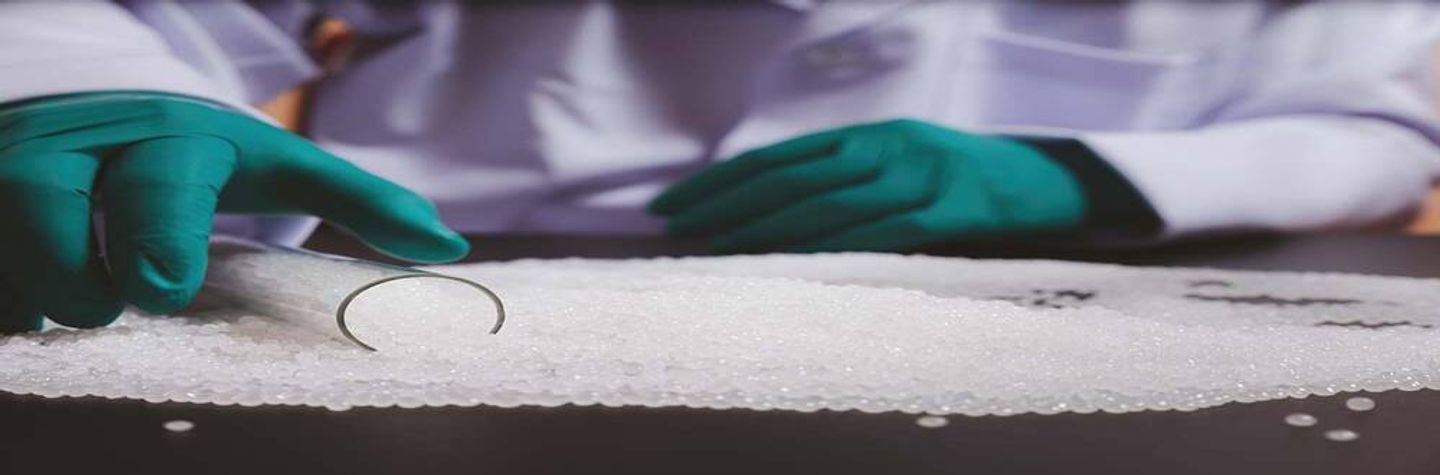
- Appearance White / off-white granules.
- Storage and handling 12 months from delivery in original packaging. Keep in cool, dry and well-ventilated area
- Temperature stability The product may be suitable for processing temperatures up to 300 °C.
- Dosing rate The recommended dosing rate is 2.5 – 5 wt% depending on the substrate, processing conditions and application.
- Dosing equipment Volumetric or gravimetric dosing units.
- Processing equipment All extrusion and injection moulding equipment.
- The nucleating agent realises very high crystallisation termperatures (> 125 °C), thus leading to significant reductions in cycle time.
- Improved and more isotropic mechanical properties, for instance increased stiffness. Up to 20% improvement in HDT (heat deformation temperature) and up to 10% improvement in flexural modulus can be achieved, while Gardner and Izod impact remain comparable.
- Pigment nucleation levelling: the nucleating agent overrides the nucleating effect of different pigments. Thus, products that are made in various colours will have identical dimensions and quality.
- Improved product isotropy providing more controlled shrinkage and less warpage, so higher quality products.
- Elimination of surface defects and voids.
- Suitable for food contact applications