


- Home
- Companies
- Riberi P. Costruzioni sas
- Products
- Riberi - Metal Structures for Industry
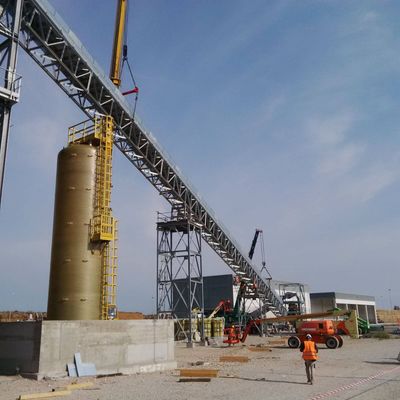
Riberi - Metal Structures for Industry
These are two different functional areas that have to respond to similar demands on the use of space and consequently employ similar structural typologies.
The primary need is to cover large spaces without intermediate pillars with covers at heights generally higher than those of the residential construction floors.
Large spans are the field of use where materials with high strength, such as steel, can be optimally exploited, often through the adoption of reticular systems.
But it’s not just a question of feasibility. Other aspects also play a fundamental role in the world of production and exhibitions: speed of execution, modularity and the possibility of expansion, the possibility of relocation.
If the question of seismic performance is analysed on the basis of the three fundamental parameters: mass – own period – ductility, the properties of metal structures are unquestionable.
Structures that belong to construction systems that usually have vertical closures and roofs made of lightweight prefabricated sheet metal panels with internal insulation layers, so the consideration of lightness extends to the construction as a whole. As far as design choices are concerned, it is easy to find oneself faced with inverted priorities with respect to multi-storey buildings.
The masses are so small that the seismic action becomes secondary to the horizontal action due to the wind, proportional to the width of the surfaces.
The advantages of adopting a steel construction for these structural types are emphasized in seismic zones.