


- Home
- Companies
- Droplet Measurement Technologies (DMT)
- Products
- DMT - Model UHSAS-G - Ultra-High ...
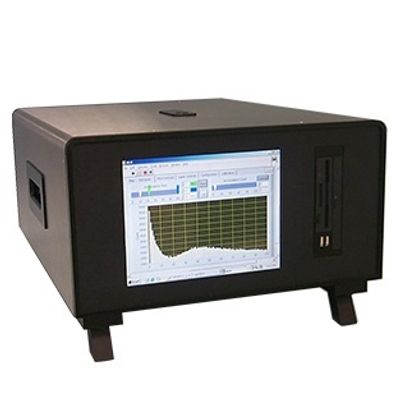
DMT - Model UHSAS-G -Ultra-High Sensitivity Aerosol Spectrometer
The UHSAS-G is an optical-scattering, laser-based aerosol particle spectrometer for sizing particles in the 0.06 µm to 1 µm range. The instrument counts particles in up to 100 user-specified sizing bins, with a resolution as fine as 1 nm/bin. This high sensitivity makes the UHSAS-G ideal for aerosol research and filter testing.
Superior Resolution
Get accurate sizes for even the smallest particles, and eliminate sizing uncertainty associated with scattering spectrometers that measure at sizes larger than the excitation wavelength.
High Throughput
Categorize particles by size in up to 100 bins (user selects number of bins and boundaries), and count up to 3,000 particles per second.
Exceptional Versatility
Rely on the aerosol spectrometry technique with two detection systems: a primary, highly sensitive APD-based system to size smaller particles and a secondary PIN photodiode system to size larger particles.
Dynamic Gain Control
Compensate for small drifts in laser power via automatic gain control.
Advanced Tech & Software
Get an on-board computer, built-in monitor, and powerful LabVIEW-designed software for easy, real-time data analysis.
The UHSAS-G comes with LabVIEW-designed software that provides a user-friendly virtual instrument panel for the control and data display of the UHSAS-G. For instance, the program enables the user to do the following tasks:
- Start data recording and sampling
- View a histogram of particles binned by diameter, by transit time, or by peak optical signal
- Set boundaries for the histogram bins
- Control sample flow and monitor temperature, pressure, and laser current
- Calibrate the instrument
- Pollution Characterization
- A solid-state Nd3+:Y LiF4: ~1054 nm laser illuminates particles.
- Scattered light is collected by two pairs of Mangin optics – highly sensitive APD-based system to size smaller particles, and a secondary PIN photodiode system for larger particles.
- Amplification allows detection of particles as small as 60 nm.

- Auxiliary Parameters:
- Temperature
- Pressure
- Derived Parameters: Particle diameter
- Number Concentration Range: 3,000 particles/second
- Particle Size Range: 60 nm – 1 µm
- Aerosol Medium: Air, 0 – 30 °C (32 – 86°F)
- Lasers: Solid-state Nd3+:Y LiF4: ~1054 nm, 1 kW/cm2 intracavity circulating power
- Pump Laser: ~797 nm, 1.6 W
- Number of Size Bins:
- 100 max:
- 99 standard bins (98 if both overflow and underflow are enabled)
- One overflow bin and one underflow bin
- Sample Flow:
- Standard option: 1 – 100 standard cm3/minute (typically 50)
- Other options available
- Flow Control: Controlled from software; can also be manually adjusted via mass or volume flow controller
- Front Panel Display: Built-in monitor, 2 USB 2.0 ports
- Rear Panel Connections: System power switch, system power connection, Ethernet, exhaust vent, exhaust port, serial stream connection
- Computer System:
- On-board Intel®Celeron™ CPU
- 504 MB RAM
- 80 GB hard drive for data storage
- User interface via standard keyboard, mouse, and built-in monitor (included)
- Software: Executable program written in LabVIEW
- Data Recording:
- Output file written to computer hard drive
- Output data sent to serial port
- Communications Output: Serial, Ethernet, USB
- Power Requirements: 100-240 VAC, 47-63 Hz, 200W
- Dimensions: 56 cm L x 43 cm D x 24 cm H
- Environmental Operating Conditions:
- Temperature: 0 – 30°C (32 – 86°F)
- RH: 0 – 100% RH non-condensing
- Altitude: Sea level to 4 km
- Rack mountable unit (standard 19” instrument rack)
- External laptop (for remote applications, replaces flat screen display)
- Particle-by-particle (PBP) feature (supplies information on individual particles, including inter-particle times)
- Bidirectional serial stream communication control
The Lifecycle Care Program ensures UHSAS-G integrity and performance vital to your research mission for 3 years or 3 calls (whichever comes first). When conducting complex and time intensive laboratory or field measurements it is critical to avoid down time, and ensure data collection accuracy. The program consists of 3 key deliverables for each year or call:
- Instrument Logistics
- Instrument Integrity
- Instrument Performance
Lifecycle Care Program Includes:
LOGISTICS
- Shipping to and from Droplet Measurement Technologies facility
- Customs handling, including CARNET ATA if required
INTEGRITY
- Incoming instrument evaluation and health check
PERFORMANCE
- Software and firmware validation
- 100%-unit functionality test
- Calibration data
- Calibration report
- Certificate of calibration
At times, our technician might discover an instrument issue, which might not be covered by the Lifecycle Care Program or by our product warranty. In such case we will reach out to you with a service & repair estimate to allow you to provide us with the next steps of action.