


Compact-Pipe
Compact Pipe is a renovation procedure for trenchless rehabilitation of defective drinking water, waste water, gas and industrial pipes made of conventional materials such as cast-iron, steel, vitrified clay or asbestos cement. Owing to its small space requirement, this method is particularly well suited for intra-urban sites. Up to 600 m at a stretch can be renovated by applying the Compact Pipe method - in nominal widths ranging from DN 100 to 500. It is known as a `close-fit` procedure.
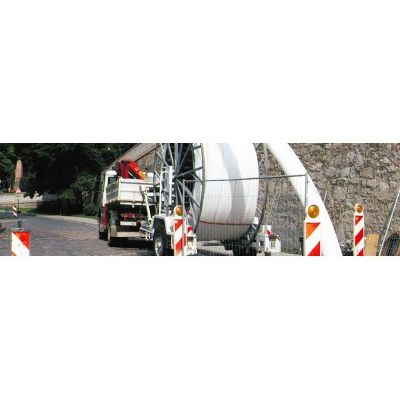
The pipe to be renovated is first cleaned and subsequently inspected with a camera. A rope winch then draws the pipe, formed into the typical C-shape and delivered on reels, into the rehabilitation section. In the case of pressure pipes, only two small trenches, a launch and an exit trench, are required for insertion. For sewers, the existing shafts are sufficient. After drawing in, the pipe ends are sealed and steam pressure is applied to the formed pipe. Here the procedure utilises a specific characteristic of PE material: the memory effect. Under the application of heat, the inliner "remembers" its original round shape and reassumes it. It is consequently pressed exactly onto the old pipe – a perfect close-fit is achieved.
Compact Pipe at a glance:
- Rehabilitation of all signs of damage
- Suitable also for pipes that are no longer structurally stable
- Quality and service life of the liner correspond to those of new pipes
- Efficient and cost-effective
- Civil engineering tasks are limited to small launch and exit trenches
- Excellent hydraulics thanks to smooth inner surface
- Minimal disruption of traffic
- Only brief interruption to supply and disposal services of surrounding properties