


- Home
- Companies
- I2M Associates, LLC
- Services
- Environmental Geology Services
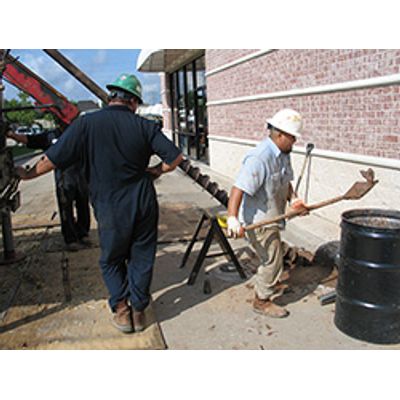
Environmental Geology Services
The environmental geology discipline, often a part of engineering geology, involves studies, investigations, and reviews that often include.
Environmental site assessments for real-estate transfers, mergers, often referred to as ASTM Phase I or II ESAs, or for determining impact of long-term production of oil and gas, waste disposal, or injection well operations, are investigated in similar phases but varies in program design depending on the conditions encountered.
environmental hazard investigations of growth faults in urban areas, water-well failures, hillside slumping, landslides, subsidence, etc., soil contamination investigations resulting from leaks from underground storage tanks at service stations, from dry cleaning facilities, and other from industrial sources of leaks or spills of hazardous materials, remediation studies of ground-water contamination from USTs, dry cleaning facilities, oil & gas production, and other subsurface investigations requiring sampling, interpretation and assessment of hydrogeologic data and hydrochemical analyses to determine conditions in the subsurface.
Subsequent Evaluations Require:
- a definition and interpretation of correlative subsurface lithology and stratigraphy,
- an evaluation of local hydrogeologic conditions for dewatering of open-cut and underground mines,
- an assessment of the potential development of drinking water supplies and associated impact of contaminants on the ground-water resources,
- an assessment of risk exposure from any potential contaminant present in the subsurface on human health and the environment, and
- a cost-benefit analyses of all applicable remedial approaches to clean-up.
This discipline may also be involved in mining to determine potential environmental impact of mining operations, or to evaluate subsurface conditions (i.e., ground-water quality and hydrogeologic parameters such as ground-water flow direction and rate, etc.).
Placed in a context of litigation, each of the above activities, analyses, evaluations, or assessments may have been conducted in a biased manner, by inadequate methods, or by personnel having inappropriate training and experience and the associated professional certifications and/or state licenses. These actions contribute, to one extent or another, to errors which can lead to unnecessary financial losses or injury to human health and/or the environment. However, as indicated by Campbell, et al (2004):
"This is not meant to imply that consultants and experts must perform without error. The standard of care applied to professionals in science and engineering requires that any professional product or testimony measure up to common practice in the industry. Of course, this definition is often considered to be a matter of law; it indicates that the expert does not have to be perfect. Because of the nature of field operations in the environmental field, errors may occur, either in constructing monitoring wells or in reporting on or interpreting the data produced by sampling those wells or other media. The potential impact of any errors on the expert`s conclusions is at issue here. If the error would materially alter the expert`s conclusions then the error becomes critical to a case. If, on the other hand, the error doesn`t impact the basic premise of an expert`s opinion to any significant extent [such as in typos or simple plotting errors that could be repaired] then the error can be considered to be of only minor importance to the testimony and does not change the basic conclusions of an expert. Any Daubert challenges of an expert need to keep these perspectives in mind."
In litigation, cases may involve discriminating between an opinion that is based on a failure of a perceived industry standard of care and / or practice of an engineered structure as a result of improper design or construction, or as a result of some natural subsurface conditions that changed, thus altering the original input assumptions. These cases can be too complex for juries to comprehend. Such cases are best left to the judge to assess the merits of highly technical arguments. Other cases may alsp involve shallow contamination in soil and underlying sediments or rocks as a result of leaking underground or aboveground tanks (USTs and ASTs), which store, and leak, a variety of petro-chemical and industrial products, intermediates or solvents. These too are often too technical for juries to understand.