Stabilisation / Solidification (S/S)
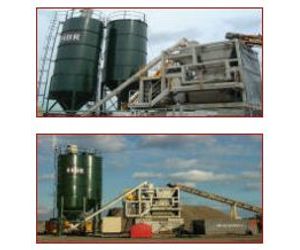
This process can be carried out insitu using either modified continuous flight auger soil mixing equipment or power mixers, which are attached to the arm of a long reach excavator, or exsitu using traditional excavators, batching plants and ancillary equipment. HBR has leading experts within the S/S field, who have wealth of experience in numerous such projects both here in the UK and Europe.
It is two processes in one; chemical fixation and mass encapsulation. It relies on the physicochemical reaction between binders, reagents and contaminants in soil, sediments and groundwater to reduce mobility, by mechanisms such as sorption, precipitation, complexation, hydrolysis, oxidation and reduction. Contaminants are transformed into insoluble salts and /or incorporated into the crystal lattices of hydration products and can be physically encapsulated at molecular level or en-masse.
Commonly used binders include ordinary Portland cement, special cements and a variety of pozzolanic materials, including pulverised fuel ash, granulated ground blast furnace slag and various forms of lime. There is a vast array of additional reagents that can be used to chemically fix specific target contaminants that cannot be treated by binders alone. These include clays, both naturally occurring and modified, zeolites, polysulphides, bauxsite, polymers, phosphates and combinations of them, the list is not exhaustive.
Performance is based on leachability testing, as contaminants are not removed or destroyed during the process. Therefore, in order to produce an optimum design mix formulation specifically to fix the contaminants present, HBR carry out an intensive schedule of laboratory treatability testing to ensure objectives can be met. Depending on the requirements of the end use of the site, S/S materials can be designed to form either monolithic low permeability materials or a more friable product.
S/S is suitable to target both granular and cohesive soils and sediments containing multiple contaminants including:
- metals and metalloids
- corrosives
- coal tars
- asbestos
- petroleum hydrocarbons
- polyaromatic hydrocarbons
- radio nuclides
- dioxins
- cyanides and spent oxides
- polychlorinated biphenyls
- chlorinated hydrocarbons
The process can also be used simultaneously to improve the geotechnical properties of poor soils to meet batching capacity and settlement specifications.