- Home
- Companies
- OPSIS AB
- Applications
- Continuous emissions monitoring ...
Continuous emissions monitoring solutions for chemical industry - Chemical & Pharmaceuticals
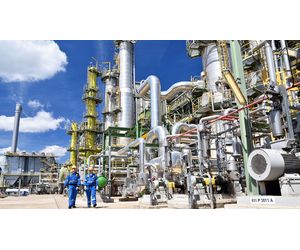
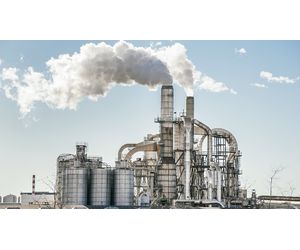
`Chemical industry` can comprise many types of industries, for example refineries, paper mills, fertilizer production, and sulfuric acid plants. Each individual industry may have its own special needs and special environments, but there are also many common factors. Regardless, process control and emissions monitoring at chemical plants can be challenging due to for example toxic, aggressive and/or explosive gases, and high temperatures. The use of extractive systems in such environments requires a lot of maintenance and can still cause major operational disruptions. However, the non-contact technology offered by OPSIS handles the challenges in an elegant way.
The OPSIS systems can measure all relevant gases for combustion process monitoring, such as nitric oxide (NO), nitrogen dioxide (NO2), sulfur dioxide (SO2), carbon monoxide (CO), carbon dioxide (CO2), oxygen (O2), and water vapour (H2O).
In addition to these parameters, OPSIS also offers systems for concentration measurements of, for example:
- hydrocarbons such as benzene, toluene, xylenes, ethylbenzene, styrene, methane at refineries and petrochemical plants, and in the steel industry
- by example, chlorine (Cl2), carbon disulfide (CS2), ozone (O3), and chlorine dioxide (CIO2) in the textile industry, at pulp and paper factories, and in the production of colour pigments
- phenol and formaldehyde at mineral wool factories and in the production of fiber boards
- hydrogen sulfide (H2S) and total reduced sulfur (TRS) for process and emissions monitoring at refineries and paper mills, among others
- ammonia (NH3) and hydrogen fluoride (HF) at, for example, fertilizer factories and refineries.
The OPSIS monitoring systems are based on gas analysers that have short response times, are accurate, and require minimal maintenance. The monitoring takes place contact-free along light beams where gas molecules can absorb parts of the light. In process and emissions monitoring, light beams are sent through the gas channels, or some of the gases are led into measurement cells through which the light is sent. The light is captured and led via optical fibres to the analyser which measures the absorption and calculates the gas concentrations.
A single analyser can measure several types of gases along several light paths. This gives a very cost-effective monitoring system.
There are multiple reasons for choosing OPSIS as supplier of systems for gas analysis. Among the key benefits of the methods and solutions offered by OPSIS are:
- can be installed in explosive environments
- one system for all components
- a single system can measure at several monitoring points
- combines the benefits of the UV-DOAS, FTIR-DOAS, and TDL techniques
- best performance according to QAL1 certification
- longest calibration interval according to QAL1 certification
- optional automatic QAL3 control
- non-contact monitoring, no sampling
- long maintenance interval
- low energy consumption
- gas calibration only once a year
- thousands of systems installed worldwide
- certified by, among others, German TÜV and under British MCERTS standards.