
- Home
- Articles
Refine by
Environmental Industry Articles & Analysis
67,925 articles found
As operators, engineering companies and technology providers exchange views at IFAT, one topic is increasingly taking centre stage: digital process control in water treatment. The focus is less on individual components and more on the question of how measurement data, operating conditions and documentation requirements can be recorded in a structured manner and utilised effectively. Increasing ...
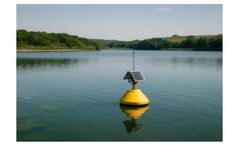
Executive Summary Chilmark Pond (200 acres) on Martha's Vineyard achieved 3× faster control of harmful algal blooms after deploying an MPC-Buoy in July 2025. Independent monitoring confirmed bloom dissipation in 8 days during the 2025 season, compared with 29 days in 2022 without intervention. CBS News Boston coverage in April 2026 highlighted community restoration and safe swimming conditions, ...

In many operations, output is tracked closely, but the definition of quality is often left unanswered. That gap is where inconsistency begins, and when bale weights vary from one cycle to the next, the impact extends beyond the production floor into measurable financial loss across labor, hauling, and commodity value. This second week of Harmony's How-To Tuesdays series tackles this important ...
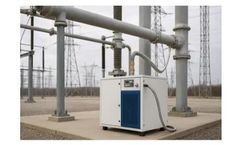
EMT Global reports on a case study of a Gas-Dry installation on a 345 kV critical transmission bus for a Midwestern utility, designed to evaluate in-field moisture reduction under real-world operating conditions where outages are rare and energized work, including SF6 testing, is not permitted.Project OverviewA major Midwestern utility deployed the EMT Gas-Dry unit on a mission-critical asset ...
Power-to-Gas (PtG) processes are central to the defossilisation of global economies and, in particular, the chemical industry. The intermittency of renewable energy sources necessitates long-term chemical storage of electricity through dynamically operated PtG processes. In CO2 methanation, hydrogen and carbon dioxide are converted to methane, synthetic natural gas. The dynamic operation of this ...
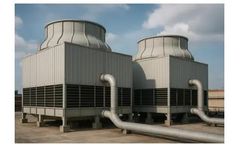
Industrial cooling towers are essential for heat rejection in many facilities but create conditions that favor Legionella proliferation. An integrated risk management program is required to maintain safety, reliability, and regulatory compliance, combining design assessment, water treatment, monitoring, maintenance, automation, and training.Understanding Legionella in Cooling TowersLegionella ...
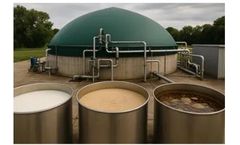
Dairy byproducts such as whey, hot whey, buttermilk, and filtration permeates are well-suited for anaerobic digestion, and yields can be further boosted with recuperative thickening. Why Anaerobic Digestion Works for Dairy Anaerobic digestion is a biological waste-to-energy process where microbes break down organic matter without oxygen, producing biogas, a methane-rich renewable fuel, and ...

A University of Washington study evaluates sustainable bioplastics from algae, focusing on sugar kelp-derived materials, their seawater biodegradability and comparative life cycle environmental impacts relative to polylactic acid (PLA).The algal approach offers a feedstock-independent alternative that is naturally biodegradable, addressing concerns about reliance on agricultural ...

Business intelligence for scientists: more than data dashboards When people talk about business intelligence tools, they often think of sales teams or finance departments. But what if you're a scientist managing complex environmental projects? Scientists running consulting or engineering firms face a different challenge. You need clarity, not complexity. You want to manage time, budgets, and ...
Discover the top water tech trials bottlenecks that derail innovation, and learn practical ways to avoid them. This is the second of a three-part blog series on how the Trial Reservoirs Initiative is helping accelerate tech adoption in the water sector and beyond. Want to steal our model? Find out how in our first blog, here. The global water industry is experiencing a boom in tech trials ...
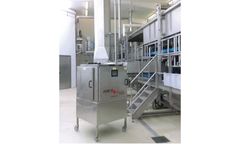
For 25 years, Jimco A / S has created some of the world’s most outstanding solutions for air, surface and waste-water purification and sterilisation and received the EU’s environmental award in ...

A practical look at why specialized project software helps environmental and engineering firms stay organized, informed, and on track. Managing projects in environmental consulting and engineering is complex. Field teams gather data, conduct assessments, and perform critical tasks while office teams handle analysis, reporting, and client interactions. Traditional project management tools fail to ...
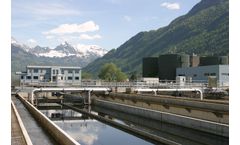
Wastewater treatment efficiency and reliability depend on many intertwined factors. Design and infrastructure—including plant type, capacity, layout, and redundancy—set the foundation for performance. Operational conditions such as flow variability, influent quality, maintenance practices, and staffing levels determine how well the plant meets demand. Treatment processes span primary ...

Introduction Many industrial workshops invest in fume extraction systems but still struggle with poor air quality, visible smoke, and inconsistent system performance. These issues are typically not due to the absence of equipment, but rather improper system design, incorrect usage, or lack of maintenance. As a result, common welding fume extraction problems persist despite the presence of ...
Introduction In welding fume control, the extraction unit often gets the most attention—but in practice, system performance is governed just as much by the duct network that connects capture points to the collector. Poorly designed ducting leads to pressure losses, uneven airflow distribution, dust settling, and ultimately ineffective fume capture at the ...
Introduction Automotive manufacturing is one of the most welding-intensive industries, involving processes such as robotic spot welding, MIG welding, and arc welding across body shops, chassis assembly lines, and component fabrication units. These processes generate large volumes of welding fumes containing fine metal particulates and gases, which can quickly accumulate in enclosed production ...
Heavy engineering shops work with big metal structures, thick materials, and long welding cycles. These conditions produce a large amount of welding fumes that spread out over large areas of production. Heavy engineering units often have more complicated extraction problems than small fabrication shops. It's hard to control fumes when there are big workpieces, moving equipment, and open spaces. ...
Introduction Welding operations across manufacturing environments generate airborne contaminants that must be effectively controlled to maintain safe working conditions. These contaminants include fine metal particulates and gases that can remain suspended in the air if not captured at the source. In fabrication shops and production facilities, improper control of welding fumes can lead to poor ...
Introduction Welding operations across manufacturing industries generate airborne contaminants in the form of metal fumes, gases, and ultrafine particulate matter These emissions, if not properly controlled, can accumulate within the workspace and expose workers to hazardous substances. In high-production environments such as fabrication shops, automotive plants, and heavy engineering ...
Introduction Fabrication shops rely heavily on welding processes such as MIG, TIG, and arc welding to manufacture structural components, assemblies, and custom metal products. While these processes are essential to production, they generate significant amounts of welding fumes consisting of fine metal particles and gases. In enclosed or semi-enclosed fabrication environments, these contaminants ...