

ABM Sensor Technology articles

In bulk material processing environments, accurately determining the volume and distribution of materials on conveyor belts in critical for efficient operations. Manual inspections are not only a safety concern, but also prone to human error. Traditional contact-based sensors suffer from wear and require regular maintenance, while non-contact sensors often lack the speed needed to capture real-time changes in material flow.
Solution
To address these challenges a
A municipality operating multiple elevated and remote water storage tanks faced inefficiencies in monitoring water levels. Tank level was monitored by physically traveling to each site, climbing tanks to visually inspect levels, and manually logging data. This process was time and labor intensive, posed safety hazards, and resulted in substantial costs. The municipality needed a more efficient, safer, and scalable solution—particularly to respond effectively during emergencies or sudden dem
In paving operations, precise distance control between the material transfer vehicle (MTV) and the paver is critical to maintain alignment of the conveyor over the hopper. Misalignment can result in material spillage, uneven hopper filling, and paving defects. An equipment manufacturer sought a robust sensor that could operate reliably in the demanding environment of hot-mix asphalt paving.
Challenge
Due to the challenging environment, finding a suitable d
A manufacturer of high-speed foiling vessels needed a sensor to monitor the distance between the hull and the water surface. This data is critical for real-time lift control and vessel stability.
Challenge
The sensor had to operate in challenging marine conditions—waves, wind, condensation, and salt water exposure—while delivering accurate measurements suitable for real-time performance optimization. Existing sensors lacked the necessary response tim
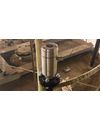
Non-contact radar technology ensures reliable measurement in agitated, vapor-rich tanks with internal obstructions
A manufacturer faced persistent issues with unreliable level readings in storage tanks containing volatile paint and solvent mixtures. These tanks are critical to production, and inconsistent sensor performance led to operational disruptions and increased maintenance. The facility needed a reliable, maintenance-free solution capable of withstandin
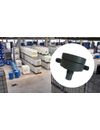
What is a level sensor?
A level sensor is a device used to measure the level or height of liquids and solid materials in various environments. They are most commonly used for tanks, silos and reservoirs to track media levels, provide real-time feedback or trigger alarms when the media level exceeds thresholds (i.e. full tank or empty tank).
Why are level sensors important?
Level sensors are important for various industries as they help to
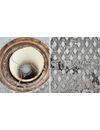
An engineering firm was tasked with developing an efficient solution for monitoring water levels within an infiltration trench as part of a stormwater management system. The trench, integrated with R-Tanks, collects and stores stormwater, reducing runoff and flood risks by facilitating groundwater infiltration. The firm required a reliable sensor capable of monitoring water levels and transmitting data wirelessly for remote monitoring.
Challenge
Accurate water l
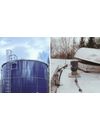
Small public water systems often face challenges operating within the constraints of a tight budget. A town was looking for a solution to monitor a critical remote water storage tank located at the southern end of town. With no AC power available and no SCADA system, regular manual checks were required, putting worker safety at risk. The town sought a reliable wireless solution to monitor water level in the 25 foot tall storage tank, enhancing both safety and efficiency.
So
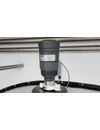
Accurate level monitoring in dairy storage tanks is crucial for operational efficiency and product quality. A facility sought a new solution to monitor their 6000 gal horizontal milk storage tanks measuring 8.5 feet (2.5 meters) in height.
Surface foam, condensation, and steam from clean-in-place (CIP) processes created significant challenges for level sensing. Existing ultrasonic sensors frequently lost their signal, leading to unreliable readings.
Solution
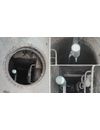
A city required accurate and reliable monitoring of the sanitary and storm water levels in manholes to enhance water management efficiency, prevent flooding, and proactively monitor infrastructure for maintenance requirements.
A variety of level sensors were tested with varying results. Sensors that involved direct contact with the water proved to be maintenance intensive due to build-up and damage from floating debris. As a result, the city was seeking a reliable solution that re