


Advanced Cyclone Systems, S. A. (ACS) applications

Several industries face problems from dust released during product transportation or processing. This is the case of the Textile, Wood Processing, Mining, Ink Manufacturing and other industries. Frequently, in order to maintain an appropriate level of particles suspended in the air (usually measured in Parts per Million by Volume), dust is extracted with air in strategically positioned caption points and typically recovered in cyclones or in bag filters.

Burning biomass and or coal releases particulate matter (PM) to the atmosphere, polluting the surroundings and harming the human health. PM emissions is a common problem in industries that operate furnaces or boilers to generate heat or steam for their processes or for electricity generation to be sold to the grid. The general arrangement of a biomass or coal combustion plant includes a cyclone pre-separator to reduce the concentration of particles after the boiler and a final dedusting system.
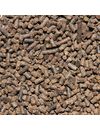
The drying of biomass is common to many industries, including wood pellet making, panel boards and many others, from coffee to olive-oil or animal feed. Technologically, these industries operate drum / rotary dryers to dry biomass. It can be a raw-material or a fuel for the manufacturing process. The pellet making industry presents a typical general arrangement which is replicated in other industries. It includes a “dryer” cyclone after a rotary dryer which is heated by a furnace (generally burning biomass). Usually, a fraction of air is recirculated back to the dryer for energy recovery.

Separating particles from the air at high temperature serves multiple needs that go from thermal energy recovery in several industries to improving the economics of power and incineration plants.
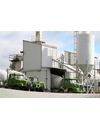
The control of clinker fines emissions after the heat exchanger, placed downstream of the clinker cooler, is usually a problem for cement plant managers. The process is characterized by high material abrasiveness, high loads and variable flow rate in normal and maximum conditions.

Calcination is a process that involves heating a substance, typically a solid material, at high temperature with limited supply of air or oxygen. The purpose of calcination is to remove volatile components and drive off impurities or to transform the material into a more desirable form for further processing.

Steel and ferroalloys manufacturing processes involve high temperature exhaust streams, often at more than 900ºC. Typically, the gas flows from the furnace (usually electric arch type) and goes into a gas conditioning tower to cool down below 200ºC so that it can be treated by a Bag Filter. It`s also common to have ESP´s as end dedusters that can be preceded by a multicyclone serving as pre-separators.
For PM emission control in high temperature exhaust streams, such as those from fuel oil boilers, common dedusters like bag filters, have very high maintenance costs. The diesel and fuel oil fly ash can be quite sticky and clog to filter elements, which can be minimized with costly protection reagents or frequent filter elements changes. Fuel gas cooling is needed in front of the filter when temperatures are higher than 200ºC.


Several industries face problems from dust released during product transportation or processing. This is the case of the Textile, Wood Processing, Mining, Ink Manufacturing and other industries. Frequently, in order to maintain an appropriate level of particles suspended in the air (usually measured in Parts per Million by Volume), dust is extracted with air in strategically positioned caption points and typically recovered in cyclones or in bag filters. When filters have to be used to increase capture efficiency, operating problems may arise, usually due to condensation and particle aggressiveness.