


Dispersion Technology, Inc. (DTI) articles
Abstract:
We have examined mixtures of toluene, a Newtonian liquid, with several non-Newtonian liquids (i.e. surfactants) across the full composition range, from pure toluene to pure surfactant, for the purpose of exploring their rheological properties. Surfactants of similar viscosities but significantly different molecular weights were chosen, in order to verify the role of the molecular chain length. We discovered that the classical mixing rule, based on excess activa
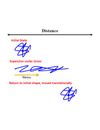
We have examined mixtures of toluene, a Newtonian liquid, with several non-Newtonian liquids (ie onfactants)
across the full composition range, from pure toluene to pure surfactant, for the purpose of exploring their rheological
properties. Surefactants of similar viscosities but significantly different molecular weights were chosen,
in order to verify the role of the molecular chain length. We discovered that the classical mixing rule, based on
excess activation energy, succeeds
Andrei Dukhin, Sean Parlia, Ponisseril Somasundaran
Work carried out in the Soviet Union 30 years ago by the father-and-son team of Stanislav and Andrei Dukhin now has implications in nanotechnology and microfluidics.
Because they don’t delve into the fundamental theories of electrokinetics very often, few analytical chemists instantly recognize the names of Stanislav Dukhin and his son Andrei. Some may vaguely recollect seeing a dimensionless number, the Dukhin number (Du), in research papers, but that’s about it. But a
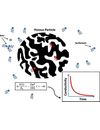
Hypothesis: Surfactants cause ionization in non-polar liquids, enabling such liquids to become electrically
conductive with that conductivity being a linear function of the surfactant concentration. Consequently,
measurement of the conductivity can be used as a tool for monitoring surfactant concentration.
Experiments: We describe here a simple method for studying surfactant adsorption from oil into a porous
material. The conductivity of solutions containing tolu
Andrei Dukhin, Sean Parlia
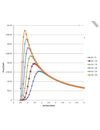
There are two mechanisms by which ion size affects conductivity of liquids: hydrodynamic resistance, and electrostatic attraction between cation and anion that leads to the formation of ion-pairs. Increasing ion size reduces conductivity due to growing hydrodynamic resistance. On the other hand, increasing ion size reduces the probability of ion-pairs formation, which leads to higher ionic strength and higher conductivity. The opposing nature of these two mechanisms indicates the existence of
Andrei Dukhin, Sean Parlia, Ponisseril Somasundaran
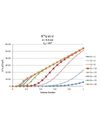
There have been number of papers published lately denying the role of ion-pairs role in the ionization of non-polar liquids containing surfactants. We have conducted several studies published in this Journal that unambiguously confirm the essential role of ion-pairs, and have suggested a theory that fits experimental conductivity data for a wide variety of non-polar liquid mixtures with amphiphilic substances. However, one contradiction remains between our very first paper on this subject and
Sean Parlia, Ponisseril Somasundaran, Andrei Dukhin
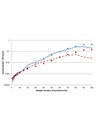
In previously published papers [Dukhin, A., Parlia. S., J. Electrochem. Soc., 162, H1–H8 (2015); Parlia, S., Dukhin, A., Somasundaran, P., J. Electrochem. Soc., 163, H1–H6 (2016); Bombard, A., Dukhin, A., Langmuir, 30, 4517–4521 (2014)] we presented data on the conductivity of various alcohols mixed with several non-polar liquids. A peculiar range of the conductivity, in which it decayed exponentially with alcohol content, was discovered for all mixtures.We suggested a theor
Sean Parlia, Andrei Dukhin, Ponisseril Somasundaran
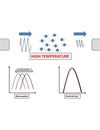
Ultrasound attenuation spectroscopy provides a unique means for studying various properties of complexfluids such as aggregative stability, particle size, longitudinal rheology, zeta potential, etc. Additionally,ultrasound emerges as an important tool for microfluidics. These features of ultrasound attenuationspectroscopy are dependent upon a theory that describes colloidal particle motion in an ultrasoundfield. Here we verify experimentally the validity of this well-known theory at elevated
Andrei Dukhin, Sean Parlia
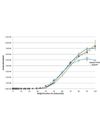
In our previous paper [A. Dukhin and S. Parlia, J. Electrochem. Soc., 162, H1 (2015)] we suggested a theory that fits experimental data for mixtures of various alcohols with toluene within the full composition range. This theory is based on the general expression for ionic strength given by Aurbach [D. Aurbach and M. Dekker, Nonaqueous Electrochemistry (1999)]. In this paper we test if the chemical nature of non-polar liquids affects conductivity of such mixtures by mixing butanol with differ
Sean Parlia, Andrei Dukhin, Ponesseril Somasundaran
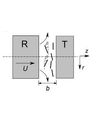
Ultrasound attenuates when propagating through an aqueous dispersions of carbon nanotubes. We established a significant difference in the ultrasound attenuation frequency spectra for the nanotubes oriented either along or across the ultrasound beam. This effect can be used for calculating geometrical and
rheological properties of nanofiber materials dispersed in liquids.
Properties of liquid materials with dispersed non-spherical nano-objects depend strongly not only on their
Alexander A. Loshkarev, Anastasia L. Karpovich, Valentin S. Sukharev, Victor V. Ivanov, Andrei Dukhin