


- Scientific - Chillers & Coolers - Refrigerated Circulating Baths
- Scientific - Dry Block Heaters - Dry Block Heating/Cooling
- Scientific - Life Science - Shakers, Mixers & Stirrers
- Scientific - Life Science - Rockers and Rotators
- Scientific - Water Baths - Heated Circulating Baths
- Scientific - Water Baths - Ultrasonic Baths
- Data Acquisition - Data Loggers - Process Loggers
- Data Loggers
- Heated Circulating Laboratory Baths
- Refrigerated Circulating Laboratory Baths
- Unstirred Scientific Water Baths
- Dry Block Sample Heating Systems
- Dry Block Heating / Cooling Systems
- Thermoshakers
- Benchtop Centrifuges
- Orbital Shaking Platforms
- Vortex Mixers
- Shaker-Incubators
- UV Cabinets - DNA/RNA
- Densitometers
- Temperature Loggers
Grant Instruments (Cambridge) Ltd products
Refrigerated Circulating Laboratory Baths
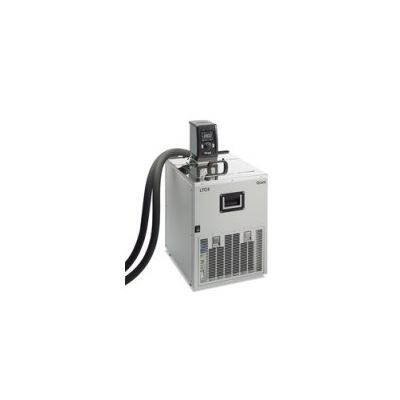
Model LTC4 - Refrigerated Circulating Baths
The TX150 - R4 is available ready assembled with the circulator mounted on the refrigerator and supplied with insulated tubing and clips to form a system ready to use.
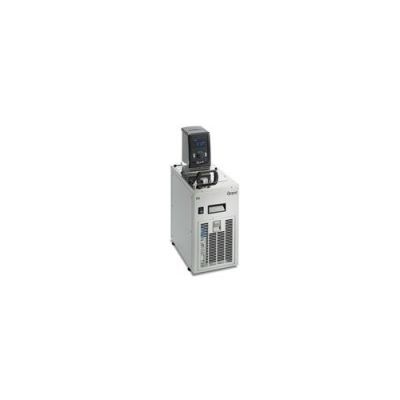
Model T100 R Series - Refrigerated Circulating Baths
The Grant Optima™ T100 R series of refrigerated circulating baths with digital control provides excellent value for money for straightforward applications requiring accurate heating and cooling in the temperature range of 0 to 100°C.
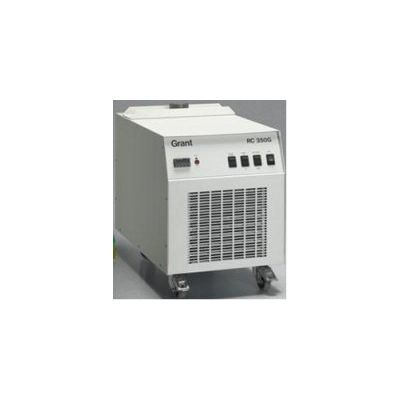
RC series High Precision Recirculating Chillers
Many industrial and scientific applications require powerful cooling to remove the mechanical or electrical heat produced in equipment, or the heat generated by an exothermic reaction, combined with high pressure flow for fast heat removal within restricted systems. The Grant RC recirculating chillers are ideal for these applications. Before water became an expensive commodity tap water was frequently used as a source of powerful, high pressure cooling. Unlike tap water, RC chillers provide a constant flow at a precise, repeatable temperature and can operate at temperatures as low as -10°C. They eliminate the use of mains water, minimise scaling and corrosion of the equipment being cooled. Moreover, alarms warn of any temperature or flow changes.