


- Home
- Companies
- Johnson Matthey
- Products
Johnson Matthey products
Technologies
Johnson Matthey - Hydrocarbon-SCR Systems
Hydrocarbon-SCR (lean NOx reduction) systems use hydrocarbons as the reductant. The hydrocarbon may be that occurring in the exhaust gas (`native`) or it may be added to the exhaust gas. This has the advantage that no additional reductant source (e.g. urea) need be carried but these systems cannot offer the performance of ammonia-SCR systems.
Johnson Matthey - 2-way (Oxidation) Catalysts
In most gas streams, carbon monoxide (CO) and hydrocarbons (HC) can be removed by combination with oxygen (O2) using an oxidation catalyst (also known as a 2-way catalyst): CO + ½ O2 → CO2, [HC] + O2 → CO2 + H2O. This reaction is suitable for oxygen-rich (“lean”) gas streams, typical of diesel exhaust and many industrial process emissions. Many diesel particulate filter systems incorporate an oxidation catalyst, either as a coating on the filter or as a separate element. In diesel exhaust applications, oxidation catalysts may also achieve up to 30% reduction of PM emissions.
Johnson Matthey - NOx Adsorber Catalysts
NOx can be removed from a lean gas stream by chemical adsorption onto a catalyst, hence the term NOx adsorber catalyst (NAC). The process of adsorption releases CO2.
Filter Regeneration
Any filter has a finite capacity. Diesel particulate filters must be cleaned out, intermittently or continuously, if they are not to block. This is most important, since an overfilled filter can damage the engine through excessive exhaust back pressure and can itself be damaged or destroyed.
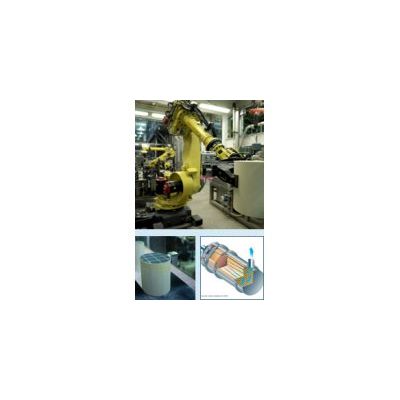
The CRT System
The CRT system is the most widely used DPF system in the world and is a patented Johnson Matthey technology. It comprises an oxidation catalyst followed by a DPF. The principle of its operation is shown below.
The CCRT System
The CCRT system is a CRT system, but with a catalytic coating also applied to the DPF.
NO2 from Passive Filters
Nitrogen Dioxide (NO2) Emissions. Diesel engines emit oxides of nitrogen (NOx), consisting of nitrogen oxide (NO) and nitrogen dioxide (NO2). The percentage of each does vary, but typically NO2 might make up 10% of the total NOx coming out of the engine. Reports have linked continuously regenerating filter systems to increased emissions of NO2 from the tailpipe. These do not always contain sufficient information to enable the reader to make an informed judgement on the issues.
Active Systems - Active DPF Regeneration
Active DPF Regeneration. Any application in which it cannot be guaranteed that the exhaust gas conditions will be suitable for a passively regenerating system will require some active regeneration. Even in these cases, it is desirable to maximise the amount of passive regeneration that can be achieved since passive regeneration is `free`, requiring no additional energy.

The SCRT System
The SCRT system is more than simply a combination of a CRT system and an SCR system. In this integrated design, the CRT performs two functions: it gives excellent conversion of CO, HC and PM, and it enhances the NO2 content of the gasses that pass into the SCR system. By optimising the gas mix supplied to the SCR catalysts in this way, excellent NOx conversions are also achieved.
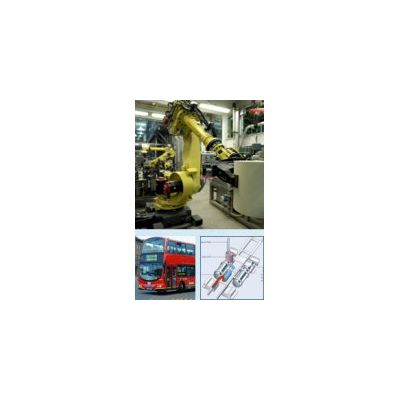
NOx Adsorber Catalyst And A Diesel Particulate Filter (NAC - DPF)
A NOx adsorber catalyst and a diesel particulate filter may be used together to give effective removal of CO, HC, PM and NOx from a diesel exhaust. Different system configurations using the two technologies have been developed by Johnson Matthey to achieve a suitable balance between performance, durability and size.