Samyang Corporation applications
The importance of ultrapure water used in the semiconductor, OLED, LCD, and other electronics industries is increasing, and as related industries advance, the purity and reliability standards for ultrapure water are becoming even stricter. TRILITE® ion exchange resins for ultrapure water have been delivered domestically and internationally to ultrapure water facilities in the semiconductor, display (OLED, LCD) industries, and have acquired references of trust. They are contributing to improving our customers` competitiveness through stable quality control and timely delivery. TRILITE® ion exchange resins for ultrapure water are divided into URR100, UPR200, UPR300, and UPR400 series depending on the required ultrapure water quality.
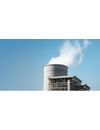
The ion exchange resins used in thermal power plants are used for demi water systems, cooling water, and condensate treatment. For demi water systems, various combinations of demineralization devices can be used. In the case of condensate treatment, high operational exchange capacity, heat resistance, and physical-chemical strength are required to remove impurities present in the condensed water from steam passing through a turbine. TRILITE® ion exchange resins have a diverse delivery record in domestic and international thermal power plants and are contributing to our customers` competitive power supplies through stable quality control and technical support.
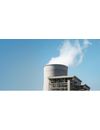
Ion exchange resins used in nuclear power plants are used in processes such as make-up systems, condensate treatment, and nuclear power plant primary circuits. The water treatment flow for PWR nuclear power plants typically consists of two stages, including the primary circuit and make-up systems, as well as the condensate treatment in the secondary circuit. The ion exchange resins used in the primary circuit must be highly cross-linked resins and have low impurity content and high physical-chemical strength, as they may be exposed to radiation. TRILITE® ion exchange resins have a diverse delivery record in domestic and international nuclear power plants and are contributing to our customers` competitive power supplies through stable quality control and timely delivery.

TRILITE ion exchange resins and synthetic adsorbents can be used in various separation and purification processes for pharmaceuticals and food raw materials. Some representative examples are as follows.
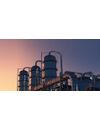
Ion exchange resins used as catalysts in various reactions can convert batch processes to continuous processes and maximize the final product yield based on high conversion rates.

Water softeners and demineralization devices used in water treatment can be configured in various ways depending on factors such as the type of ion exchange resin filled in a resin tower, layer, direction of flow/regeneration, and combination of resin towers. Various options are available to correspond to raw water and treated water, etc.

- Sugar: The general process of cane sugar production can be divided into two stages: first, the production of raw sugar from sugarcane, and second, the refining of raw sugar to produce refined sugar. Generally, ion exchange resins are not used during the production of raw sugar, but they are essential in the production of refined sugar.
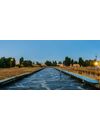
TRILITE ion exchange resins and chelating resins can be used to remove, separate, and concentrate various metal ions. By utilizing these properties, specific metal ions can be selectively recovered from mines and other sources, and difficult-to-treat heavy metals in wastewater can be selectively and economically removed.