


VDH Water Technology products
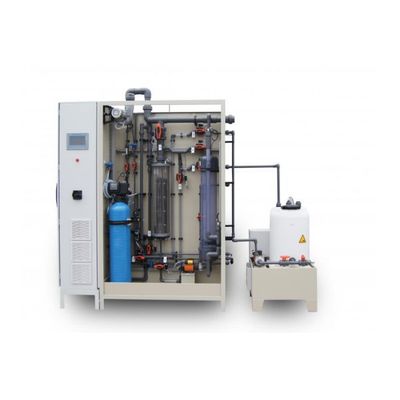
CHLORINSITU - Model II - Open Cell Electrolysis System
The CHLORINSITU II is an open cell electrolysis system in which the electrochemical reaction takes place in a flow through the cell chamber, so that the freshly produced active chlorine immediately reacts with the sodium hydroxide to form sodium hypochlorite.
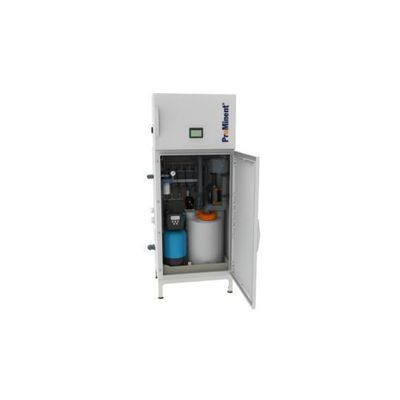
CHLORINSITU - Model IIA Small - Electrolysis System
The CHLORINSITU® IIA Small is a cutting-edge electrolysis system designed to produce high-quality sodium hypochlorite solutions efficiently. Utilizing an open cell technology, this system operates within a capacity range of 60 to 300 grams per hour, offering a hypochlorite output of 8 grams per liter at a pH range of 8.5 to 9. One of its key advantages is the significant reduction in chlorate levels, maintaining values well below the EN 901 standards. The system is engineered to be both compact and user-friendly, with a plug-and-play configuration allowing for immediate deployment without specialized ventilation needs. It efficiently converts approximately 50% of salt with a consumption rate of 3.0 kg of salt per kg of free available chlorine (FAC) and requires around 4 kWh of electricity per kg of FAC, suitable for various applications in water treatment.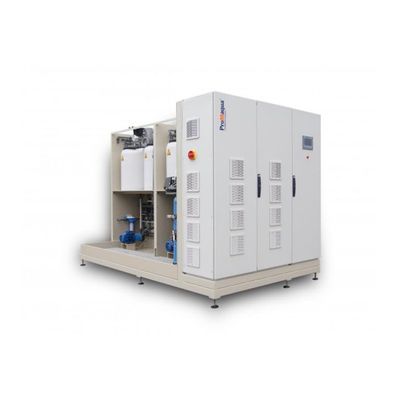
CHLORINSITU - Model III - Membrane Cell Electrolysis System
The CHLORINSITU III is a membrane cell electrolysis system in which the electrochemical reaction takes place in two electrode chambers (anode and cathode) which are separated by a cation selective membrane. The formation of active chlorine and sodium hydroxide is physically separated.
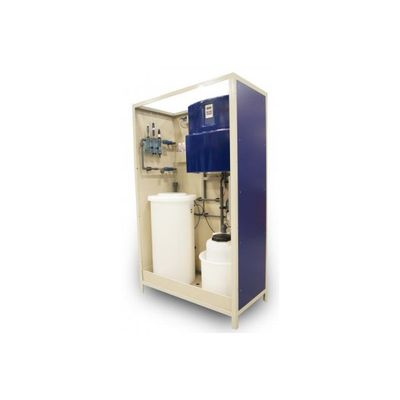
CHLORINSITU - Model III Compact - Membrane Cell Electrolysis System
Do you need sodium hypochlorite that is high-purity or low-chloride and low-chlorate? And in relatively small capacity? The electrolysis system CHLORINSITU III Compact is the solution. The system can be used for potable-, waste-, process-, swimming pool water, fountains and in cooling towers. The CHLORINSITU III Compact is a membrane cell electrolysis system in which the electrochemical reaction takes place in two electrode chambers (anode and cathode) which are separated by a cation selective membrane. The formation of active chlorine and sodium hydroxide is physically separated.
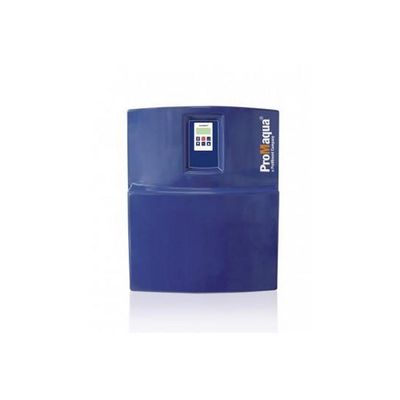
CHLORINSITU - Model IV Compact - Membrane Cell Electrolysis System
The CHLORINSITU IV Compact is a membrane cell electrolysis system in which the electrochemical reaction takes place in two electrode chambers (anode and cathode) which are separated by a cation selective membrane. The formation of active chlorine and sodium hydroxide is physically separated. In the CHLORINSITU IV Compact the freshly produced active chlorine will immediately be dosed in the water to be treated, forming in-situ hypochlorous acid. The sodium hydroxide which is being produced at the cathode side can be used for pH correction.
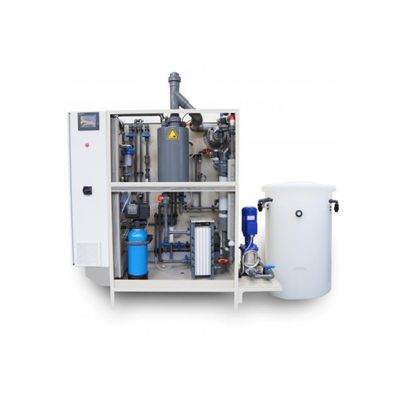
CHLORINSITU - Model V - Membrane Cell Electrolysis System
The CHLORINSITU V is a membrane cell electrolysis system in which the electrochemical reaction takes place in two electrode chambers (anode and cathode) which are separated by a cation selective membrane. The formation of active chlorine and sodium hydroxide is physically separated. In the CHLORINSITU V the freshly produced active chlorine will immediately be dosed in the water to be treated, forming in-situ hypochlorous acid. The sodium hydroxide which is being produced at the cathode side can be used for pH correction.
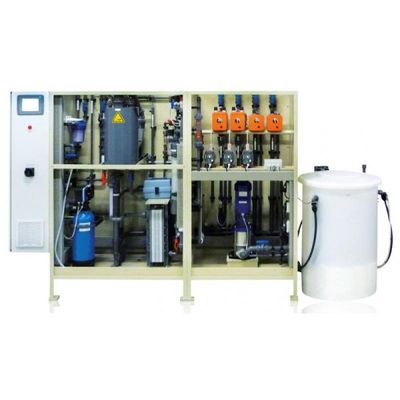
CHLORINSITU - Model V PLUS - Membrane Cell Electrolysis System
The CHLORINSITU V PLUS is a membrane cell electrolysis system in which the electrochemical reaction takes place in two electrode chambers (anode and cathode) which are separated by a cation selective membrane. The formation of active chlorine and sodium hydroxide is physically separated. In the CHLORINSITU V PLUS the freshly produced active chlorine is immediately dosed in the water to be treated forming in-situ hypochlorous acid. The hypochlorous acid concentrations in the bypass will vary from 50 – 1.000 ppm FAC. The sodium hydroxide which is being produced at the cathode side can be used for pH correction.The surplus of active chlorine will be used to produce a sodium hypochlorite solution, for which a special reactor based on the unique vacuum system is being used forming a sodium hypochlorite solution (20 – 25 g/l FAC), which can be stored temporarily and metered as needed.
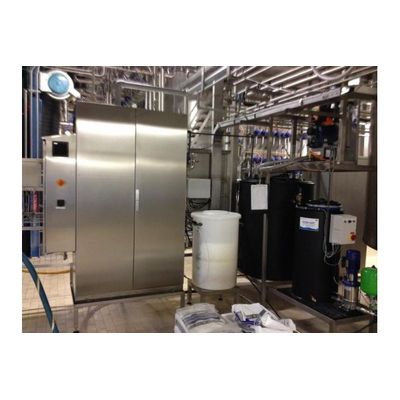
DULCO - Model Lyse - Membrane Cell Electrolysis System
The DULCO Lyse is a membrane cell electrolysis system in which the electrochemical reaction takes place in two electrode chambers (anode and cathode) which are separated by a cation selective membrane. The formation of active chlorine and sodium hydroxide is physically separated. In the DULCO Lyse a very low concentrated mixture (400 ppm) of the freshly produced active chlorine is created. The pH value of the mixture is adjusted between 6 and 7 using the sodium hydroxide. The end product is a highly pure hypochlorous acid which can be stored in small amounts to keep it fresh. The DULCO Lyse systems therefore only need to be designed for average demand, as peaks of capacity can be compensated for from the ECA (day)storage tank.