


- Home
- Companies
- DAS Environmental Expert GmbH
- Products
- DAS - Membrane Bio Reactor (MBR)
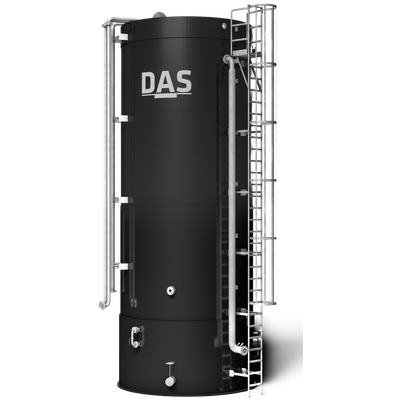
DAS - Membrane Bio Reactor (MBR)
The wastewater is first fed into a biological reactor containing micro-organisms. These organisms play a key role in the degradation of organic contaminants in the wastewater and, unlike the MBBR, are not present as a biofilm but as activated sludge and therefore in the form of flocs suspended in the wastewater. Anaerobic, anoxic and aerobic tanks or zones are also used to exploit the characteristics of different micro-organisms in the biocenosis. However, unlike MBBR, these pass through all stages rather than remaining in one zone.
To maintain the activity of the aerobic organisms, air is injected into the reactor, allowing their aerobic growth and accelerating the degradation of pollutants. Anaerobic or anoxic zones are mixed without the introduction of air. The treated wastewater then passes through membrane filtration in the MBR system. Special membranes are used to effectively retain particles and activated sludge.
Periodic backwashing of the membranes is required to remove deposits and blockages, usually by reversing the water flow or using chemical cleaning methods. Depending on the level of fouling, alkalis, acids or even enzymatic cleaners and chlorine-based hypochlorite are used. The activated sludge is recirculated to the upstream parts of the plant to avoid a critical concentration in the membrane chamber. The excess sludge produced during the process is also removed from this recirculation. Finally, depending on the application, the purified water can be reused or discharged to the central sewerage system.
Alternatively, it can be subjected to further purification processes to achieve higher levels of purity. The advantages of this process include the absence of solids in the effluent, potentially lower reactor volumes due to higher activated sludge concentrations, easy stepwise increase in filtration capacity and a smaller footprint for solids separation compared to gravity sedimentation.