
- Home
- Articles
Refine by
Environmental Industry Articles & Analysis: This-Week
26 articles found
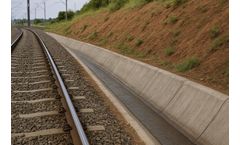
GCCM 5 MM was deployed in a railway project in Wardha, Maharashtra, to enhance drainage channel durability and erosion protection around embankments and track structures subjected to heavy rainfall and mechanical vibration.Project overviewLocation: Wardha, MaharashtraMaterial: Ocean Geosynthetic Cementitious Composite Mat GCCM 5 MMQuantity: 1,160 square metersObjective: provide a durable erosion ...
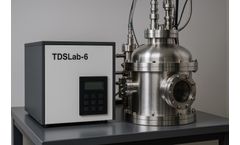
Hydrogen diffusivity measurements are critical for understanding embrittlement in materials exposed to hydrogen-rich environments. The TDSLab-6 system from Hiden Analytical, which integrates Isothermal Desorption Mass Spectroscopy (ITDMS), provides a precise method for these measurements and offers advantages over traditional electropermeation (EP) techniques. The system, formerly known as the ...

Executive Summary LiORA's comprehensive sensor monitoring system successfully enabled risk-based closure at a longstanding hydrocarbon-contaminated commercial site, demonstrating how continuous data collection can accelerate regulatory approval processes. Through the strategic deployment of soil and water sensors, LiORA provided definitive evidence of plume stability and natural source zone ...
ByLiORA
Executive Summary LiORA's integrated monitoring system successfully characterized the relationship between seasonal groundwater fluctuations and petroleum hydrocarbon concentrations at a former gas station site, providing critical insights for risk assessment and regulatory decision-making. By combining continuous contamination monitoring with groundwater level tracking, LiORA delivered the ...
ByLiORA
Executive Summary LiORA's comprehensive sensor network successfully characterized three distinct contamination plumes at varying depths within a large industrial facility that experiences extreme seasonal groundwater fluctuations of up to 50 feet. By deploying 20 water sensors across the complex site, LiORA provided critical insights into plume behavior under dynamic hydrogeological conditions, ...
ByLiORA
Executive Summary LiORA's sensor system for continuous monitoring of hydrocarbon depletion successfully supported regulatory approval for risk-based site management at a historical pipeline spill site in California. Through strategic deployment of soil sensors monitoring temperate, pressure, humidity, C02, CH4, 02, and hydrocarbon concentrations, LiORA provided real-time quantification of ...
ByLiORA
INTRODUCTION Environmental Material Science ("LiORA") provides a new generation of Internet of Things (loT) enabled non-dispersive infrared (NDIR) water sensors that provide high-resolution quantification of groundwater (GW) petroleum hydrocarbon (PHC) concentrations. The current generation water sensor transmits data at 30-minute intervals using a 4-channel pyroelectric NDIR detector, along ...
ByLiORA
Executive Summary Decades of site activities that reduced sources of hydrocarbons resulted in a complex picture of the contaminated groundwater plume. Now that immediate human and ecological health risks were addressed, the management team needed to determine if the groundwater plume was stable or if further remediation was needed to protect groundwater resources. LiORA Trends, utilizing ...
ByLiORA
Executive Summary LiORA's real-time soil sensor network successfully optimized SVE/MPE remediation system performance at a pipeline condensate release site, delivering $184,500 in operational cost savings while achieving significant environmental benefits. Through continuous monitoring of remedial progress, LiORA enabled data-driven system optimization, reducing operating costs by identifying ...
ByLiORA
Executive Summary LiORA's monitoring system successfully guided remediation decision-making at a contaminated site in an urban area, where historical impacts had migrated onto neighboring property near residential buildings. Through integrated soil and water monitoring, LiORA provided real-time assessment of remediation effectiveness and Natural Source Zone Depletion rates, enabling data-driven ...
ByLiORA
Executive Summary LiORA's comprehensive sensor network successfully demonstrated the effectiveness of natural attenuation at a large midstream crude oil and condensate facility, providing regulators with definitive evidence of plume stability and depletion. Through the deployment of 17 sensors, LiORA collected over 23 million data points in one year, quantifying an annual depletion rate of 4,490 ...
ByLiORA
Executive Summary LiORA's innovative technology successfully guided the remediation strategy at a former bulk fuel facility, enabling a precise Natural Source Zone Depletion (NSZD) assessment that reduced the excavation area and optimized site management. Through continuous monitoring and data-driven analysis, LiORA demonstrated how advanced sensor technology can transform traditional ...
ByLiORA
Client Overview Our client operates a portfolio of 350 active retail fuel sites located across multiple regions. These stations are involved in both fuel retailing and bulk transfer, and are predominantly equipped with underground fuel storage tanks (USTs). Our client is responsible for approximately 1,000 sites, which include both active and legacy sites. Over the past few years, the client has ...
ByLiORA
Summary A former spill site in the United States has three Soil Sensor locations within ~1 metre of each other. Though they are installed in separate boreholes, they are meant to reflect a gradient in gaseous emissions within the soil. The sensors are installed at 15, 30, and 45 ft (4.57, 9.14, and 13.72 m) belowground. Here we compare two approaches to calculating NSZD: the first is our ...
ByLiORA
Site Challenge Workers at a facility noted transient odours and were concerned that vapours were entering the workspace from a nearby source. The client and their team hypothesized that the transient vapour entry might be linked to site activities, such as deliveries on-site. The client's consultant had conducted soil vapour sampling using a Photo-lonization Detector (PID) over the 2022 calendar ...
ByLiORA

Coolpack, a global leader in temperature-controlled packaging, has set a new benchmark for combining environmental responsibility with high-end manufacturing. Faced with the labor-intensive maintenance and high energy consumption of traditional UV lamps and chemical cleaning, the company sought a more sustainable way to manage its extensive process water needs. By implementing the Watter system, ...
Listeria and Pseudomonas represent two of the most significant microbial threats to food safety and process integrity. Listeria is notoriously resilient, surviving in cold, moist environments and hiding within industrial machinery, while Pseudomonas is a master of biofilm formation, creating protective layers in piping systems that resist standard cleaning. When these bacteria establish ...
As 2,2-dibromo-2-cyanoacetamide (DBNPA) faces stricter European regulations due to its classification as an endocrine disruptor, industries are searching for safer, future-proof disinfection methods. The phase-out of DBNPA in applications like food industry surface treatment and general installations has created a need for alternatives that offer both high efficacy and legal certainty. In-situ ...
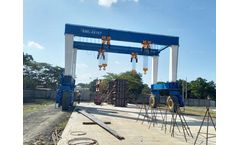
Rubber-tired gantry (RTG) cranes are indispensable in modern logistics, container terminals, and industrial operations due to their mobility, high lifting capacity, and efficiency. Unlike rail-mounted gantry (RMG) cranes that operate on fixed tracks, RTG cranes travel on rubber tires, allowing flexibility in container yard layouts. However, the performance, safety, and lifespan of an RTG crane ...
The recent recall of popular beverage brands due to excessive chlorate concentrations has placed a spotlight on the hidden risks of traditional disinfection. Chlorates are harmful byproducts that typically form during the degradation of stored chlorine-based disinfectants like sodium hypochlorite. Factors such as high storage temperatures, long shelf lives, and high chemical concentrations ...